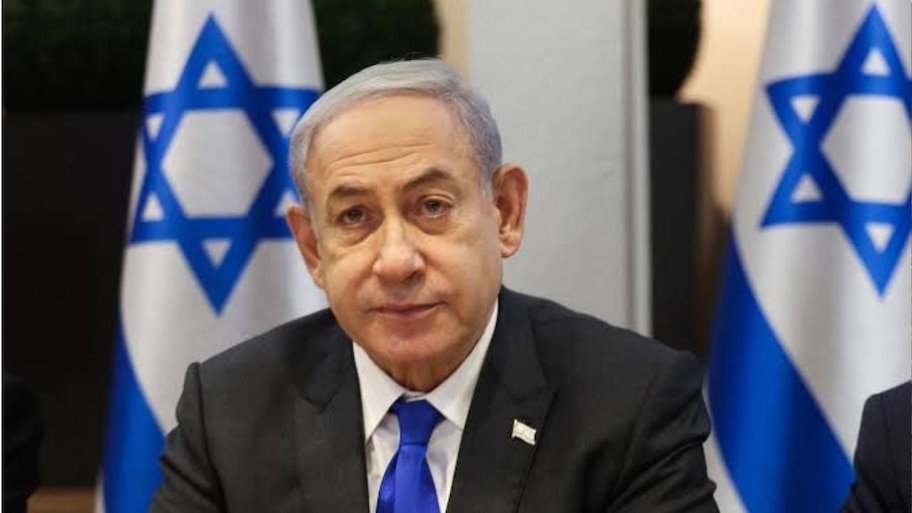
The gunpowder that was smoldering for a long time in the Middle East has once again transformed into the echo of horrific explosions. The Israeli Defense Forces (IDF) have launched a major and aggressive military operation against the extremist organization Hezbollah operating in southern Lebanon, destroying its strongest strategic strongholds. Israeli Prime Minister Benjamin Netanyahu has officially announced that his forces have completely destroyed Hezbollah's huge terrorist infrastructure on Lebanon's strategically important Beaufort Ridge and Ali al-Taher Ridge. These two mountainous areas not only remained a natural security shield for Hezbollah for decades, but from here it was very easy to fire anti-tank missiles and rockets at Israel's northern cities. Israeli Air Force fighter planes and precision-guided missiles targeted and destroyed Hezbollah's underground bunkers, weapons depots, modern surveillance posts and secret tunnel networks. After this destructive action, tension on both sides of the border has reached its peak and high alert has been declared throughout Lebanon. 'There is still a lot of work left, we will complete': Prime Minister Netanyahu's open and stern warning Immediately after this major military attack, Israeli Prime Minister Benjamin Netanyahu issued a bluntly worded ultimatum to his enemies through the social media platform X (formerly Twitter) and a video message. Netanyahu bluntly said that Israel had achieved another decisive and historic victory against Hezbollah. He made it clear that Israel's policy is as clear as glass – no terrorist infrastructure will be allowed to flourish in Lebanon's security zone. Prime Minister Netanyahu gave a strong warning and said, "If our enemies have not learned the lessons of the setbacks they have received so far and dare to attack us again, they will have to face even more dire and devastating consequences than before. Our mission is still incomplete, there is still a lot of work left and with God's help we will complete this work at any cost." This statement by Netanyahu gives a clear message that Israel is in no mood to stop its ground and air attacks until it completely breaks the military backbone of Hezbollah without bowing to any international pressure. Gunpowder Action Amidst Diplomatic Talks: The Contradiction of Rome Peace Talks and Ground Reality This aggressive action by Israel has come at a critical time when efforts were going on behind the scenes between the two countries to find a diplomatic solution. Recently, the seventh round of talks was held between high-level delegations of Israel and Lebanon in Rome, the capital of Italy. Lebanese President Joseph Aoun had recently informed in his cabinet meeting that positive progress has been registered between the two sides in Rome on important issues like permanent solution to the border dispute, ceasefire, rehabilitation of displaced civilians, identification of buffer zones and exchange of prisoners held by both sides. The American administration was also busy implementing this negotiation under the Washington Framework Agreement. However, Hezbollah has been strongly opposing this bilateral dialogue from the beginning. On the other hand, Israel has made it clear that talks have their place on the diplomatic table, but to protect its national security and the lives of its citizens, it will not tolerate any terrorist activity. This latest attack parallel to the peace talks has proved that the path of diplomacy in the Middle East is passing through heaps of gunpowder. Buffer zone policy in southern Lebanon and return of displaced persons to northern Israel According to the Israeli defense establishment, Hezbollah's presence on the Beaufort and Ali al-Tahar peaks posed a constant threat to Israel's Northern Galilee region. Due to the cross-border conflict that has been going on for the past several months, more than sixty thousand civilians from dozens of border towns in northern Israel have had to leave their homes and seek shelter in safe places. There is immense political pressure on the Israeli government at home to completely secure these border areas so that displaced citizens can return to their homes. The Netanyahu administration's new strategy is to create an impenetrable buffer or 'security zone' in southern Lebanon, where Hezbollah will have no armed presence, in accordance with UN Security Council Resolution 1701. The Israeli army is blowing up with dynamite all the modern tunnel systems and observation posts built in the mountains bordering Lebanon, which the terrorist group has been using for sudden infiltration or missile attacks. Israel's goal is to push Hezbollah north of the Litani River. Global Economy, Crude Oil Market and India's Concerns This latest conflict erupting in the Middle East is not limited to Lebanon and Israel only, but its wider global and regional economic impacts are visible. As Netanyahu's tough statements and news of new attacks appeared in international media, uncertainty increased in global energy markets. Concerns have once again deepened regarding the safety of ships on the commercial sea routes of the Red Sea and the Strait of Hormuz. This geopolitical tension is also very sensitive from India's point of view. The energy supply of Indian industrial hubs such as New Delhi, Mumbai and Chennai largely depends on crude oil and LNG coming from West Asia. If this war spreads further regionally through Lebanon, there could be a sudden surge in crude oil prices in the international market, which will have a direct impact on fuel prices, transportation costs and inflation in India. Additionally, there are millions of Indian expatriates working in Lebanon and the surrounding Gulf countries, ensuring their security always remains a top priority for the Indian Ministry of External Affairs. What further conflict could erupt in the coming days? Big question on regional stability: Defense experts are extremely worried about the possible reaction of Hezbollah after losing its strong positions on Beaufort Ridge. This Iran-backed Shia militia organization is believed to be equipped with a large number of long-range precision guided missiles and suicide drones. If Hezbollah launched massive retaliatory rocket attacks on Tel Aviv, Haifa or Israel's sensitive infrastructure, the conflict could escalate into an outright war. US military officials and diplomats are currently trying to prevent the situation from getting out of control through backchannel contacts between Beirut and Jerusalem. However, looking at the adamant attitude of Benjamin Netanyahu and the aggression of Hezbollah, it is clearly visible that the gunpowder smoke on the border does not seem to be stopping at the moment. The coming days will decide whether Washington and Rome's diplomacy brings about a ceasefire or whether the Middle East falls into another long and terrifying war.