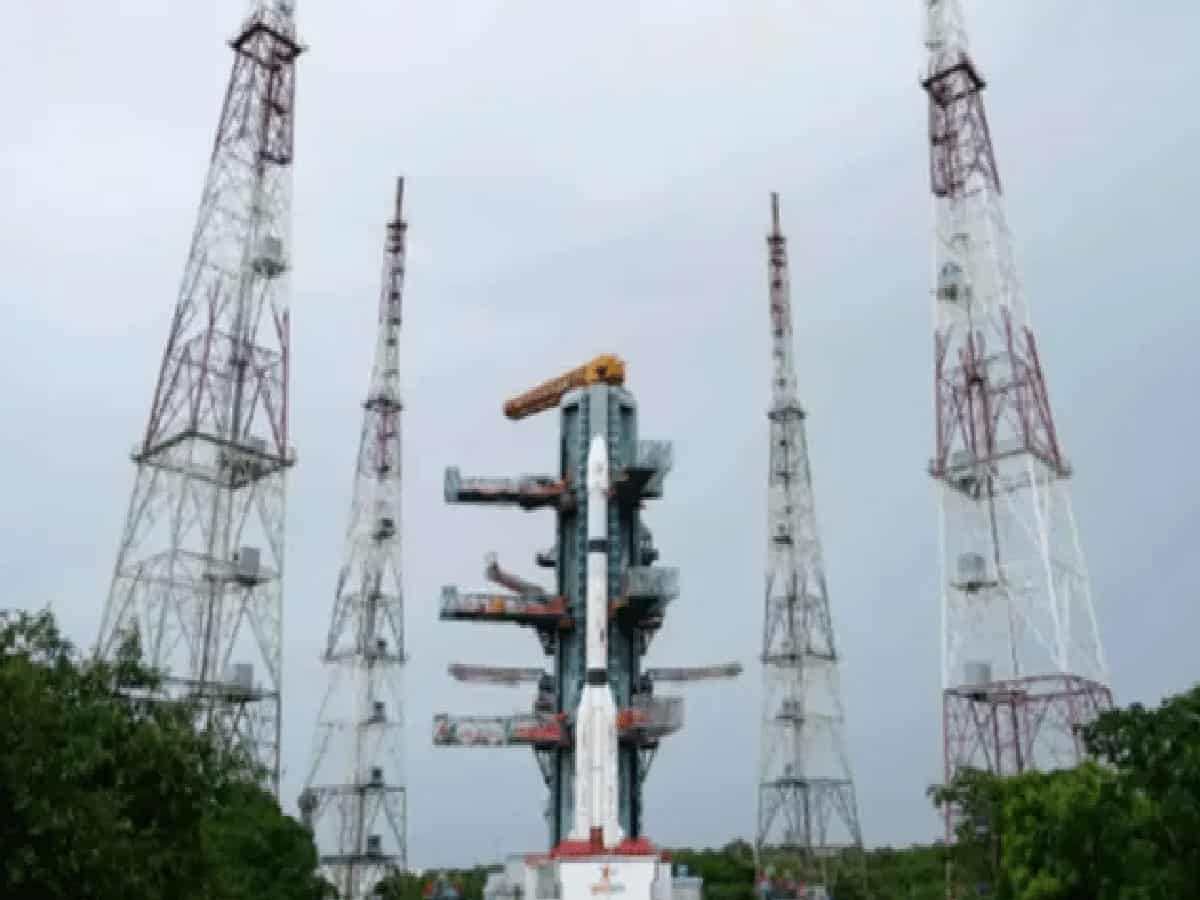
In a historic leap toward ending reliance on foreign satellite constellations and securing strategic self-reliance, the Indian Space Research Organisation (ISRO) successfully launched its next-generation navigation satellite, NVS-03, from the Satish Dhawan Space Centre (SDSC-SHAR) in Sriharikota late Friday night. Lifting off precisely at 11:51 PM from the spaceport’s second launch pad, the GSLV-F18 launch vehicle precisely injected the advanced spacecraft into Geosynchronous Transfer Orbit (GTO). From navigating daily commutes on consumer smartphones to guiding maritime vessels and commercial aircraft, satellite navigation serves as critical modern infrastructure, and the commissioning of NVS-03 substantially bolsters India’s dedicated regional positioning network, “NavIC” (Navigation with Indian Constellation), providing independent, resilient, and ultra-precise geospatial intelligence across the subcontinent.
Civilian-Ready L1 Band and Indigenous Atomic Clock Power Greater Precision Than GPS
The induction of NVS-03 marks a transformative architectural upgrade for the NavIC constellation, engineered to deliver accuracy levels that surpass conventional GPS signals for both strategic defense assets and ordinary citizens. While earlier generation NavIC satellites broadcast signals primarily across the L5 and S frequency bands, NVS-03 integrates the globally standardized L1 band—the exact civilian frequency utilized by modern smartphones, smartwatches, and smart wearable gadgets worldwide. At the heart of the satellite sits a cutting-edge indigenous rubidium atomic clock, engineered entirely in-house by ISRO’s Space Applications Centre (SAC). Because satellite positioning algorithms calculate precise location metrics based on minute time-delay differences between transmitted orbital signals, the high-precision atomic chronometer guarantees pinpoint location tracking and nanosecond timing accuracy across an expansive primary service zone stretching over 1,500 kilometers beyond India’s territorial frontiers, catering seamlessly to aviation corridors, highway transit, marine shipping, and disaster management operations.
Engineering Fixes Overcome Past Glitches as GSLV Sheds ‘Naughty Boy’ Legacy
The operational triumph of the NVS-03 mission reflects rigorous engineering corrections incorporated by space scientists following anomalies experienced during the NVS-02 mission in January 2025, where a faulty connector incapacitated the on-board propulsion system and created hurdles in raising the spacecraft to its designated operational slot. ISRO implemented reinforced connector fail-safes and robust propulsion contingencies on NVS-03 to prevent similar orbital insertion setbacks. The launch also marked the landmark 20th flight of the Geosynchronous Satellite Launch Vehicle (GSLV), with tracking teams closely monitoring the cryogenic upper third stage. Having faced early developmental complications mastering complex cryogenic rocketry that colloquially earned the launcher its mischievous “Naughty Boy” moniker, the flawless ascent of GSLV-F18 firmly demonstrates cryogenic maturity while fortifying India’s sovereign technological autonomy.