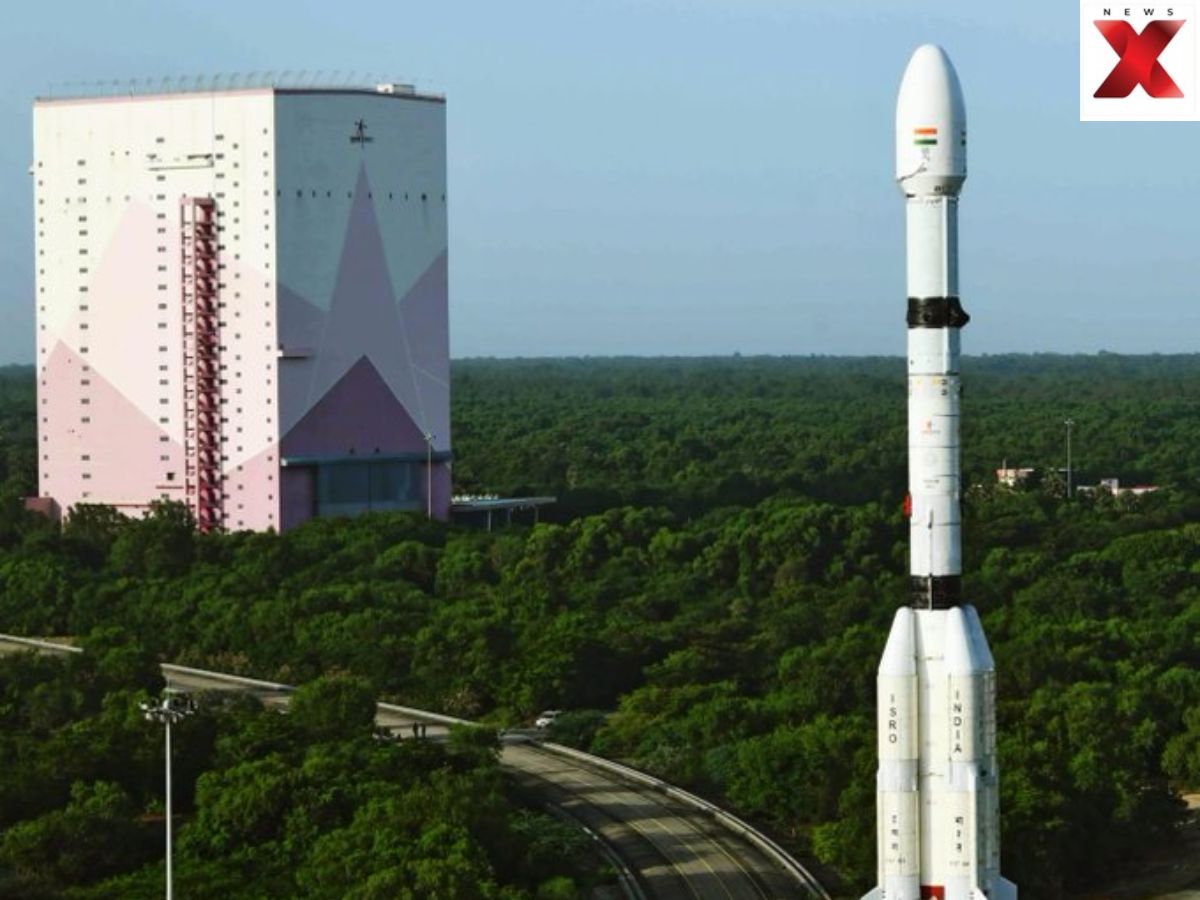
Naughty Boy: ISRO’s GSLV-F17 rocket successfully placed the 2,367-kg EOS-05 Earth-observation satellite into orbit on Friday, September 4, 2026, marking the return of India’s launch programme after an eight-month gap. The rocket lifted off from the Second Launch Pad at the Satish Dhawan Space Centre at 2:55 AM IST. But the mission has drawn attention for another reason: the GSLV Mk II, once nicknamed ISRO’s “Naughty Boy” for its uneven record, delivered a performance that exceeded expectations.
The third-stage cryogenic engine performed better than planned and injected EOS-05 into a sub-geosynchronous transfer orbit with an apogee of 31,026 km, nearly 2,100 km higher than the original target. ISRO Chairman Dr V. Narayanan and media reports said the extra altitude could preserve onboard fuel and extend the satellite’s operational life by at least three years. The performance has prompted scientists to jokingly call the launcher a “Smart Boy”.
Naughty Boy: Why has this satellite earned such a curious nickname?
The “Naughty Boy” tag belongs to the GSLV Mk II rocket, not EOS-05. The launcher has completed 19 flights, but six ended in failures or partial anomalies. Engineers faced major challenges while mastering its indigenous cryogenic upper-stage engine. Its first flight in April 2010 and the August 2021 failure that destroyed the EOS-03 satellite were among its notable setbacks.
Friday’s mission offered a sharp turnaround. The successful GSLV-F17 launch not only restored confidence in the launcher but also gave India its first major space triumph of 2026.
Naughty Boy: How will it keep a watch on Earth?
EOS-05 will operate from a geosynchronous orbit nearly 36,000 km above Earth. Unlike India’s 21 operational Earth-observation satellites that largely work in low Earth or sun-synchronous orbits and pass over locations periodically, EOS-05 will remain aligned with the Earth’s rotation and provide a continuous view of the Indian subcontinent.
It can produce fresh imagery of the country every 30 minutes, while high-priority areas can be revisited every five minutes during emergencies. This gives EOS-05 an “unblinking” 24/7 view for tracking fast-changing events.
Naughty Boy: What are its key features and why could it be a game-changer?
The satellite is the heaviest payload ever delivered into orbit by a GSLV. Its imaging system is built around a large 700mm telescope and multispectral and hyperspectral sensors. Instead of capturing ordinary colour images, these sensors divide light into hundreds of narrow bands, helping identify chemical signatures, moisture changes and thermal variations.
The technology could transform disaster management by allowing authorities to monitor flash floods, cloudbursts, forest fires and cyclones without waiting for a satellite to return overhead. It could also strengthen round-the-clock surveillance of remote and sensitive borders and provide detailed information on crop health, soil moisture and water-body depletion.
Prime Minister Narendra Modi described the launch as a testament to the “excellence, innovation, and growing capabilities” of India’s space sector. For agriculture, security and disaster response, the satellite’s continuous view could make the mission far more than just another launch.
Also Read: Pakistan’s D-248 Kamikaze Drone Vs India’s S-400: What Is Its Range, Flight Time And Can It Be Stopped?
Khalid Lateef is a Sub-Editor at NewsX Digital, specializing in Indian politics and global affairs. He also covers viral trending stories and major crime developments.
The post ISRO’s ‘Naughty Boy’: Why Curious Nickname, How EOS-05 Will Watch Over Earth, Its Features And What Makes It A Game-Changer For India appeared first on NewsX.