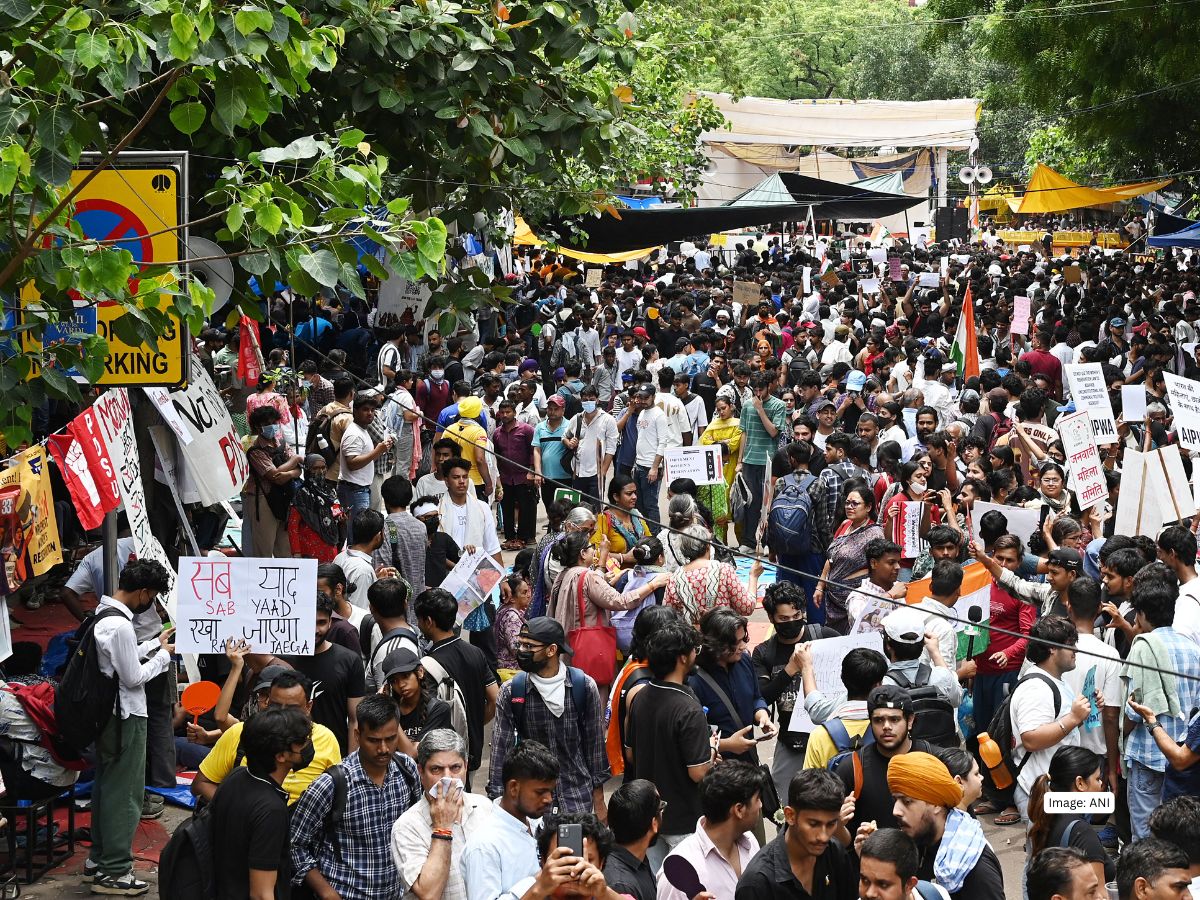
The Supreme Court on Tuesday said it will constitute a high-powered committee to examine allegations of police excesses during a student protest at Delhi’s Jantar Mantar last month. A bench led by Chief Justice of India Surya Kant, along with Justices Joymalya Bagchi and V Mohana, heard a batch of petitions related to the protest. The bench indicated that the committee could include a former Supreme Court judge, a former Chief Justice of a High Court and a retired officer who served at the Director General level. The final composition of the panel is expected to be announced on Wednesday.
“As we said, we will be constituting a high-powered committee (HPC). Some measures of urgent interim nature,” the bench said.
Panel to Examine Alleged Police Excesses
The court has asked lawyers representing both sides to submit their suggestions on the scope of the committee. The panel is expected to look into allegations of excessive police action against protesters. Lawyers for the petitioners have also raised concerns over alleged action against unarmed students.
Solicitor General Tushar Mehta told the court that complaints had been filed by both the police and protesters. He said that if there was any dereliction of duty by the police, “we will deal with it in consultation with the HPC.”
The bench, however, indicated that once the committee is constituted, the matter should largely be left to it.
Supreme Court Examines FIRs Against Protesters
The Supreme Court also discussed the FIRs registered in connection with the protest. The bench indicated that it could use its special powers under Article 142 of the Constitution to quash FIRs against protesters found to be innocent. However, it made it clear that cases involving people with criminal antecedents would need separate consideration.
“Both sides give a list of FIRs. Let us identify the area where there is no controversy. But where there are criminal antecedents also, we will decide what to do,” the court observed.
Advocate Vrinda Grover urged the court to provide all FIRs to the petitioners’ lawyers. She said this would help them separate cases involving innocent protesters from those involving people with criminal backgrounds. She also sought compensation for those who were injured by pellet guns during the protest.
Court Draws Line Between Protest and Criminal Conduct
During the hearing, the bench stressed that the constitutional right to protest must not be confused with criminal activity. The court referred to Article 19 and the fundamental right to freedom of speech and expression.
“We must remember Article 19, freedom of speech and expression, rightful protest. Their case can be completely distinguishable from criminal elements,” the bench said.
Mehta told the court that it could quash FIRs against student protesters but argued that a different approach should be followed in cases involving protesters with criminal antecedents. The distinction could become important as the court reviews the FIRs connected with the Jantar Mantar protest.
Delhi Police Denies Mass Facial Recognition Surveillance
The Delhi Police has also rejected allegations that it carried out mass surveillance using facial recognition technology during the protest. In an affidavit submitted to the Supreme Court, the police said the technology did not profile every person.
According to the police, the system was used to identify people with prior criminal records. Mehta reiterated this position before the bench. He said people with criminal backgrounds would be investigated by a Special Investigation Team formed by the Delhi Police commissioner.
Petitioners Seek Action Against Errant Policemen
Senior advocate Shadan Farasat told the court that videos available in the public domain showed conduct by certain police officers that raised serious concerns. He said the petitioners had no objection to such material being examined by the proposed committee.
Farasat also sought immediate interim action against police officers accused of using excessive force against unarmed protesters. Senior advocate Gopal Sankaranarayanan, appearing for one of the petitioners, also argued that a strong message should be sent to policemen found responsible for excesses.
The petitioners’ lawyers pointed out that the Delhi Police affidavit did not clearly explain what administrative action had been taken against officers accused of wrongdoing.
Supreme Court Seeks Suggestions on Committee’s Scope
The top court said notices had already been issued on all the petitions. It directed lawyers appearing in the matter to submit their suggestions by Tuesday evening on the proposed scope of the high-powered committee.
The panel is expected to examine the allegations of police excesses and other connected issues. The court’s next steps could also determine how FIRs against student protesters are handled, particularly where there is no allegation of criminal conduct or prior criminal record.
Sudeep Singh Rawat is a Copy Editor at NewsX Digital with over five years of experience in digital journalism. He covers national and international news, with a focus on politics, crime, technology, public affairs, and trending topics. Before joining NewsX Digital, he worked with Business Standard, The Sunday Guardian, and other digital media organisations. His reporting focuses on breaking news, enterprise stories, and explainers that inform readers through accurate, balanced, and context-driven journalism.
The post Jantar Mantar Protest: Why Is the Supreme Court Setting Up a High-Powered Panel to Probe Police Excesses? appeared first on NewsX.