
Japan’s big message in G7: Concern expressed on Indo-Pacific security, China’s challenges and Strait of Hormuz

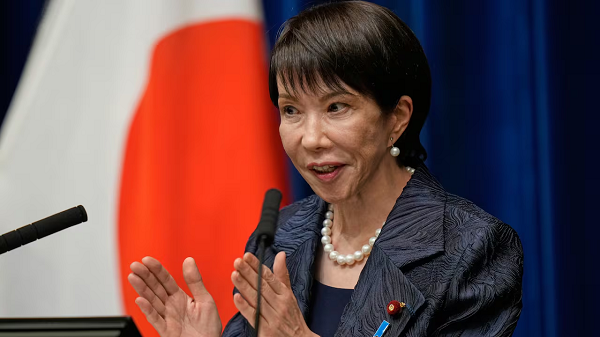
New Delhi . Global security, economic stability and geopolitical challenges were widely discussed during the G-7 summit held in France. During this, Japanese Prime Minister Sanae Takaichi stressed the need for greater coordination among the member countries, highlighting the changing circumstances of the Indo-Pacific region, the strategic challenges related to China and the increasing tension in West Asia. His statement has come at a time when security challenges are increasing in many parts of the world and global supply chains are also facing pressure.
Referring to the meetings and dinner discussions with G-7 leaders, the Japanese Prime Minister said that the Indo-Pacific region has today become an important center of world politics and global trade. Maintaining stability in the region is essential not only for Asian countries but for the economic and strategic interests of the entire world. He said that Japan has presented its viewpoint to partner countries on various challenges and regional security concerns related to China.
Takaichi said that there has been a broad consensus among the G-7 countries that cooperation and coordination should be further strengthened in the current global circumstances. He particularly emphasized on securing and strengthening the supply chains of critical minerals. Availability of minerals required for modern technology, defense production and green energy projects has become one of the major economic priorities of the world today.
Expressing concern over the situation in West Asia, the Japanese Prime Minister underlined the importance of the Strait of Hormuz. He said that this route is extremely important for global energy supply and maritime trade. If tension increases in this region, it may affect the economy of the entire world. Therefore, all parties should ensure that maritime trade continues unhindered and does not face any obstruction.
The issue of Iran’s nuclear program also remained the center of discussion. Japan supported diplomatic efforts to enhance cooperation with the International Atomic Energy Agency (IAEA) and prevent nuclear proliferation. Japan believes that controlling the spread of nuclear weapons is essential for regional stability and global security.
In the same conference, India also strongly raised the role of development partnership and the global south. Prime Minister Narendra Modi said that the real success of any partnership lies in how much it enables the partner countries to become self-reliant. Citing India’s development projects, skill development programs and capacity building efforts in Africa, he said India is committed to promoting long-term development through partnerships.
On the other hand, the concerns of European countries regarding China’s increasing exports also remained a topic of discussion. Experts believe that despite US tariffs, China’s industrial production and export capacity remain strong, raising new questions related to competition and economic balance in global markets. Overall, the G-7 summit clearly indicated that issues related to security, trade and supply chains are going to be at the center of the global agenda in the years to come.

Comments are closed.