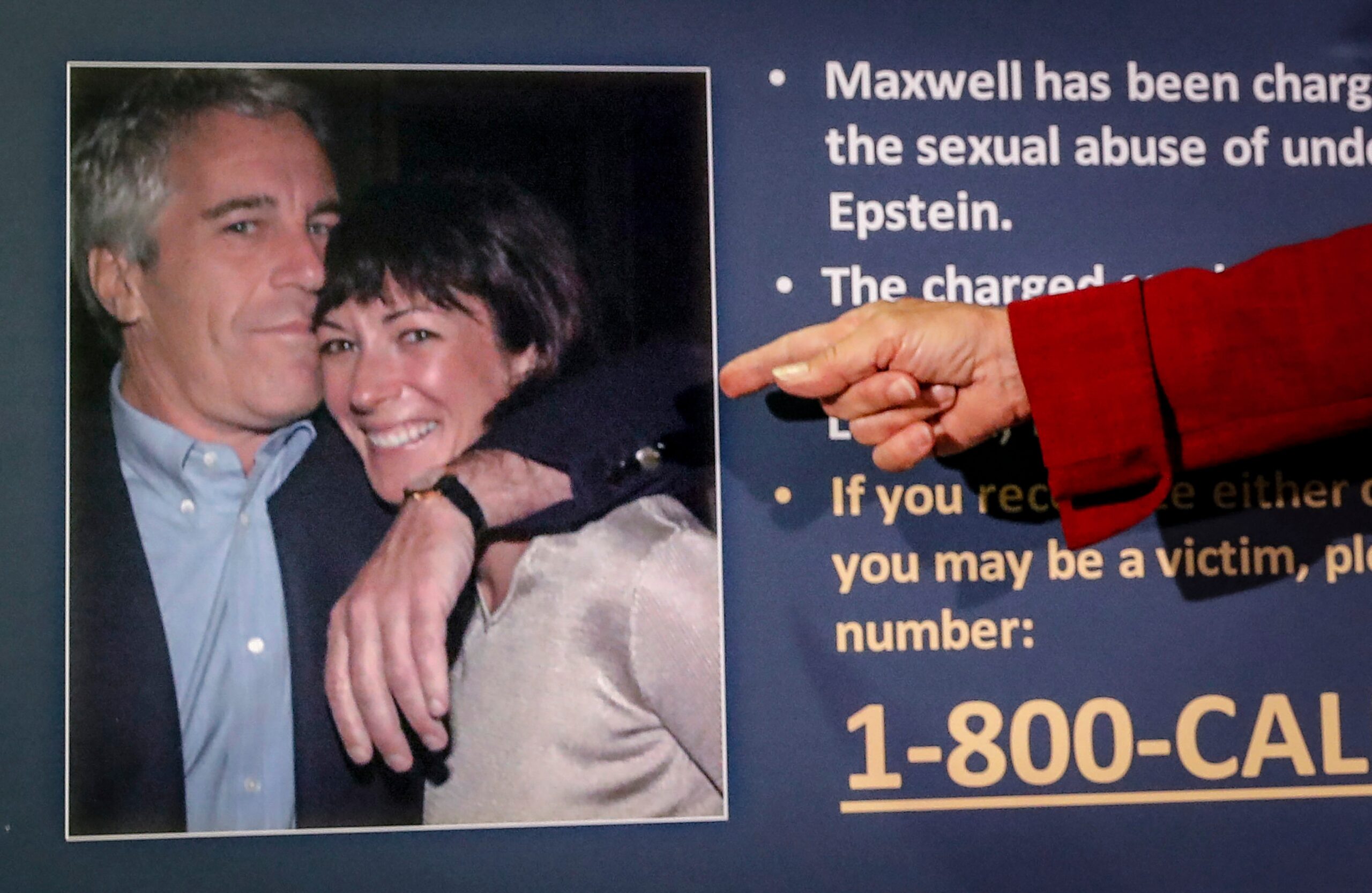
Judge Rejects Ghislaine Maxwell’s Bid to Overturn 20-Year Prison Sex-Trafficking Conviction/ TezzBuzz/ WASHINGTON/ J. Mansour/ A federal judge rejected Ghislaine Maxwell’s request to overturn her sex-trafficking conviction and release her from a 20-year prison sentence. Judge Paul A. Engelmayer called nearly all her claims frivolous, procedurally barred or based on speculation, distortions and falsehoods. He found that recently released Jeffrey Epstein investigative records did not exonerate Maxwell and, where relevant, reinforced the case against her.
Quick Look
- Maxwell sought to overturn her conviction through a habeas petition.
- She claimed prosecutors withheld exonerating evidence and presented false testimony.
- Judge Paul A. Engelmayer rejected her request Tuesday.
- He said nearly all her claims were procedurally barred or frivolous.
- Maxwell was convicted of sex trafficking in December 2021.
- She is serving a 20-year federal prison sentence.
- Her conventional appeals have already been exhausted.
- Many of her new claims relied on recently released Epstein files.
- The judge said those records were largely irrelevant or incriminating.
- He also rejected her claim that prosecutors made her a scapegoat.
Deep Look
Judge rejects Maxwell’s request for release
NEW YORK — A federal judge rejected Ghislaine Maxwell’s attempt to overturn her sex-trafficking conviction and secure release from her 20-year federal prison sentence.
Maxwell, the former girlfriend and longtime associate of Jeffrey Epstein, filed a habeas petition in December alleging that newly available information demonstrated serious errors in her prosecution.
She argued that authorities withheld exonerating evidence and presented false testimony at her trial, resulting in what she called a “complete miscarriage of justice.”
U.S. District Judge Paul A. Engelmayer rejected those arguments Tuesday, concluding that Maxwell had presented no evidence capable of changing the outcome of her trial.
Court calls claims frivolous and meritless
Engelmayer wrote that Maxwell’s arguments “all or almost all are frivolous.”
“Nearly all its claims are procedurally barred; the overwhelming testimonial and documentary evidence adduced at trial conclusively established her guilt; and her petition’s claims are demonstrably meritless, and generally based on speculation, distortions, and/or outright falsehoods,” Engelmayer wrote.
A request for comment was sent to attorneys who previously represented Maxwell.
Habeas petition followed exhausted appeals
Prisoners often file habeas petitions as a final legal avenue after exhausting their direct appeals.
The petitions allow courts to review allegations that a person is being held unlawfully because of constitutional violations, prosecutorial misconduct or other fundamental errors.
Maxwell turned to that process after her previous challenges to her conviction and sentence were unsuccessful.
Maxwell convicted in 2021
Epstein, a wealthy financier, was arrested in July 2019 on federal sex-trafficking charges.
A judge ordered him detained while awaiting trial. He was found dead in his cell at a New York federal jail in August 2019, and authorities ruled his death a suicide.
Maxwell, a British socialite, was arrested the following year. A jury convicted her of sex trafficking in December 2021 for helping Epstein sexually abuse girls.
She was later sentenced to 20 years in federal prison.
Maxwell transferred to Texas prison camp
Maxwell was moved from a Florida prison to a federal prison camp in Texas in 2025.
The transfer occurred shortly after she was interviewed by Todd Blanchewho was then the Justice Department’s second-ranking official and had previously worked as Trump’s criminal defense attorney. Blanche is now U.S. attorney general.
The judge’s ruling did not indicate that the interview or prison transfer provided grounds for overturning Maxwell’s conviction.
Newly released Epstein records do not exonerate Maxwell
Many of Maxwell’s assertions about “new evidence” relied on documents released under the Epstein Files Transparency Act.
Over the past eight months, the Justice Department has released 18 categories of investigative materials from the extensive sex-trafficking investigation.
The records include search warrants, financial documents, victim-interview notes and information extracted from electronic devices.
Engelmayer concluded that the material is “largely irrelevant to the charges against Maxwell and does not support her claims of error.”
“On the contrary, to the extent it is relevant, far from exculpating her, it incriminates her or reinforces the correctness of the legal rulings Maxwell challenges,” he wrote.
Judge dismisses selective-prosecution argument
Maxwell also argued that the Justice Department selectively prosecuted her and made her a “scapegoat.”
She cited the government’s failure to indict four alleged co-conspirators identified in a government document or 25 men who reached settlements with Epstein’s victims.
Engelmayer said Maxwell could have raised the selective-prosecution claim during her direct appeal. He found the argument frivolous regardless of that procedural issue.
Among the recently disclosed Justice Department records, “she does not cite any that reveals the existence of an uncharged confederate, let alone one as instrumental as she in facilitating Epstein’s horrific crimes,” the judge wrote.
The decision leaves Maxwell’s conviction and 20-year sentence in place.
More on US News