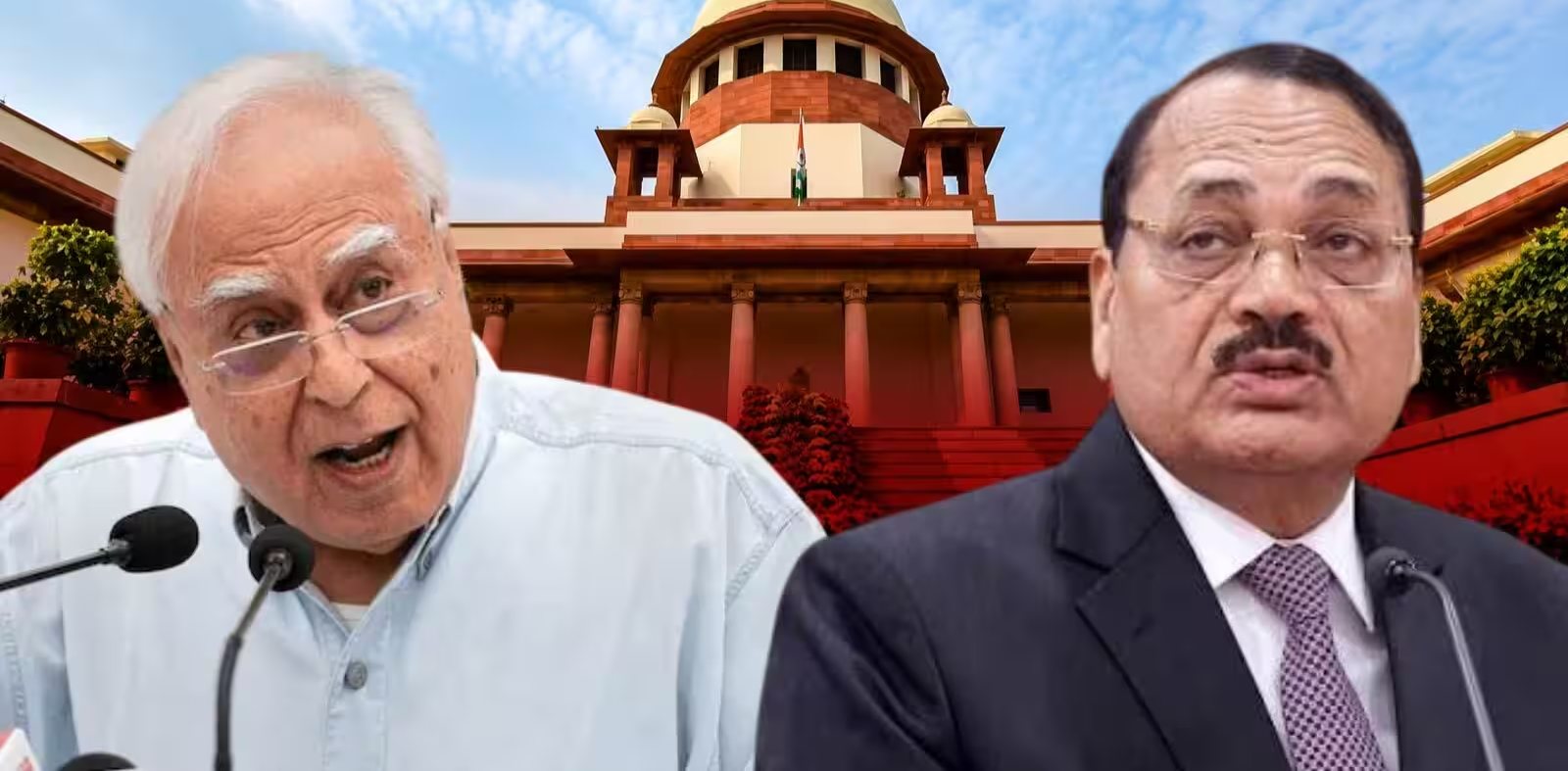
A very interesting and heated debate broke out in the Supreme Court of the country when senior advocate and well-known politician Kapil Sibal raised serious questions on a particular ‘pattern’ during the hearing. When Kapil Sibal spoke on this alleged pattern of systemic practices and delays in decisions during the hearing of an important political and constitutional case in the court, the bench led by Chief Justice (CJI) Surya Kant made a very balanced and introspective comment. The Supreme Court bench made a scathing comment and said that before giving instructions or setting a deadline for any other constitutional institution or authority, the judiciary should look at its own mirror. This ideological and legal discussion held in the Temple of Justice has once again given rise to a new national debate on the country’s judicial system, administrative speed and mutual coordination of constitutional institutions.
Know what was the whole matter and why this hot issue of ‘pattern’ arose
This entire incident came to light in the Supreme Court at a time when a major political upheaval in the country and the legal maneuvers related to it were being heard. Senior advocate Kapil Sibal, appearing for the petitioners, drew the court’s attention to how decisions in some sensitive and politically important cases are not taken within the stipulated time, thereby adversely affecting democratic systems. Sibal argued that there appears to be a certain pattern in such cases whereby delays are caused either deliberately or due to systemic deficiencies. He was pointing out that when decisions are not taken on time, the ruling party or the concerned administrative machinery directly benefits from it, while the party expecting justice has to wait for a long time. Such arguments caught the attention of everyone present in the courtroom and it was emphasized that there was a need to understand this pattern in depth.
CJI Surya Kant and the bench bluntly: Judiciary will also have to introspect
On this ‘pattern’ question raised by Kapil Sibal, Chief Justice (CJI) Surya Kant and other respected judges of the bench responded with utmost sensitivity and transparency. The bench clearly observed that it is not enough to merely question the functioning of other institutions or Speakers and Commissions, but the judiciary should also see whether it itself is able to dispose of the cases pending within itself within the stipulated time frame. It was added on behalf of the bench that there are many laws and provisions under which the courts also have to give decisions within a certain time period, but sometimes due to systemic pressures, there is a mistake in following those limits. This openness of the judiciary and this style of accepting its shortcomings is a symbol of how serious and alert the Supreme Court of the country is towards judicial reforms and introspection.
Increasing importance of functioning and time limit of constitutional institutions
In today’s time, when the democracy of the country is progressing rapidly, it becomes the moral and legal responsibility of every constitutional institution—be it the judiciary, the Election Commission or the Speaker of the Legislative Assemblies—to be completely transparent and prompt in their decisions. The long delay in disposal of cases not only shakes the confidence of the general public in the system but also increases the risk of political instability manifold. This recent comment of the Supreme Court has served to convey the message that to keep the democratic structure strong, all organs will have to work together and ensure speedy justice while staying within their respective limits. Experts believe that such high-level discussions prove to be a milestone in deciding the direction of judicial and administrative reforms in the future, thereby further protecting the dignity of the country’s Constitution.
Hope for future path and transparency in justice system
In conclusion, it can be said that this issue raised by Kapil Sibal and this impartial comment of CJI Surya Kant’s bench on it has become an important episode in the history of Indian jurisprudence. This incident shows that the Supreme Court of India does not shy away from any debate, but welcomes open discussion on every question which is related to the democracy and rights of the citizens of the country. It will be very interesting to see in the coming days whether after such debates, any major and positive change is seen in the way the courts and other constitutional institutions function or not. The eyes of the country are always fixed on these historic decisions and observations of the Supreme Court, because it is through them that the outline of the democratic future of the country is prepared.