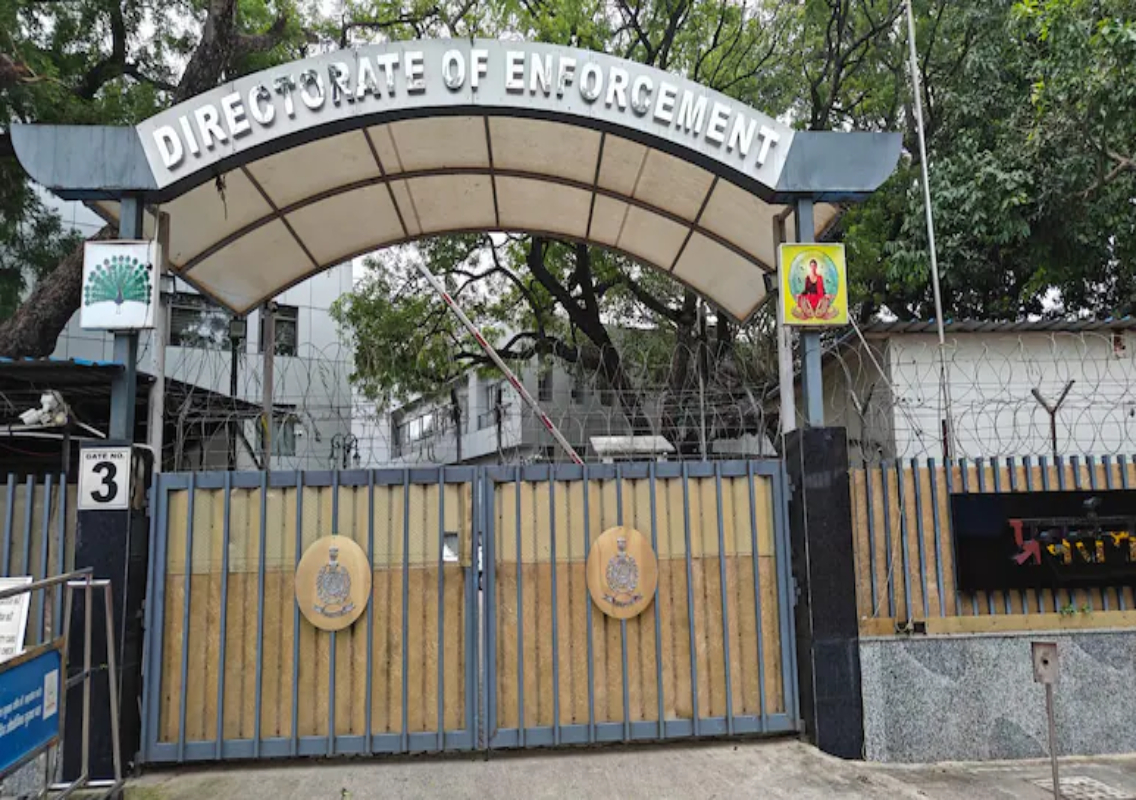
Bengaluru: The Karnataka High Court has upheld the Enforcement Directorate’s seizure of property linked to Genpact India in a case involving alleged foreign exchange violations and transactions totalling around Rs 7,635.9 crore. The court dismissed Genpact India’s challenge to the ED’s seizure order, while separately directing the competent authority to reconsider the company’s application for regulatory approval for a proposed overseas investment.
The ruling, delivered by Justice Suraj Govindaraj on September 16, 2026, concerns proceedings under the Foreign Exchange Management Act (FEMA). The ED had seized property valued at Rs 37.15 crore belonging to Genpact India Private Limited, formerly known as Empower Research Knowledge Services Private Limited.
The court’s order does not establish the ED’s allegations as proven wrongdoing. It specifically left the substantive merits of the pending investigation, alleged transactions and alleged FEMA violations open for consideration by the appropriate authority.
Court dismisses challenge to ED seizure
The case before the Karnataka High Court included Genpact India’s challenge to an ED seizure order dated February 3, 2026. The property involved is the company’s head-office premises at DLF City, Phase V, Sector 53, Gurugram, Haryana.
Genpact had sought to have the seizure order set aside and had also asked the court to direct the release of the property. The company had challenged the ED’s invocation of Section 37A of FEMA.
The court ultimately dismissed W.P. No. 7283/2026, which challenged the seizure order. It also vacated the interim stay that had earlier halted the operation of the seizure order.
However, the ruling allows Genpact to continue its lawful business operations from the seized head-office premises. The company cannot create third-party rights in the property or transfer, alienate or encumber it in a manner inconsistent with the seizure order.
ED alleges Rs 7,635.9 crore was transferred
According to the ED, the transactions under investigation involved Rs 7,635.9 crore, comprising Rs 4,600 crore in principal and Rs 3,035.90 crore in interest. The agency alleged that funds were moved to Genpact Luxembourg through a structure involving foreign direct investment and non-convertible debentures (NCDs).
The ED’s case relates to a series of transactions undertaken in 2015 as part of a restructuring of Genpact’s Indian operations.
The agency alleged that Empower Research Knowledge Services, an entity with a net valuation of around Rs 66 crore, received Rs 4,528.25 crore as FDI from Headstrong Consulting Singapore on January 28, 2015. According to the ED, the funds were subsequently routed overseas to acquire a 49% stake in the then Genpact India without the required Reserve Bank of India approvals.
The ED further alleged that Empower raised another Rs 4,600 crore from Genpact Luxembourg in March 2015 through 4,600 NCDs, each with a face value of Rs 1 crore. The agency said the funds were then used to acquire the remaining 51% of shares in the operating Indian company.
What the ED alleged about the transaction structure
The Enforcement Directorate described the arrangement as an alleged “integrated, multilayered fraudulent scheme” involving corporate restructuring and debt financing. According to the agency, the structure resulted in funds moving through offshore group entities and ultimately created liabilities within the Indian company.
The agency also alleged that funds originally borrowed overseas from Morgan Stanley Senior Funding were moved through offshore entities and used to settle the overseas loan shortly after disbursement.
Another allegation concerned the valuation of Genpact India’s shares. The ED said the internal share valuation was increased from Rs 26,250 to Rs 58,230 per share to facilitate the arrangement.
These remain allegations made by the investigating agency. The High Court’s decision on the seizure challenge does not amount to a final finding that Genpact committed the alleged violations.
Court examines the timing of FEMA Section 37A
One of the important legal issues was the timing of Section 37A of FEMA.
The provision came into force on September 9, 2015, whereas some of the transactions under investigation took place in January and March 2015. Genpact argued that Section 37A could not be applied retrospectively to transactions completed before the provision came into force.
The High Court agreed with the general principle that Section 37A cannot be applied retrospectively to completed transactions from before September 9, 2015.
However, the court found that the ED was not relying solely on the original 2015 transactions. The agency also relied on payments made between 2018 and 2023 in connection with the NCD liability. Those subsequent acts took place after Section 37A came into force and could therefore be considered while examining whether the statutory conditions for action under Section 37A were satisfied.
The court consequently held that the invocation of Section 37A could not be invalidated merely because the arrangement originated in 2015.
Genpact’s separate NOC challenge partly succeeds
The High Court also considered a separate petition concerning Genpact India’s application for a No-Objection Certificate under Rule 10 of the Foreign Exchange Management (Overseas Investment) Rules, 2022.
Genpact had sought approval for a proposed investment of USD 100 million in Genpact Global (IFSC) Private Limited to establish a global or regional corporate treasury centre.
The ED had rejected the NOC request in a communication dated January 13, 2026.
The High Court found that the mere existence of an ED investigation could not, by itself, be sufficient grounds to refuse an NOC. The authority needed to provide relevant and rational reasons showing a connection between the investigation and the proposed investment.
The court noted that the proposed Gift City entity was intended to operate as a global treasury centre and provide financial facilities to overseas Genpact entities. Because the investigation concerned alleged movement of value from India through overseas entities, the court said there was a connection that the ED was entitled to examine.
However, that connection had not been adequately explained in the original January 13 rejection communication.
NOC application sent back for fresh decision
The court therefore set aside the January 13 communication rejecting the NOC application and remitted the matter to the competent authority for fresh consideration.
Genpact has been given 10 days from receipt of the certified order to submit relevant documents and material. The competent authority must then take a fresh, reasoned decision within 10 days of receiving the complete submission.
The court made it clear that this does not amount to an order directing the authority to grant the NOC. The competent authority must independently examine whether the requirements under Rule 10 have been met.
The court also directed that the relevant regulatory authority consider extending the deadline for the proposed investment, since the existing extension was stated to expire on September 15, 2026. Any investment would remain subject to the required FEMA, RBI, IFSCA and other regulatory approvals.
What the Karnataka High Court ruling means
The ruling produces two separate outcomes for Genpact.
First, the challenge to the ED’s seizure of the Gurugram property has failed. The seizure order remains operative, although the company can continue its lawful business operations from the premises.
Second, Genpact has obtained a fresh opportunity to have its proposed USD 100 million overseas investment application considered. The earlier NOC rejection has been set aside because the reasons provided were found inadequate, but the court has not directed that the investment be approved.
The court also expressly stated that its order should not be treated as an opinion on the ultimate merits of the pending proceedings or on Genpact’s entitlement to make the proposed investment.
Investigation remains subject to further proceedings
The Genpact case now moves forward with the ED’s seizure order continuing to operate and the NOC application going back to the competent authority.
The court’s decision is significant because it distinguishes between the legal validity of the seizure action and the separate regulatory question concerning Genpact’s proposed overseas investment.
While the High Court has allowed the ED’s seizure order to proceed, it has not made a final determination on the underlying allegations concerning the Rs 7,635.9 crore transactions. Those substantive issues remain open for consideration through the relevant proceedings.