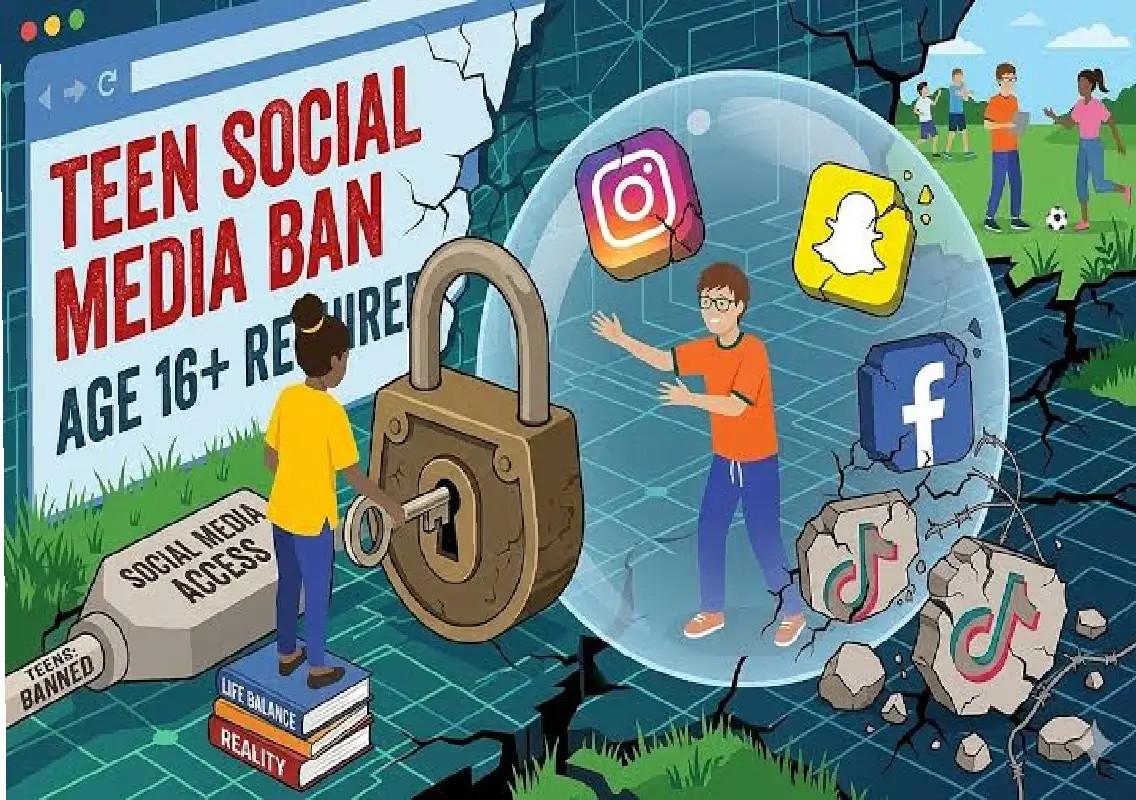
Governments around the world are grappling with concerns about how social media affects teenagers, from online bullying and harmful content to sleep disruption and pressure to constantly stay connected.
Australia became the first country to introduce a nationwide social media ban for children under 16, renewing debate over whether restricting access is the most effective way to protect young people. The discussion has also raised questions about what happens when the wider digital environment remains unchanged. (thereader.mitpress.mit.edu)
The problem may be bigger than social media
Researchers and policymakers have raised concerns about the design of many online platforms, where algorithms can encourage users to spend more time scrolling and repeatedly engage with content.
For teenagers, who are still developing emotionally and socially, exposure to harmful material or intense social comparison can potentially create additional pressures.
However, simply preventing young people from accessing platforms does not necessarily address the underlying issues, particularly when smartphones, messaging services, gaming platforms and other digital spaces remain part of everyday life.
What happens when restrictions begin?
Age restrictions can also present practical challenges. Determining a person’s age online is difficult, while teenagers may attempt to bypass restrictions through alternative accounts or services.
A ban could therefore shift some young people’s online activity rather than eliminate it. It may also reduce opportunities for parents, teachers and young people to discuss responsible digital behaviour openly.
Building safer digital spaces
The debate has increasingly focused on whether governments and technology companies should place greater responsibility on platforms themselves.
Stronger privacy protections, better moderation, safer default settings, greater transparency around recommendation algorithms and effective parental controls are among the approaches discussed in the broader debate.
For parents, digital safety may also involve helping teenagers recognise harmful content, manage screen time and understand that online popularity does not define their worth.
Protecting young people online is a complex challenge. The discussion around social media restrictions highlights the need to consider not only who can access platforms, but how those platforms are designed and governed.