
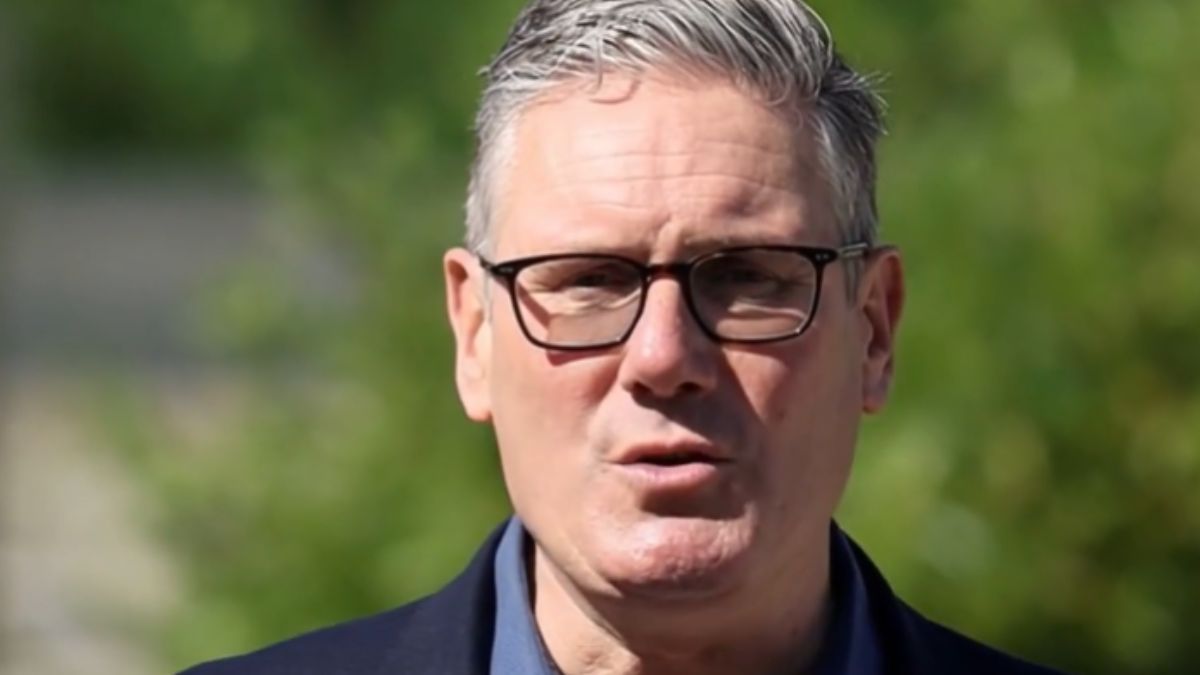
Keir Starmer Resigns: 6 Prime Ministers in 10 years, is it so easy to change PM in Britain, how and who gets this post?

Keir Starmer Resign Explainer: There was a big political stir in British politics on 22 June. Prime Minister Keir Starmer Has announced his resignation from his post. He said that he is taking this decision accepting the stand of the party MPs.
Starmer said that he has informed the British King about his decision. However, he will remain on the post of Prime Minister till the election of a new leader and complete the process of transfer of power. Now the question is arising that why is the process of changing the Prime Minister so easy in Britain and who becomes the new PM?
How is the Prime Minister elected in Britain?
In Britain the public does not directly vote for the Prime Minister. There the public elects MPs for the House of Commons. The leader of the party that gets the majority usually becomes the Prime Minister. If the leader of a party resigns from the post or the party wants to change him, then a new leader is elected from within the party. The new leader assumes the post of Prime Minister, because he is the head of the party with majority in the Parliament.
Is it easy to remove PM in Britain?
In Britain, a general election is not always necessary to remove the Prime Minister. If the MPs of the ruling party lose confidence in the leader, then the party can choose a new leader through internal elections. This is why many times the Prime Minister in Britain changes within a few years. Leaders may resign due to political pressure, internal party discord and fear of electoral loss.
Why did 6 Prime Ministers of Britain change in 10 years?
1. David Cameron (2010-2016): Cameron was the leader of the Conservative Party. He resigned after the Brexit referendum in 2016 as Britain voted in favor of leaving the European Union.
2. Theresa May (2016-2019): He had to resign due to lack of support in the party and Parliament regarding the Brexit agreement.
3. Boris Johnson (2019-2022): He stepped down from the post after the controversy related to Covid rules and growing opposition within the party.
4. Liz Truss (2022): Liz Truss became Britain’s shortest serving Prime Minister. His economic policies caused huge instability in the market, due to which he had to resign after about 45 days.
5. Rishi Sunak (2022-2024): Sunak took over the government amid economic challenges, but he also had to step down after the Conservative Party’s defeat in the 2024 elections.
6. Keir Starmer (2024-2026): Starmer, who became Prime Minister after the victory of the Labor Party, has now decided to resign from the party leadership.
What did Starmer say in his resignation?
Starmer said that every decision he took was to give priority to the country. He said that the party was now raising the question whether he was the right person to lead the party till the next general elections. He said that he will give full support to the new leader and hand over Britain in a strong position.
Why is it so easy to change PM in Britain?
- In Britain, to change the government or remove the Prime Minister, one does not have to follow a complex process like the American presidential system.
- In the British system, MPs of the ruling party can create an atmosphere of distrust against the head of their own government.
- If the required number of party MPs (e.g. 20% of MPs in the Labor Party) stand against the leader, then a new leadership election is triggered.
- According to the law of the country, if the Prime Minister resigns, it is not mandatory to dissolve the Parliament. The majority party chooses a new leader through its internal elections and he directly takes oath as the Prime Minister.
How and who gets this post? (selection process)
The process of becoming Prime Minister of Britain mainly works in three stages:
1. To be a member of Parliament (MP)
A person becoming Prime Minister must be a member of the House of Commons, the lower house of the British Parliament.
2. Party leadership election (Internal Election):
A new leader is elected under a fixed procedure within the ruling party (currently the Labor Party). The candidate has to get the support of at least 20% of the MPs of his own party. After this, all the registered members of the party and recognized trade union supporters cast their vote through online or postal ballot. The one who gets more than 50% votes is elected the new leader.
3. Formal appointment by the King
After the new leader is elected, the outgoing Prime Minister goes to Buckingham Palace to submit his resignation to King Charles III. Soon after, the newly elected leader meets with the King, where the King formally invites him to form a government and appoints him Prime Minister.

Comments are closed.