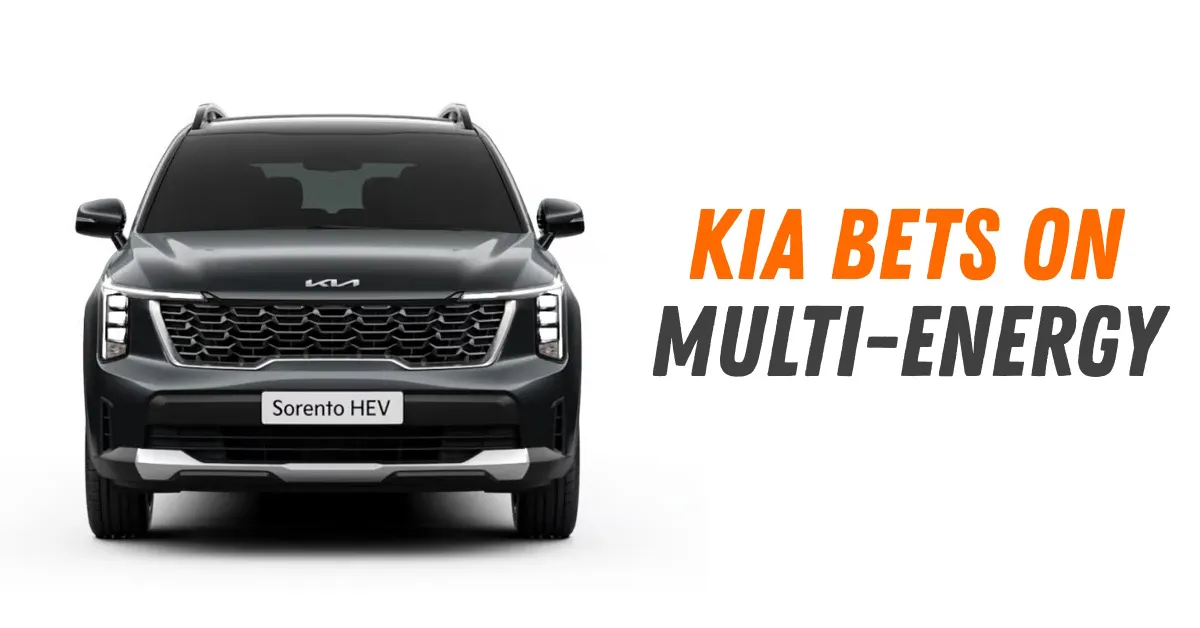
Kia has made its future powertrain strategy unusually clear: it does not intend to bet everything on electric cars.
The company plans to use EVs, strong hybrids and CNG alongside conventional engines, adapting the mix according to demand and price. Its newly launched Sorento shows how broad that approach can be.
The three-row SUV is offered with a strong-hybrid petrol powertrain and a 2.2-litre diesel, with prices ranging from Rs 27.99 lakh to Rs 40.39 lakh. Kia expects around 60 percent of Sorento sales to come from the hybrid and has set an internal target of 4,000 Sorentos a month. At the other end of the market, CNG is being considered for models such as the Sonet.
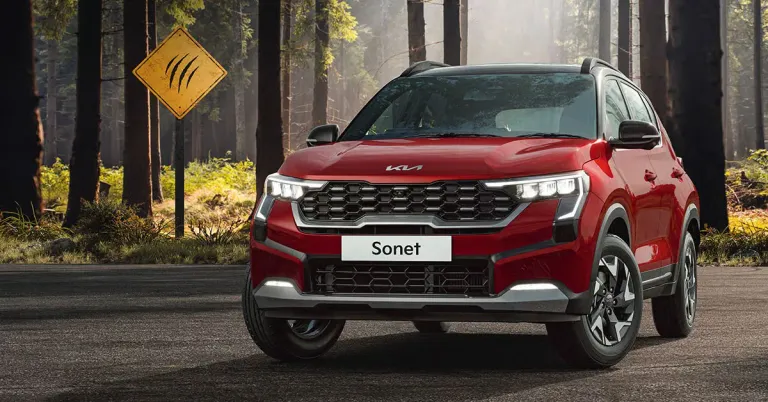
MD and CEO Gwang Gu Lee has ruled out taking the strong-hybrid system down to models such as the Sonet and Seltos for now, citing affordability. Their fuel-saving advantage is useful, particularly in city traffic, but the extra cost becomes harder to absorb in lower-priced vehicles.
Its 1.6-litre turbo-petrol strong-hybrid combines a petrol engine with an electric motor, while the alternative 2.2-litre diesel gives long-distance users another option. Higher variants also offer all-wheel drive. Kia says it is not seeking special government tax incentives for hybrids. Lee’s position is that EVs need government support, while hybrids should be commercially viable without it.
For more affordable cars, Kia sees CNG as another part of the transition. The Sonet is the obvious candidate because CNG demand is already strong in the compact-car and compact-SUV market. Kia has not announced a Sonet CNG launch date, price or final specification, so it should not yet be treated as a confirmed showroom variant.
A factory CNG system can lower running costs without adding an expensive high-voltage battery and electric drive system. That allows Kia to cover customers who want lower fuel bills but are not ready for an EV or cannot charge one conveniently. Diesel is also not disappearing immediately. The Sorento has launched with a diesel option, and Kia continues to sell diesel engines in several high-volume models.
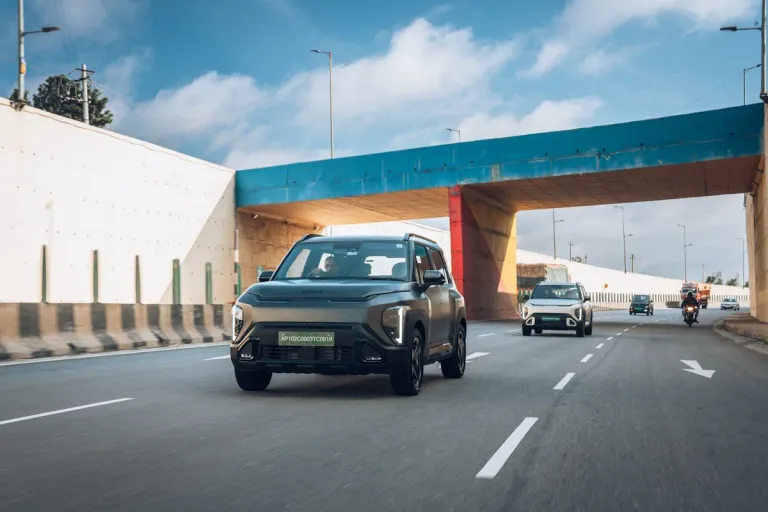
A multi-technology strategy does not mean Kia is backing away from battery-electric cars. Its EV range already stretches from the locally produced Carens Clavis EV to premium electric models, and more electric products are planned. The issue is the speed at which different customers can move.
An urban household with home charging may find an EV straightforward. Someone covering high highway kilometres may still prefer diesel. A city user without charging could find a strong hybrid attractive, while a price-sensitive customer with access to CNG may choose that route. Kia wants products across those use cases rather than trying to force one powertrain into all of them.
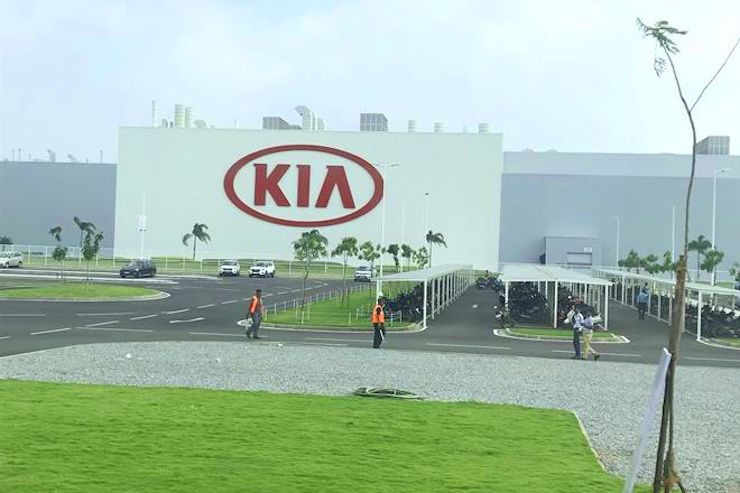
The strategy only works if Kia can build enough vehicles. Its Anantapur plant has annual capacity of around 4.31 lakh units. The company says its immediate goal is to reach 100 percent utilisation and it is evaluating additional capacity, although no expansion decision has been finalised.
The Sorento target alone is ambitious. At 4,000 units a month, it would translate to 48,000 vehicles annually, with roughly 28,800 hybrids if Kia achieves the planned 60 percent mix. That would make the Sorento a hybrid-volume product rather than a niche technology showcase.
Kia’s approach is therefore becoming more segmented. EVs remain central, hybrids enter where customers can absorb their higher cost, CNG can serve more price-sensitive models, and diesel continues where long-distance efficiency matters.
Via ETAuto