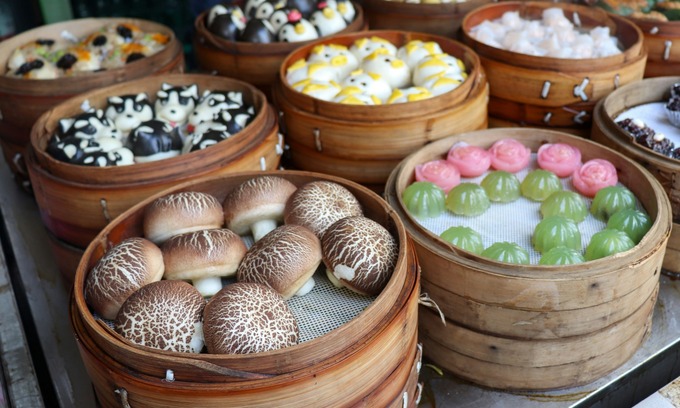
The Lanzhou Intermediate People’s Court in Gansu Province found that Li Huifang, who ran the Heshi Peixin Kindergarten in the city of Tianshui, and its executive principal, Zhu Jinglin, had instructed and organized the addition of toxic materials to food served to children and staff to make it look more colorful and attractive for marketing, Xinhua reported.
In the first-instance verdict delivered on Oct. 16, Li was convicted of producing and selling toxic and harmful food, stripped of her political rights for life and ordered to forfeit 500,000 yuan (US$74,700) in personal assets.
Zhu was jailed for 15 years and fined 300,000 yuan. Four kitchen workers who carried out the instructions received six to eight years in prison, along with fines.
More than 2,000 times the safe lead limit
The case came to light in July 2025, when more than 200 children at the kindergarten were found to have lead poisoning. Police said at the time that canteen staff had bought decorative paint online with Li’s and Zhu’s consent, diluted it and mixed it into food, the South China Morning Post reported.
Laboratory tests confirmed that the paint, clearly marked as unfit for consumption, contained lead. Food samples from the kindergarten contained more than 2,000 times the national safety limit, the newspaper said.
A provincial investigation report released in July 2025 found that pastries colored with the paint had been served to children and staff once a month since May 2024. Of the 251 children tested, 247 had abnormal blood lead levels, Xinhua reported.
All 247 received hospital treatment or home-based nutritional intervention, and their blood lead levels fell by an average of about 40% after treatment, the agency said. Provincial disciplinary authorities also investigated 10 officials, including the director of the provincial health commission and leaders of Tianshui City.
SCMP described the case as China’s worst food safety scandal in almost two decades. Some have compared it with the 2008 melamine scandal, in which about 300,000 children were poisoned after suppliers added the industrial chemical to powdered milk to inflate protein readings.
In a commentary after the verdict, People’s Daily said the case had severely undermined basic food safety standards and called for “zero tolerance” of food safety crimes.
It accused those involved of disregarding lives and health for the sake of a marketing gimmick and urged law enforcement and judicial authorities to investigate and punish every such case they uncover, saying harsh criminal penalties would raise the cost of wrongdoing and force food businesses to respect the rules.
The commentary pointed to guidelines recently issued by the Central Political and Legal Affairs Commission, the party body that oversees China’s police, prosecutors and courts, which call for strict punishment of food safety crimes and name school food as a priority area.