
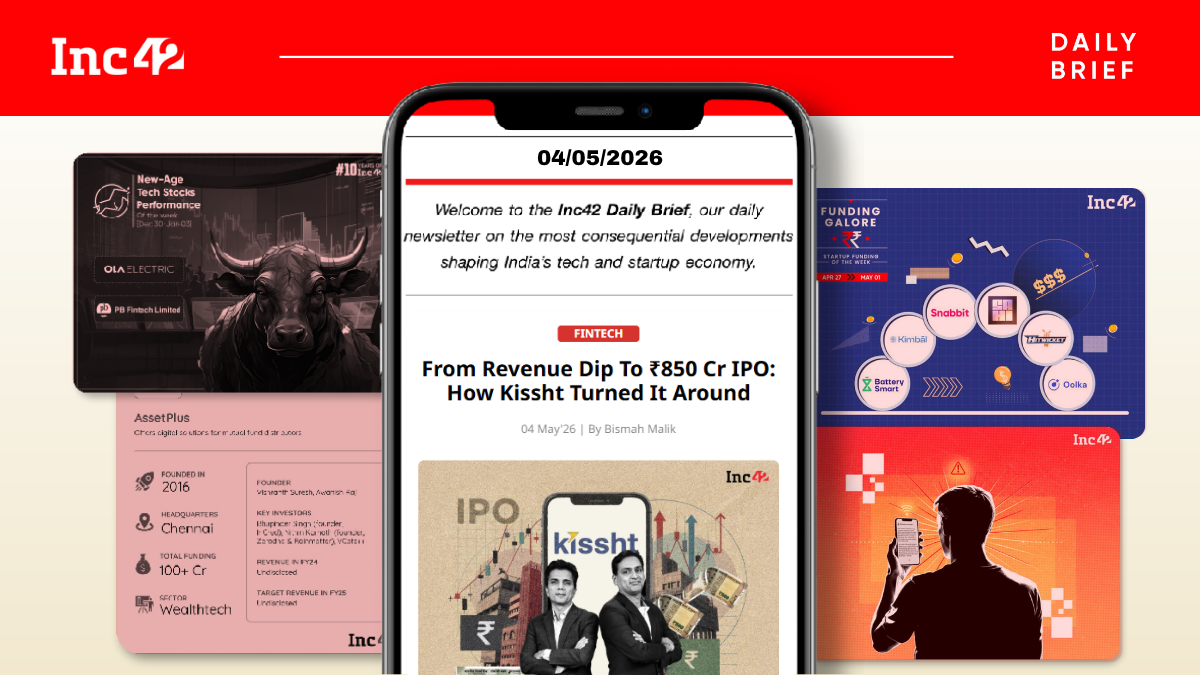

Kissht’s Road To IPO
Kissht’s IPO lands at an inopportune moment. Despite the raging market volatility and the conflict in West Asia, the lending tech is not waiting for markets to calm. Instead, it is banking on its financials, strong anchor interest and a sharper lending play to make a splash on the bourses.
Tactical Retreat: The biggest ace up its sleeve is its bottom line. After a tough FY25, when both its revenue and profit declined due to RBI’s clampdown on unsecured lending, the startup slowed disbursements and focused on low-risk borrowers to preserve profitability and traded volume for high-quality growth. The strategy paid off, as the company roared back with a PAT of ₹199.3 Cr in 9M FY26
AUM Showcase: Another centrepiece of Kissht’s IPO pitch is its AUM growth, which surged 2.2X to ₹5,956 Cr between March 2024 and December 2025. Powering this was its in-house NBFC, which has allowed the company to maintain control over underwriting, loan pricing, and collections. This control has helped the startup manage risk more tightly and build a more efficient credit engine.
Risk Diversification: Whose is also hedging its bets with secured lending. The startup is scaling its loans-against-property vertical, which currently contributes 5% of revenue but offers the stability of long-term assets. By layering on cross-sell products like health insurance, Kissht is deepening its engagement with a base of 11.17 Mn registered customers.
A Calculated Offer: To woo wary institutional backers, Kissht also rejigged its IPO structuretrimming the fresh issue by 15% to ₹850 Cr (versus DRHP) and nearly halving the OFS. On top of this, the two cofounders also bought shares worth ₹40 Cr at a premium of ₹201 apiece, well above the IPO price band of ₹162-171.
By demonstrating that its promoters have their skin in the game, Kissht secured ₹278 Cr from anchor investors and saw its public issue get subscribed 24% on Day 1. While the jury is out on whether the momentum will hold, here is what Kissht is betting on for a successful IPO…
From The Editor’s Desk
📶 What’s The Cell Broadcast Alert System?
- The DoT and the NDMA are testing a new disaster warning system. As a result, millions of Indians on Saturday received alerts on their phones, not due to a real emergency, but as part of a pilot aimed at delivering alerts faster during critical situations.
- The alerts are part of India’s Integrated Alert System, SACHET, which is already operational across all 36 states and UTs. So far, it has mainly used geo-targeted SMS alerts and has been used during cyclones and other emergencies.
- Now, the government is adding a new layer with cell broadcast technology to make these alerts faster and more effective. Cell broadcast sends one message to all phones within the range of a mobile tower, meaning alerts can reach millions in seconds.
📈 Weekly Funding Numbers Rebound
- After weeks of continuous decline, Indian startups managed to raise $204 Mn across 19 deals last week, up nearly 5X from the $39 Mn raised in the preceding week. Snabbit and Sahi topped the funding charts, raising $56 Mn and $33 Mn, respectively.
- Fintech emerged as the most funded sector last week with a cumulative funding of $57.5 Mn across three deals. The Advanced Hardware & Technology segment recorded the highest number of deals, with five startups raising a total of $13 Mn.
- Seed-stage startups raked in $4.6 Mn last week, down 74% from $17.8 Mn raised in the preceding week. Meanwhile, Accel and India Accelerator emerged as the most active investors last week, backing two startups each.
📊 Mixed Week For New-Age Stocks
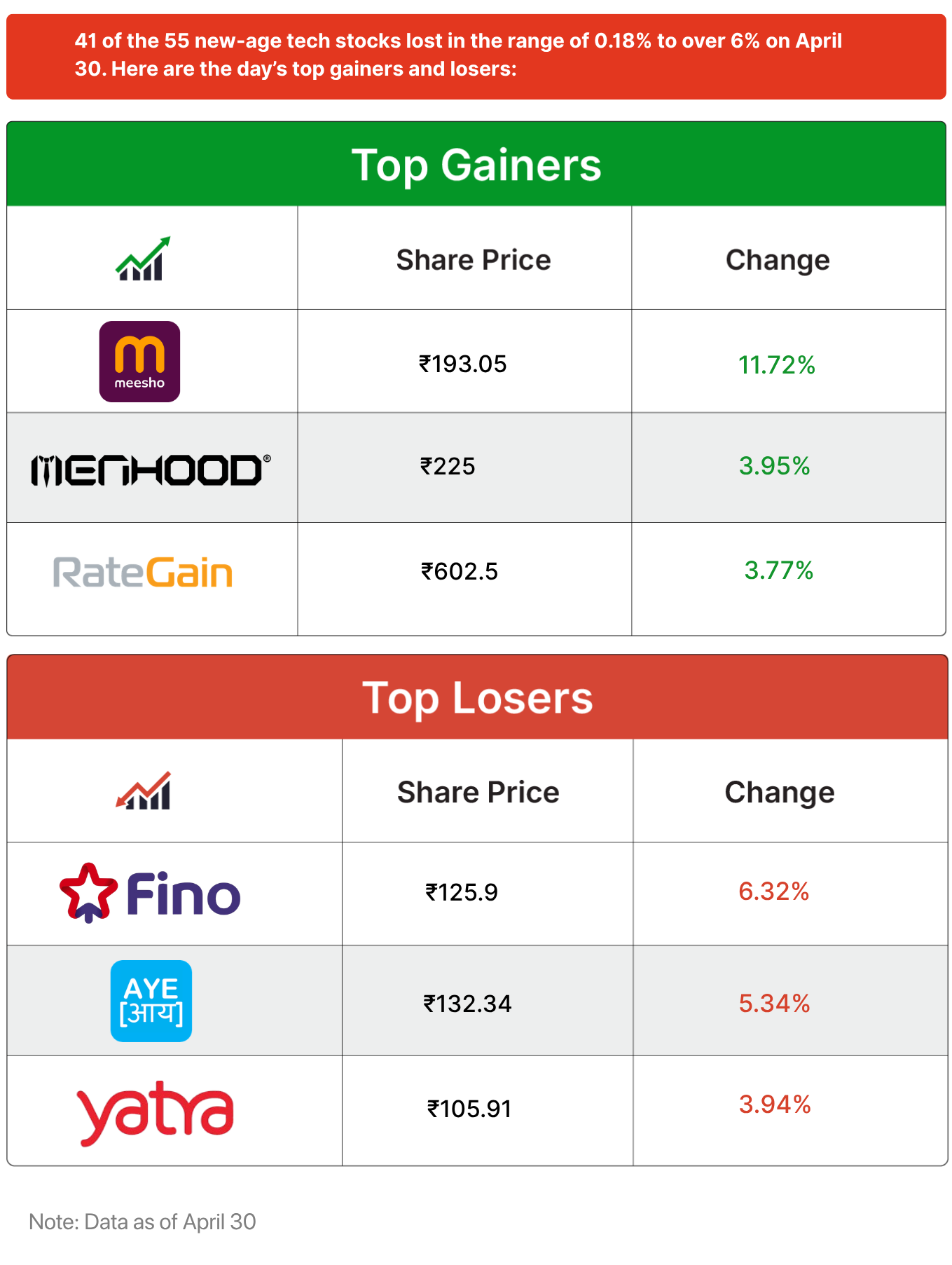
- Of the 56 startup stocks under Inc42’s coverage, twenty-eight gained in a range of 0.16% to over 18% last week, while the remaining fell in the range of 0.12% to 10%. ideaForge emerged as the biggest gainer, while Unicommerce emerged as the biggest loser.
- As a result of FII outflows, weakening Rupee, concerns around inflation and tensions in West Asia, the cumulative market cap of the 56 new-age tech stocks declined to $129.67 Bn at the end of last week from $131.25 Bn a week ago.
- Going ahead, markets are expected to continue to remain sensitive to global cues, particularly crude oil price movement and geopolitical tensions. Domestically, the ongoing Q4 earnings season will be a key trigger, alongside macroeconomic data.
🛡️ Govt Notifies 100% FDI In Insurance
- Weeks after the Union cabinet cleared the proposal, the Centre has allowed up to 100% foreign direct investment in insurance companies under the automatic route. With this, the cap on FDI for the sector has been raised from 74% to 100%.
- As per the government, the move is expected to attract stable long-term investment, facilitate technology transfer, support greater insurance penetration and social protection.
- Under the new rules, FDI in insurance companies will not require prior government approval, but will remain subject to clearance from the IRDAI. However, foreign investment in state-backed LIC remains capped at 20% under the automatic route.
💳 UPI Momentum Slows In April
- The payments infrastructure clocked 2,235 Cr transactions in April, down a marginal 1.3% from 2,264 Cr in March. As per the NPCI data, UPI processed transactions worth ₹29.03 Lakh Cr compared to ₹29.53 Lakh Cr in the previous month.
- However, average daily transaction count stood at 745 Mn in April, up 2.1% MoM, while average daily transaction value stood at ₹96,766 Cr, up 1.6% from ₹95,243 Cr in March.
- The numbers came as NPCI officials held a meeting with smaller players in the UPI ecosystem. The discussions likely focused on proposals aimed at boosting competition and curbing the dominance of PhonePe and Google Pay.
Inc42 Markets
Inc42 Startup Spotlight
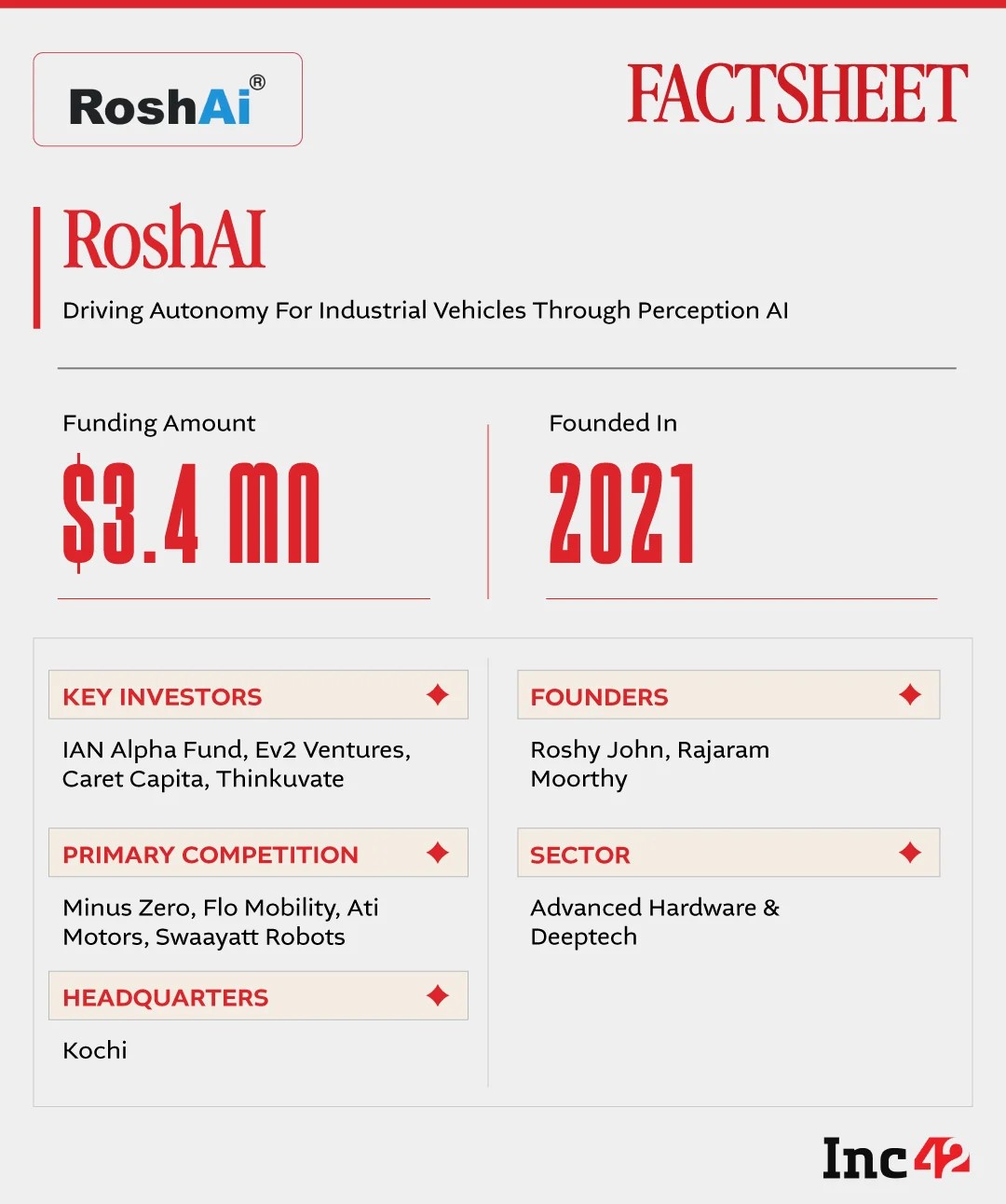
How RoshAi Is Building Driver-Less Trucks For Industries
India’s freight and industrial sectors lose time and money because there are not enough skilled drivers. With younger workers increasingly avoiding trucking jobs, RoshAi is trying to solve this pain point with its autonomous systems that can help fleets run without human drivers.
Retrofitting Autonomy: Founded in 2021, RoshAi retrofits existing ICE and electric fleets with driverless hardware, AI software and cloud-based fleet management. Together, these enable Level 4 autonomous driving for large mining vehicles, boats and trucks operating in industrial environments.
RoshAi claims that its stack is cheaper than employing drivers over a five-year period, while also reducing labour risk and operational bottlenecks.
RoshAi’s In-House Edge: The startup procures hardware through select contract manufacturers in Bengaluru, while designing and testing all its systems in-house. Most components, excluding certain sensors, are sourced domestically, though some specialised parts are imported from Taiwan and the US. As for revenue, it earns through hardware sales, SaaS subscriptions and consulting.
Beyond Mobility: While transport is its primary wedge, RoshAi is also moving into precision manufacturing, especially electronics, where its AI can automate repetitive tasks trained on years of data. That broadens the company’s relevance beyond roads and ports.
The Way Forward: Backed by IAN and working, RoshAi has so far onboarded nine OEMs as clients. Going forward, it plans to expand globally, protect its patents, focus on data to further train its models and scale its AI capabilities.
With an eye on closing FY27 with an operating revenue of ₹50 Cr, can RoshAi make driverless industrial fleets the norm?
Infographic Of The Day
A new crop of D2C brands is emerging that isn’t just selling snacks, but solving health challenges one bite at a time. So, which startups are competing for a piece of the ₹10,000+ Cr silver snacking revolution reshaping the Indian F&B industry?


Comments are closed.