The 2000 film Chocolatstarring Juliette Binoche, Alfred Molina, and Johnny Depp, ends with a surprisingly profound sermon delivered by a relatively non-consequential character played by Hugh O’Conor. In those couple of minutes, O’Conor’s Pere Henri, the young village priest, sums up the essence of what the film—and humanity—stands for: “…We can’t go around measuring our goodness by what we don’t do. By what we deny ourselves, what we resist, and who we exclude. …We’ve got to measure goodness by what we embrace, what we create… and who we include.”
That was 1959 France. The India of 2026 would definitely not agree with Pere Henri.
Double rage
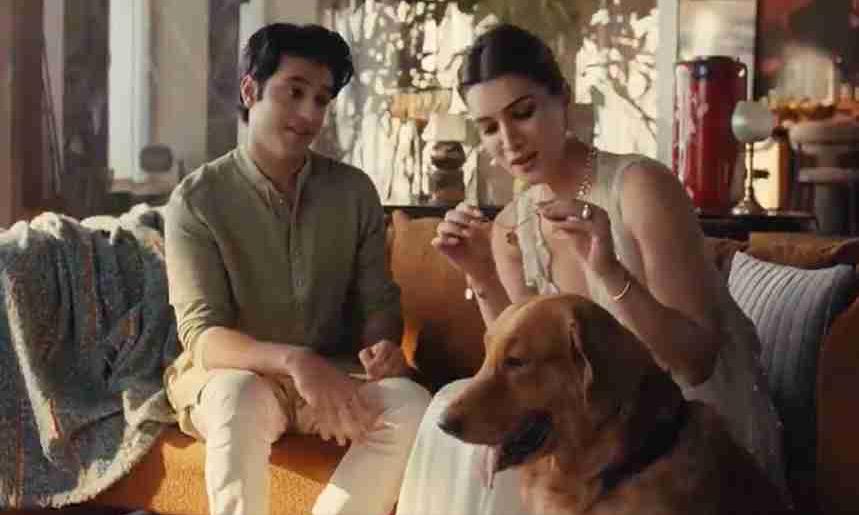
It has become a trend over the past decade. Whether it’s Holi or Diwali or Rakhi, whenever any advertisement centring around a Hindu festival hints at any kind of inclusiveness—be it religious, sexual orientation, or even pets—the puritans and right-wingers seem to get hot under the collar. The latest case in point is Kriti Sanon’s ad for jewellery brand Giva, which has upset fragile sentiments on not one but two accounts.
In the ad, the actor is dressed in an ivory-toned bralette, teamed with what looks like a shrug and a skirt. However, for the self-declared custodians of Hindu religion, the bralette has turned into a “bra”, a “bikini”, or “lingerie” that has obviously not been deemed fit to be worn on a festival like Rakshabandhan, which celebrates the “pure” relationship between a brother and sister.
That is not all. What has also made people see red is her tying the sacred rakhi on the paw of her pet dog. The product in the ad in question is Giva’s new pet collection.
Message for women, from women
Actor and BJP motormouth Kangana Ranaut, who usually has an opinion on everything, from farmers’ and students’ protests to Bollywood nepotism, was the first to react with a detailed critique on Instagram. The essence of her statement was that while the Indian woman today “is a global woman” and she has a host of options in her wardrobe to choose from—“from cocktail dresses to lehenga cholis, jeans to saris, bikinis to salwar kameez”—why would she tie a rakhi on her brother “in your bikini/ undergarments”? She ended her post saying “the advert looks intentionally creepy”.
The next celeb to jump on the bandwagon was a surprise—German actor Suzanne Bernert who works in Indian films with her social media profiles starting with “Har Har Mahadev” written in Hindi. “Less clothes doesn’t mean modern. Less clothes isn’t women empowerment! That’s a lie being sold. Wear the appropriate outfit at the appropriate time. This would have made sense for an ad on a club, not Rakhi,” she posted on X with a video speech to boot.
Also read: Tanishq store attacked in Gujarat a day after trolled ad withdrawn
What these two seemingly emancipated women are essentially trying to say is that even though women have a choice to wear whatever they like, they should know what to wear when to keep society happy.
What about inclusiveness?
While many on social media hit back at Kangana, Suzanne, and the whole right-wing brigade making up the chorus, the message of the ad was lost in the melee—inclusiveness. For many pet owners, the pet is not just an animal. It’s a family member, like a child or sibling, and it is that sentiment the company evidently aimed to cash in on. It’s another matter that the ad now likely has many more viewers than it would have got had the controversy not erupted.
This Giva ad is not alone. It is the latest in a string of ads on Hindu festivals with a message on inclusiveness that have got right-wingers’ knickers in a twist. Who could have imagined that ads celebrating religious harmony or women’s empowerment or LGBTQ representation would draw brickbats by the drove? But in the past decade, India has seen it all.
Why no bindi?
The humble bindi, a tiny dot, has sparked furore far beyond its size and weight on at least two occasions.
In 2021, Fabindia sparked a massive controversy by naming its Diwali apparel collection “Jashn-e-Riwaaz” (an Urdu phrase meaning “celebration of traditions”). Right-wingers slammed the brand for “Abrahamising” a Hindu festival and deliberately excluding traditional symbols like the bindi from their models’ foreheads. The brand faced social media boycott and ultimately deleted the promotion and renamed the line.
Also read: Woman with interfaith marriage backing Tanishq ad files FIR for online abuse
Malabar Gold sparked a similar no-bindi controversy the next year. An advertisement featuring Kareena Kapoor Khan for the auspicious gold-buying festival of Akshaya Tritiya sparked a massive online boycott under the hashtag #NoBindiNoBusiness. Netizens argued that showcasing a married woman without a bindi during a major Hindu religious festival disregarded necessary traditional customs.
No messing with symbols
In 2021, Manyavar faced flak for altering the Hindu wedding ritual of Kanyadaan. The ad featuring actor Alia Bhatt questioned the traditional custom of “giving away” the daughter, portraying it as a regressive practice that treats women as property. The brand proposed an alternative called “I'm sorry” (respecting the bride), but not everyone was ready for the step forward.
Again that year, celebrity designer Sabyasachi Mukherjee faced backlash for a mangalsutra campaign depicting lingerie models in intimate poses wearing the sacred marital piece of jewellery.
In 2021, Dabur too faced backlash for depicting same-sex Karwa Chauth. The Dabur Fem ad depicted a lesbian couple performing Karwa Chauth rituals, inviting immense right-wing backlash and legal threats from politicians who argued it distorted a sacred Hindu ritual. Dabur subsequently withdrew the ad and issued an apology.
We need no unity, thanks
The year before that, in 2020, Tanishq bore the brunt of right-wingers with its ad celebrating an interfaith marriage. In its “Ekatvam” campaign, the jewellery brand depicted a Muslim family organizing a traditional Hindu baby shower (god bharai) for their Hindu daughter-in-law. It was immediately slammed for promoting “love jihad”.
Also read: Fabindia pulls advt after abuse from internet trolls
There have been local-level fiascos too. Earlier this year, multiple local dining advertisements in Kerala drew widespread protests after displaying images of Lord Krishna alongside plates of non-vegetarian food during the spring festival of Vishu. In 2017, celebrity hairstylist Jawed Habib faced intense backlash for a print advertisement ahead of Durga Puja depicting Hindu deities enjoying a spa day at his salon.
Even Save the Children faced flak way back in 2013 for its anti-domestic abuse campaign depicting Hindu goddesses Saraswati, Lakshmi, and Durga with bruises on their faces. In trying to generate a shock value, the NGO faced a dual backlash. While traditionalists objected to the bruising of deities, feminist groups argued that real women should be portrayed instead of deities to drive home the message.
Colours of hate
However, the most intense backlash was perhaps faced by Surf Excel for its iconic “Daag Achche Hain” campaign from 2019, leading to hilarious consequences. The Rang Laaye Sang campaign is perhaps one of the most widely debated festival commercials in Indian advertising history.
The ad featured a young Hindu girl and her young Muslim friend in a neighbourhood setting during Holi. The girl rides her bicycle through the streets and challenges everyone to drench her in colours. Once the entire neighbourhood is exhausted of its colour stash, she takes her little Muslim friend on her bicycle to a nearby mosque for his namaz in clean clothes. The commercial ends with the boy saying he will join her to play Holi after his prayers.
The backlash from Hindu right-wingers was instant. However, the fury went off track when thousands of users mistakenly targeted Microsoft Excel, leaving 1-star reviews on Google Play Store. Surf Excel’s parent company, Hindustan Unilever did not withdraw the advertisement, which went on to accumulate over 200 million views, making it one of the most-watched Holi campaigns in Indian advertising history.
All eyes on content, none on intent
It is unfortunate that most of these ads had at heart a genuine intent of sending across a sweet message. An effort to encourage communal harmony in polarised times. An attempt to include the LGBTQ community in the social fold despite repeated adverse rulings by courts. A shot at telling society that women deserve better than outdated customs that have failed to keep up with social change.
Also read: Diwali is not Jashn-e-Riwaaz: Right-wing leaders slam Fabindia advt
It is one thing to disagree with a message. It is another to go on the warpath, trolling, abusing, calling for boycott, and making personal attacks using the filthiest of language. None of the brands were possibly ever adversely affected by the backlash they faced for their campaigns. In fact, they grabbed more eyeballs because of the controversies. But the bigger question is, is the backlash at all justified?
India was meant to be a country for everyone. The architects of India’s independence took pride in draping the country in a secular fabric. After the Partition riots in 1940s, and Indira Gandhi’s assassination and the anti-Sikh riots in the 1980s, a lot of careful effort was made to keep communal polarisation as far away from people’s consciousness as possible. National integration campaigns like “Mile Sur Mera Tumhara”, Freedom Run, and “Ek Chidiya”, which are all available online, still bring a smile on the faces of Eighties and Nineties kids. It is difficult to imagine what netizens would have made of those campaigns had they been released today.
True, the government of the time never said anything directly, unlike these ads which are more in-your-face. But is using a Hindu festival to spread a message of inclusion and peace a crime? Isn’t that what Hinduism is supposed to stand for? Surely, even the hardcore Hindutva champion won’t deny that.