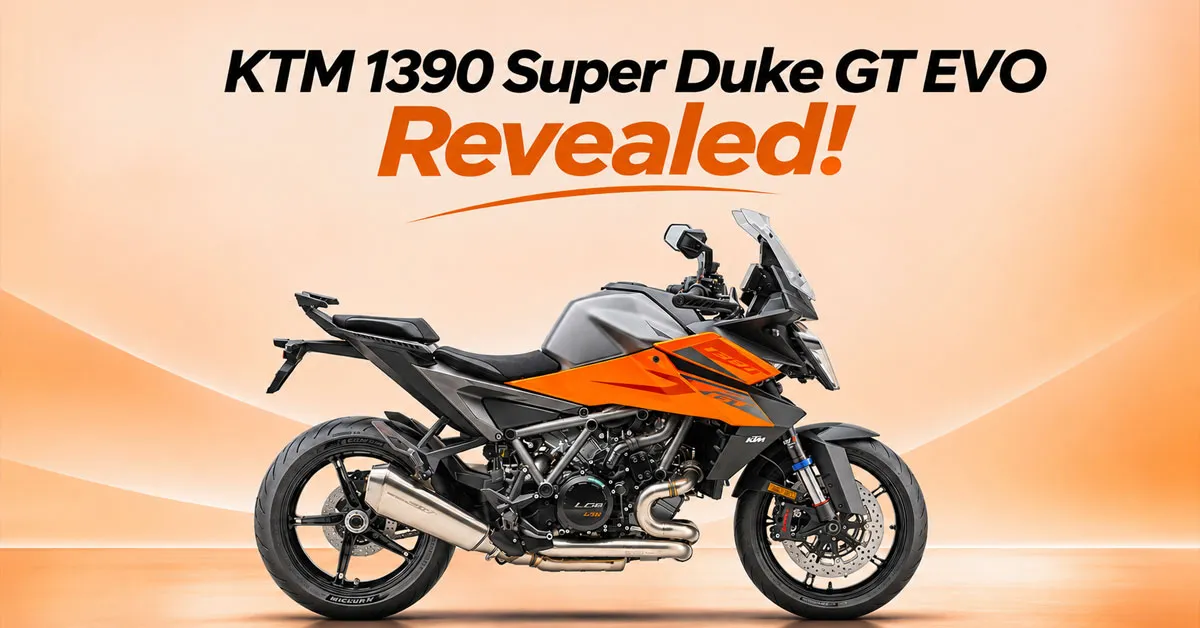
KTM has revealed the 1390 Super Duke GT Evo at EICMA 2026, giving its flagship sports tourer an automated manual gearbox and upgraded suspension. The Evo sits above the standard 1390 Super Duke GT and combines superbike-level performance with the equipment needed to cover long distances. KTM says the new range will reach international dealerships in early 2027. An India launch has not been announced.
The headline feature is the Automated Manual Transmission, or AMT. Rather than simply making a powerful motorcycle faster, KTM has tried to make it easier to ride over long journeys, especially in traffic and on routes that involve frequent gear changes. The gearbox comes alongside a 1,350cc V-twin producing 187hp and 145Nm, so this is hardly a relaxed touring motorcycle with a token sporting badge.
The liquid-cooled, 75-degree LC8 V-twin is closely related to the engine used in KTM’s 1390 Super Adventure S Evo. It produces 187hp and 145Nm of torque, figures that put the GT Evo firmly in the high-performance end of the sports-touring market. Power goes through a six-speed transmission.
The AMT is not the continuously variable transmission used by most automatic scooters. It is an electronically controlled manual gearbox that can select gears for the rider. In automatic mode, the electronics handle shifting and there is no clutch lever to operate. Riders who prefer to choose their own gears can switch to manual selection without returning to a conventional hand-operated clutch.
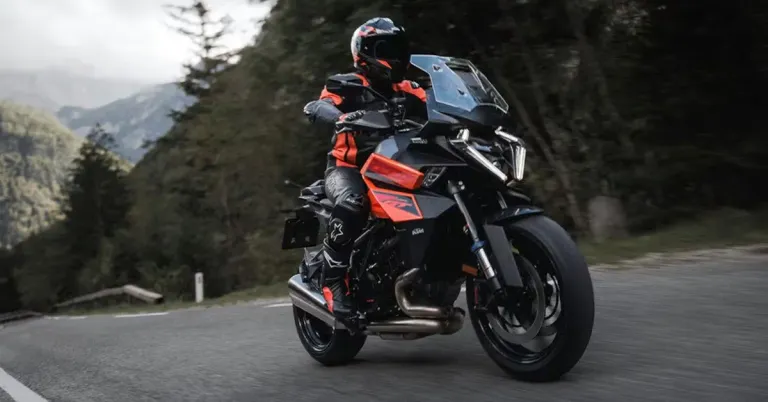
This arrangement should be useful on an otherwise demanding machine. Long-distance riders often spend as much time negotiating cities, toll booths and slow traffic as they do enjoying fast, open roads. Removing constant clutch work could make those less enjoyable stretches easier. It does not turn a 187hp motorcycle into a beginner’s machine, of course. Throttle control, braking and judgement remain entirely the rider’s responsibility.
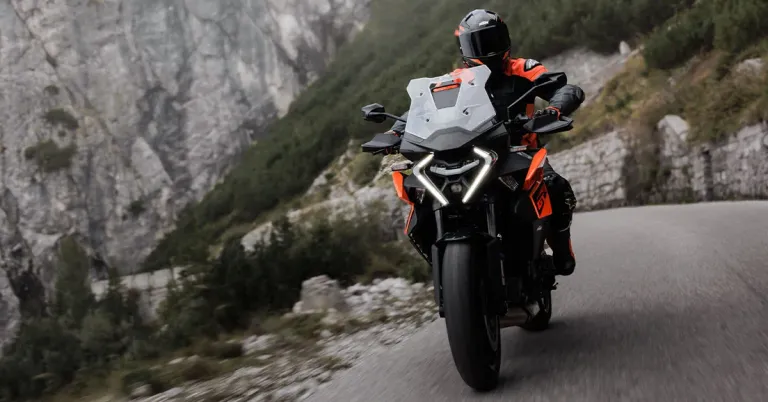
KTM has retained a steel trellis frame and single-sided rear swingarm, with 17-inch wheels at both ends. That wheel choice makes sense for a road-focused sports tourer, rather than an adventure motorcycle expected to deal with rough tracks. Michelin Power 6 tyres are fitted, measuring 120-section at the front and 190-section at the rear. KTM says the wheels save 1.2kg compared with the regular GT.
The bike weighs 213kg without fuel, while the seat stands 834mm off the ground. The tank holds approximately 19 litres. Those numbers give the motorcycle genuine touring hardware but also underline its size. A full tank, riding equipment and luggage will make it substantially heavier than the published dry-of-fuel figure suggests.
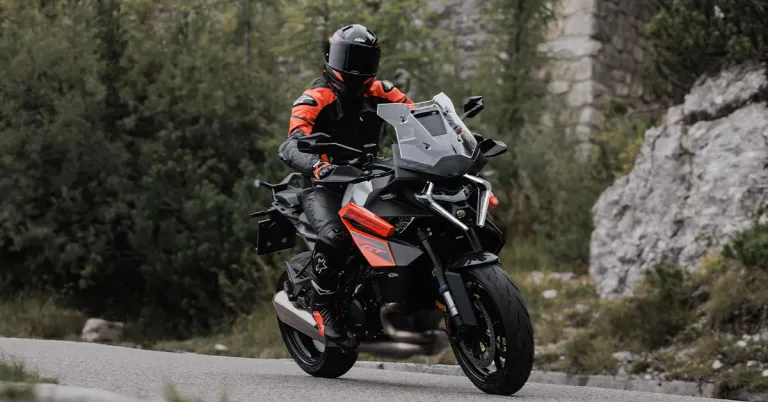
The Evo gets the latest semi-active WP Apex suspension. At the front is a 48mm upside-down fork with KTM’s thru-rod design; at the rear is a linked monoshock. Electronic damping adjustment and rear preload control allow the motorcycle to adapt its suspension behaviour to the riding situation. It should give the owner greater flexibility between enthusiastic solo riding and carrying a passenger or luggage, although actual ride comfort will need road testing.
Braking hardware is equally serious: twin 320mm front discs with Brembo Stylema four-piston monoblock callipers and a 240mm rear disc. Cornering ABS and traction control are part of the electronic safety package. That matters on a machine capable of gathering speed very quickly, especially on wet or unpredictable surfaces.
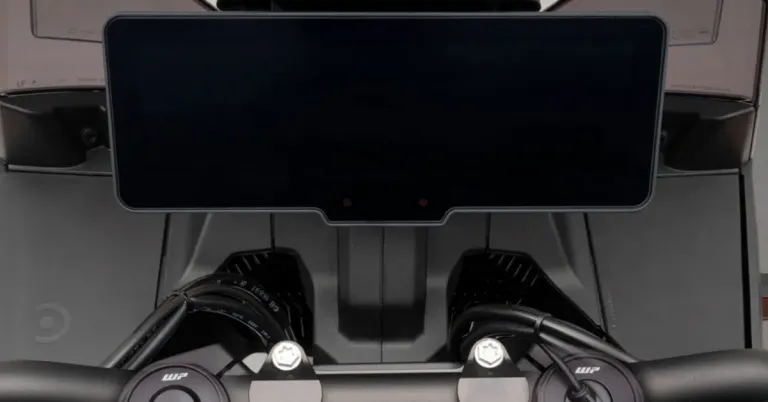
The 1390 Super Duke GT Evo comes with an 8.8-inch horizontal TFT touchscreen. The updated system supports onboard offline map navigation, which could be useful on routes with unreliable mobile reception. There is also an adjustable windscreen, an integrated phone mount and revised seats for the rider and passenger.
KTM has given the rider some room to adjust the ergonomics. The handlebar position can be changed, while the controls have been designed to offer further adjustment. The lighting package includes cornering lights and a redesigned headlamp. Taken together, these details show that KTM expects owners to use the GT Evo for far more than short weekend rides.
The difficult question is not whether the GT Evo is fast enough. With its engine output, braking equipment and chassis hardware, performance is unlikely to be the concern. What remains to be seen is whether the clutchless gearbox feels natural at low speeds, how well the semi-active suspension deals with broken roads and whether its riding position stays comfortable after several hours.