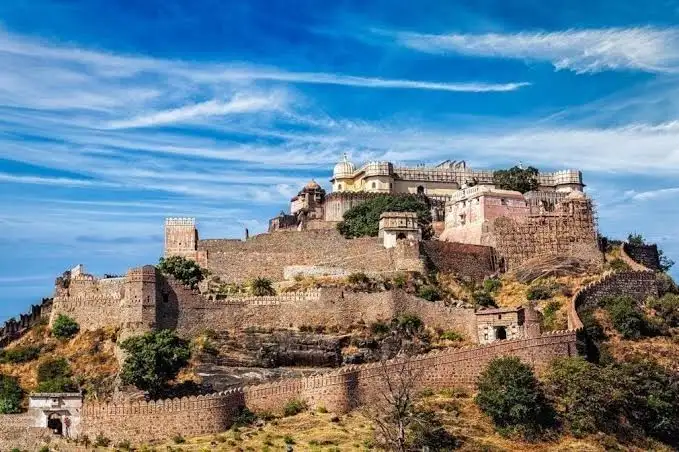
Kumbhalgarh Fort, nestled among the Aravalli Hills in Rajasthan’s Rajsamand district, symbolizes Mewar’s glorious heritage. With its massive stone walls, towering hills, and robust defenses, it is considered one of Rajasthan’s most significant forts. Not only is the fort renowned for its architectural excellence, it also holds deep ties to Mewar’s history and Maharana Pratap.
It was built by Maharana Kumbha
Kumbhalgarh Fort’s present form was developed in the 15th century during the reign of Maharana Kumbha, ruler of Mewar . According to historians, the fort’s construction and expansion took place between 1443 and 1458. The fort was built on a high hill in the Aravalli Range, making it naturally secure.
Maharana Kumbha built and rebuilt several forts to strengthen the defenses of Mewar, Kumbhalgarh being one of the most important.
36 kilometer long wall
Kumbhalgarh’s most striking feature is its massive ramparts. Often described as stretching nearly 36 kilometers , it is so wide in places that it is popularly said that several horses could walk on it simultaneously.
This massive wall, combined with the fort’s natural hill defenses, made it extremely strong.
Maharana Pratap was born here
Kumbhalgarh’s history is also linked to Maharana Pratap . It is believed that Maharana Pratap was born in Kumbhalgarh in 1540. Therefore, this fort holds a special place in Mewar’s history.
Maharana Pratap fought for Mewar’s independence against the Mughal emperor Akbar. The Battle of Haldighati and the subsequent conflict are considered significant events in Rajasthan’s history.
Several temples inside the fort
Kumbhalgarh was not only a military fort. Its complex also houses numerous temples, including those associated with both Hindu and Jain traditions. The Neelkanth Mahadev Temple is one of the fort’s most prominent religious sites.
The palaces, temples, stepwells and other historical structures within the fort reflect its grandeur and the architectural prowess of the time.
It was not easy for the enemies to win
Kumbhalgarh was considered strategically important in the Mewar defenses. Situated on a high hill and with strong walls, the fort was extremely difficult to reach and conquer.
The fort has been attacked numerous times throughout history, but its natural and military defenses have kept it an important fortress for a long time.
Part of the World Heritage
Kumbhalgarh Fort is today one of the major tourist destinations in Rajasthan. It is part of the “Hill Forts of Rajasthan” group, a UNESCO World Heritage Site . This group includes six major hill forts in Rajasthan.
Today, tourists from India and abroad come here to see the huge wall of the fort, palaces, temples and the spectacular views of Aravali.