
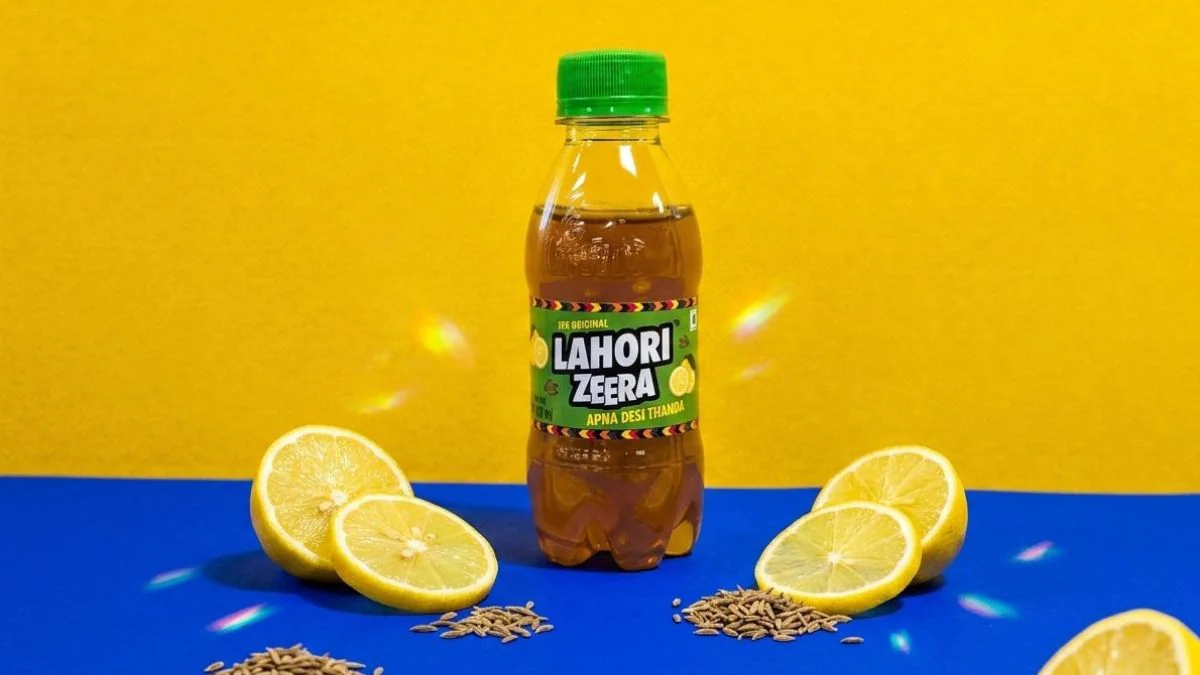
Lahori Zeera: How A 10-Rupee Indian Drink With A Pakistani Name Became A Rs 800-Crore Company

In India, irrespective of how small a shop, restaurant, or dhaba you visit, there is often a fridge installed outside, loaded with aerated drinks like Coca-Cola, Pepsi, Sprite, Thumbs Up, etc. The American drinks are much easier to spot in local markets than vendors selling sugarcane juice, bel sharbat, kokum sharbat, or aam panna.
While Indian beverages are quietly replacing aerated drinks on the menus of restaurants, Lahori Zeera‘s desi-flavoured quenchers are breaking the monopoly that foreign brands have enjoyed so far. But it did not happen overnight. The company became a multi-crore business by not only rebranding roadside drinks but also by playing on nostalgia.
If you grew up in a Tier 2 or Tier 3 city or a small town in India, aerated drinks came into the spotlight whenever a guest visited your house, or they were served during gatherings and weddings. But when it came to quenching thirst while maintaining electrolytes in the body, the most common options were shikanji, nimbu pani, banta, or aam panna.
When three cousins - Saurabh Munjal, Saurabh Bhutna, and Nikhil Doda – came together, they founded Lahori Zeera in 2017. It is a brand that sells roadside drinks with a Pakistani name in trendy, hygienic bottles, featuring catchy labels. They kept the taste of homemade Indian drinks intact but added fizz.
Tapping into India’s billion-dollar beverage market, the three cousins served nostalgia sealed in bubbling drinks with tangy notes, leaving you smacking your lips-quite literally.
How Three Cousins Built Lahori Zeera
The three cousins were reportedly raised in Punjab, a state that celebrates food like no other. Their childhood memories included enjoying goli soda sprinkled with kala namak (black salt) and jeera (cumin powder), with each sip bringing tangy notes, often leaving their tongues searching for every last bit of flavour.
Not just in Punjab, this is a common summer ritual that children and adults indulge in across India. It not only offers respite from the tropical heat but also makes you feel refreshed. However, the drinks that ruled Indian markets did not contain traces of black salt, cumin, or lemon juice.
This was where they saw a gap in the market and decided to give Indians a taste of their childhood in travel-friendly bottles. In 2016, Nikhil Doda, with no prior experience in creating beverages, combined black salt, cumin powder, and lemon juice. The drink immediately reminded them of the beverages they grew up relishing at home or on the streets.
“We’re first cousins, the same age, and have grown up together. This built a deep bond and an instinctive understanding between us. Doing something together was always the dream. After exploring several options in the F&B space, we decided to focus on Indian beverages because we believed this category had immense potential to grow,” Nikhil Doda told. 30Stades.
They sourced second-hand machines, repaired them, and conducted informal tasting sessions with local kirana store owners, roadside tea stall owners, college students, and auto drivers.
They tried permutations and combinations before perfecting the formula of the drinks that had a perfect balance of spices, flavour, and fizz. They wanted people to be transported back in time with their first sip.
“We felt this gap wasn’t an observation; it was an opportunity. We started with a very small manufacturing facility in Punjab, but the intention was clear- to focus solely on ethnic Indian drinks,” he added.
With a 160 ml bottle priced at Rs 10, the co-founder said, “We ensured the beverages remained budget-friendly without compromising quality.”
Why did they name the brand Lahori Zeera? If you are even slightly familiar with the history of India’s Partition, you would know that Lahore in Pakistan and Indian Punjab share a cultural and linguistic heritage. In fact, Lahore is hardly 50-55 km from the Wagah-Attari border in Amritsar.
The trio chose this name because it evokes cross-border nostalgia. “Zeera” for “jeera” struck a chord immediately, with its musky, woody, slightly bitter, and earthy notes instantly transporting you inside an Indian kitchen.
Lahori Zeera Taking Over The Indian Beverage Market
Since its inception in 2017, Lahori Zeera has steadily penetrated the Indian beverage market. In the financial year 2024, its revenue stood at Rs 312 crore, which jumped to Rs 540 crore in FY 2025, according to Entrackr.
Today, Lahori Zeera has a loyal and ever-growing clientele. In May 2025, the company raised Rs 200 crore from Motilal Oswal Wealth, bringing its valuation to Rs 2,800 crore, according to The Economic Times. Despite significant market capture, the brand is reportedly not investing heavily in marketing. Instead, it is focusing on strengthening core operations, improving retail reach, and widening distribution.
The brand’s foremost priority remains expanding the production capacity, widening distribution, and
The majority of its sales come from beverages, including the original Lahori Zeera, Lahori Shikanji, Lahori Nimboo, Lahori Kacha Aam, Lahori Gimboo, and Lahori Imli Banta. The jeera-based drinks are manufactured by Archian Foods, and the brand closed the financial year 2026 at around Rs 775 crore in revenue and Rs 60 crore in EBITDA, according to The CapTable.
Speaking to the publication in April 2026, Saurabh Munjal said, Saurabh Munjal shared, “This is not a function of what we could sell, but more a function of what we could make,” adding, “This is the maximum that we could manufacture, based on the bottling capacities that we have.”
Lahori Zeera initially started with a team of 20 people and has now scaled up to over 1,800 employees and contractual workers.
What began as a roadside-style beverage brand rooted in childhood nostalgia is today a reminder that memories, when bottled with intent and scale, can build a multi-crore business.
Also Read | Dal Dhaba, Macchi Tikka, Bhatinda Chicken: How Noida’s Dhaba Estd.1986 Reintroduced Classic Indian Food In A Modern Setting

Comments are closed.