
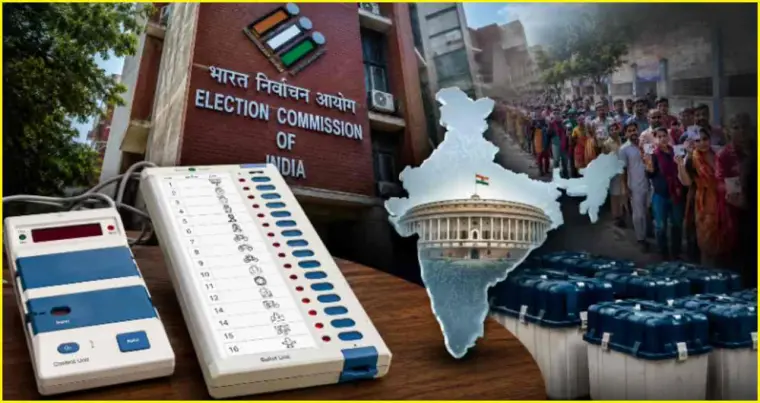

Amid ongoing discussions regarding possible delimitation of Lok Sabha seats in the country, the Election Commission is preparing to purchase new Electronic Voting Machines (EVMs) and upgrade the existing machines.
New Delhi: Preparations for the 2029 Lok Sabha elections in India seem to be starting ahead of time. The Election Commission (ECI) has proposed financial assistance of over Rs 500 crore from the central government for the purchase of new electronic voting machines (EVMs) and strengthening the existing electoral infrastructure. This step has been taken keeping in mind the increase in the number of polling stations in the coming years and the need to replace the aging machines.
According to reports, the Election Commission aims to make the 2029 Lok Sabha and assembly elections of various states smooth, secure and technically efficient. The process of procurement of new machines and replacement of old units will be completed in the next few years.
Why is there a need for new EVM?
There are two major challenges before the Election Commission. First, the possible increase in the number of polling stations in the country and second, the completion of the prescribed age of the existing EVM machines. According to experts, several EVMs and control units were purchased during 2013-14. The average working life of these machines is considered to be around 15 years. In such a situation, by 2029, a large part of them will have completed their service period and it will be necessary to replace them.
Furthermore, the Election Commission has adopted a policy of increasing the number of polling stations so as to provide better facilities to voters and make the voting process more convenient.
How many machines will be purchased?
As per the proposal, the Election Commission is planning to purchase around 3.57 lakh new ballot units and 1.25 lakh control units. The ballot unit is the part where the voter registers his vote, while the control unit operates and controls the voting process. The supply of these machines is targeted to be completed by 2027 after completion of necessary technical trials and quality checks, to ensure adequate preparation before the 2029 general elections.
According to media reports, the Election Commission has required an amount of more than Rs 500 crore for this project. According to the information, the Government Expenditure Department has given financial approval of approximately Rs 512.4 crore. Under the new cost structure, the estimated price of one ballot unit has been fixed at Rs 8,577 and the price of one control unit has been fixed at Rs 9,737. It is being told that special attention has been paid to cost control and technical improvements in the new procurement.
The increasing number of polling stations is also a big reason
An important reason behind purchasing new EVMs is the expected increase in the number of polling stations. Earlier, around 1,500 voters were accommodated at a polling booth, but now this limit has been reduced to 1,200 voters per booth. Its objective is to make the voting process more systematic and convenient for voters.
Due to this change, while about 10.53 lakh polling stations were established in the 2024 general elections, their number is expected to increase to about 15.39 lakh by 2029. The need for additional EVMs and control units will naturally increase for more polling stations.
Existing resources with the Election Commission
At present, about 30.77 lakh ballot units, 22.14 lakh control units and about 24 lakh VVPAT machines are available with the Election Commission. The VVPAT system provides voters with a visual record of their vote confirmation and is considered an important means of increasing transparency in the electoral process. However, with the retirement of older machines and the increase in the number of polling stations, existing resources are not considered sufficient to meet future needs.

Comments are closed.