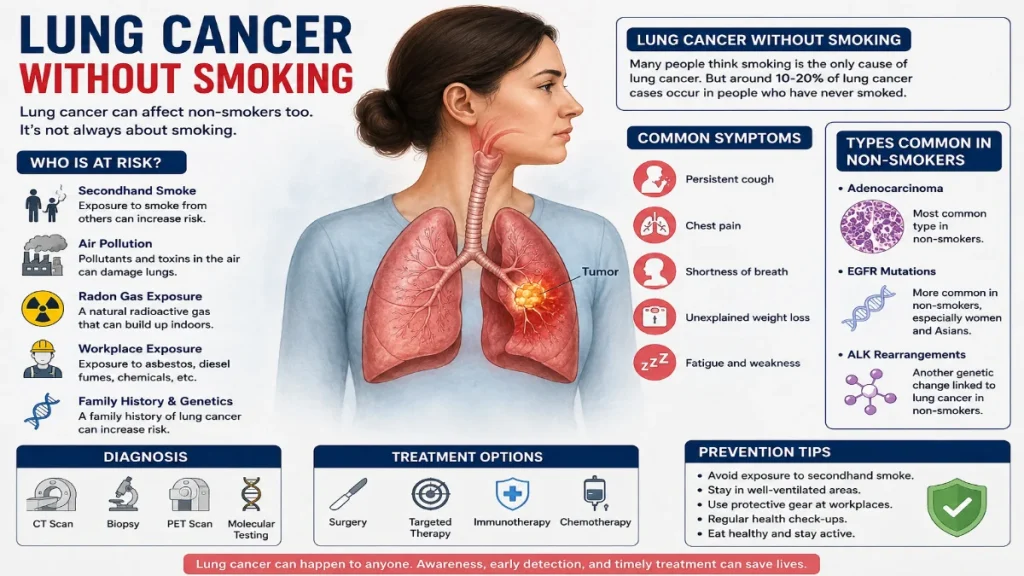
If you think that only cigarette smokers get lung cancer, you’re wrong. Every month, hospitals in Delhi-NCR see dozens of patients who have never touched a cigarette, yet they are battling the deadly disease of lung cancer. The city’s toxic air, vehicle exhaust, and indoor pollution are corroding people’s lungs just as much as chain smoking.
Lung cancer without smoking: Toxic air and polluted homes are killing us.
Not smoking, but city pollution is the real reason
Medical practice and recent clinical data clearly indicate that it is a grave mistake to consider lung cancer solely a “smoker’s disease.” Certain habits and compulsions of urban life are increasing this risk manifold. The biggest cause is air pollution. Years of breathing in fine particulate matter like PM (PM 2.5 and PM 10), dust from construction sites, and industrial smoke are eroding the lungs. Living in large cities like the capital is equivalent to smoking several cigarettes daily.
Beyond the outdoor air, our indoor environments are also unsafe. Secondhand smoke, biomass cooking fuel, poor kitchen ventilation, and direct exposure to harmful chemicals are weakening the lungs. Furthermore, people who work around asbestos, silica dust, and diesel fumes, those with a family history of tuberculosis, and those with a history of tuberculosis are at higher risk.
Doctors’ warnings and concerns
“The most worrying thing is that lung cancer symptoms don’t appear in the early stages. By the time a patient experiences symptoms like coughing, blood in the sputum, or severe chest pain for weeks, the disease has already spread throughout the body. Most patients come to us in the advanced stage.”
— Senior Pulmonologist, City Hospital, New Delhi
Alarm bells: symptoms and what next?
Citizens must now take even small changes in their bodies seriously. If you experience a persistent cough, sudden weight loss, frequent chest infections, or difficulty breathing, contact a doctor immediately.
However, there is hope in terms of treatment. Minimally invasive surgery, modern diagnostic tools, new medications, and immunotherapy can control this disease. Older adults or those in high-risk categories should undergo a low-dose CT scan annually. This can help detect the disease early.
Given the rising pollution levels in the city, it is important to avoid going out when the AQI is poor, improve ventilation in homes, and make routine checkups a part of your daily routine.