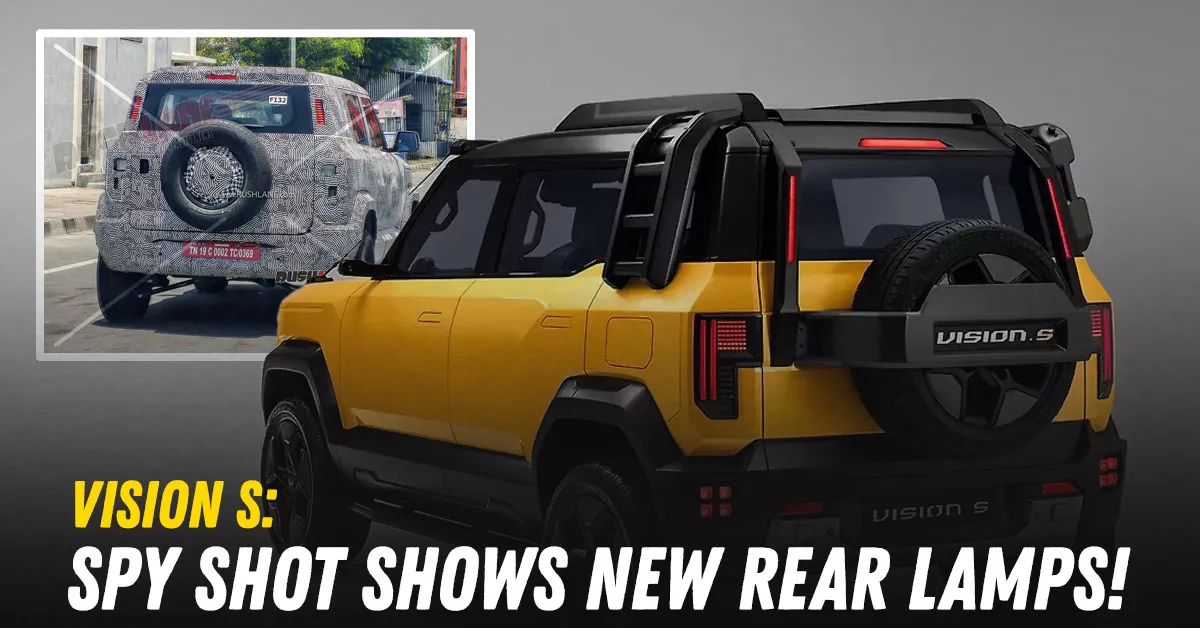
Mahindra’s upcoming Vision S-based SUV has been spotted again, and this time, the sighting has revealed an important design change (read detail) at the rear. The prototype has been seen with slim vertical tail lamps integrated into the rear pillars, like what we see on the two Scorpio models. The spy pictures, published by Rush Lanehave fuelled speculations that the production model would be placed as a mini-Scorpio, in the sub-four metre segment. They show the tyre sizes and the rear suspension setup.
The biggest change on the latest Vision S test mule is the position and design of the rear lighting elements. It gets slim vertical lamps placed alongside the rear windscreen. Each unit features stacked horizontal red lighting elements. Unlike the temporary lamps seen on earlier test mules, these appear to be better integrated into the design.
What makes this interesting is that the original Vision S concept from 2025 had a different approach to its rear styling. It had its tail lamps positioned lower down, on either side of the spare wheel. It, however, had vertical light strips near the rear glass, mounted on an external structure (which looked like an accessory). They were not directly integrated into the D-pillars. The latest prototype is therefore a clear evolution of the original concept’s design.

The test mule also shows separate rectangular lighting units lower down, on both sides of the tailgate-mounted wheel. The exact function of these cannot be confirmed from these sightings. We can also see a rear wiper and a registration plate mounted on the bumper.
The new tail-lamp arrangement immediately brings the Scorpio family to mind. Both the Scorpio Classic and Scorpio-N use tall rear lamp assemblies that extend vertically alongside the rear glass. The Vision S prototype follows a broadly similar layout, although the lighting elements have a different design.
Mahindra has not revealed what the ‘S’ in Vision S stands for. There has been speculation that the production SUV could be called the Scorpio Sport, and the latest design could add some weight to that theory. However, the latest sighting does not confirm the production name.

If Mahindra eventually positions this SUV as a sub-four-metre Scorpio, it would become the smallest member of the family. The existing Scorpio range contributes around 15,000 units a month and remains an important part of Mahindra’s portfolio. A smaller model could potentially take the Scorpio nameplate to a wider group of buyers and bring about much bigger numbers.
The latest spy shots also provide some clues about the Vision S’s wheel and tyre setup. The sidewall marking on the spare tyre appears to read 235/70 R16. It seems to be running on 16-inch wheels with wide 235 mm tyres that have tall sidewalls. This profile should provide a good amount of cushioning over broken and uneven roads.
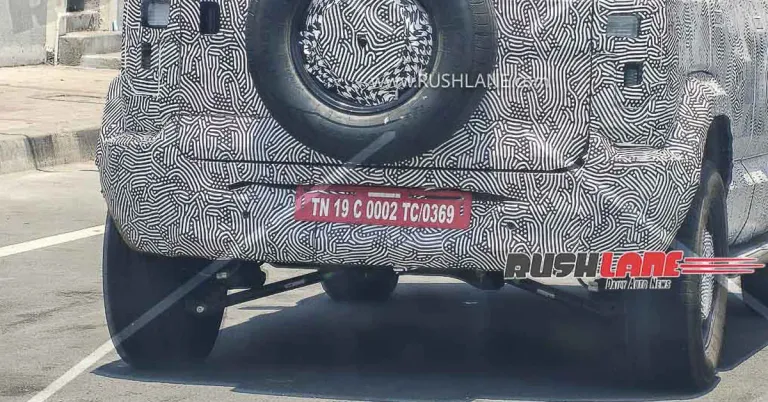
The underbody images reveal another interesting detail. Rear suspension links can be seen extending inwards from the wheel areas. This suggests the presence of an independent rear suspension system. However, the available photographs do not show enough of the complete assembly to conclusively establish the same.
If independent rear suspension makes it to the production version, it would be an important mechanical feature for a sub-compact SUV.

Earlier spy shots had already provided a glimpse of the Vision S’s interior. The test vehicle featured a dashboard with two horizontal displays, vertical AC vents, panoramic sunroof, and an electronic parking brake. They also carried temporary test equipment inside. The design of the final form’s cabin remains under wraps for now. That said, we know that the production-spec will come with a modern, tech-heavy interior.
The production-spec Vision S is expected to be based on Mahindra’s NU_IQ platform and will have a front wheel drive (FWD) configuration. Speculations suggest that Mahindra could take a multi-powertrain approach with this product- petrol, diesel, hybrid, and electric versions are expected. The carmaker has yet to confirm anything on this front officially.
The production version is expected to debut in August 2027. Until then, spy sightings such as this will continue to supply clues and fuel speculations.