
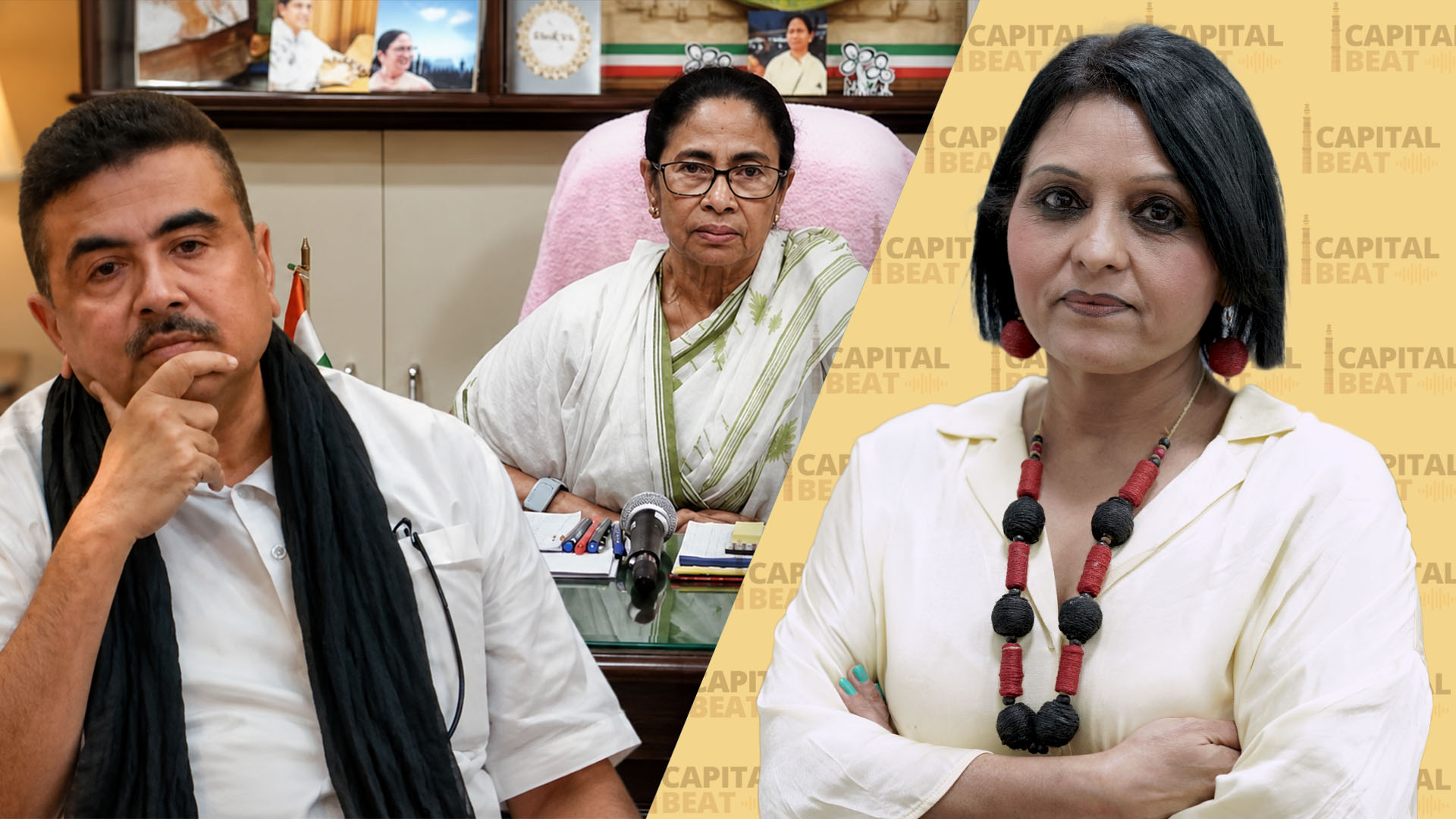

Trinamool Congress (TMC) founder Mamata Banerjee has cautioned the Bharatiya Janata Party (BJP) that in order to silence her, it has to kill her. The former West Bengal chief minister’s stern words in a video message have come at a time when her party is facing challenges both externally, from the saffron party that won power in the state, and internally, thanks to an implosion both in the state Assembly and Parliament.
Also read: What Mamata’s direct takeover of Bengal Trinamool unit signals after Chandrima exit
The Federal discussed in this episode of Capital Beat the firebrand leader’s renewed stance with a panel including senior journalist Shikha Mukherjee, Bengal BJP Minority Morcha president Charles Nandi and the Congress’s national spokesperson Chandan Ghosh Choudhury. Does Mamata’s message mark the beginning of a political resurgence or is it just an attempt to energise her beleaguered party ahead of its annual July 21 Martyrs’ Rally?
Political message
Mamata, in her message, alleged that the state’s ruling BJP had subjected TMC leaders to harassment and humiliation, and named MPs such as Mahua Moitra, Abhishek Banerjee, and Kalyan Banerjee, who have remained loyal to her, as those who had faced attacks.
She claimed that several party workers had been jailed under humiliating conditions, alleging that some had been forced to sleep on floors, paraded with ropes around their waists, got their heads shaved, or had substances thrown at them.
The former CM said such measures would not succeed in weakening the TMC.
Mamata’s July 21 rally strategy
Mukherjee said the statement needs to be read in its political context, not just its literal English translation. She noted that timing matters, coming just before TMC’s annual July 21 rally, suggesting Mamata is building momentum ahead of the event while countering dissident leaders who claim to represent the “real” TMC.
The journalist also flagged another remark from the same speech—Mamata saying she was “not that easy to ignore or kill off”—reading it as directed at gauging reaction within her own organisation, rather than from opponents.
Mukherjee dismissed claims that Bengal’s opposition had vanished after the BJP’s win, saying it had instead grown more active through localised protests rather than mass rallies. These scattered grassroots movements, she argued, were harder for the ruling establishment to control since they spanned multiple regions rather than one unified campaign.
Also read: Mamata slams BJP, cops over TMC rally brawl despite HC permit: ‘Is this democracy?’
She added that recent law-and-order controversies had opened political opportunities for opposition parties, questioning whether the government’s “zero tolerance” pledge on crimes against women had produced real institutional action or simply “mob justice”.
Nandi dismissed the TMC founder’s allegations, accusing her of practising “politics of lies, gimmicks and dramabazi”.
He argued that the BJP had no reason to politically eliminate the former CM because, according to him, she had already lost public support in the state.
Responding to allegations of harassment, Nandi said the previous TMC government itself had been criticised by the courts over law and order, referring to observations made by the Supreme Court and the Calcutta High Court.
Too early to write off Mamata, feels Congress
Ghosh Choudhury said history shows defeated political leaders can make strong comebacks when political circumstances change.
According to him, the BJP government itself may have created the conditions for Mamata’s re-emergence by what he described as an increasingly intolerant style of governance.
Also read: What went wrong for Mamata Banerjee and what lies ahead for TMC? | Capital Beat
He faulted the government’s law-and-order approach, saying the chief minister’s remarks on criminal matters overstepped executive bounds. Ghosh Choudhury also asked how a party with a decisive win faced criticism so soon, citing swift public dissatisfaction.
Mukherjee said Mamata has only “stepped out of the door” politically, not fully returned to the streets, with her focus on grassroots workers signalling an effort to rebuild the party’s base.
Also read: TMC’s double coup and Mamata’s silence: Martyrs’ Day will be her last test
Nandi, comparing her to Indira Gandhi, argued that her age and the loss of former allies make a comeback unlikely. Ghosh Choudhury countered that history shows leaders can re-emerge when governments open space for opponents. The panel agreed that Mamata’s next moves will reveal whether this signals wider mobilisation.

Comments are closed.