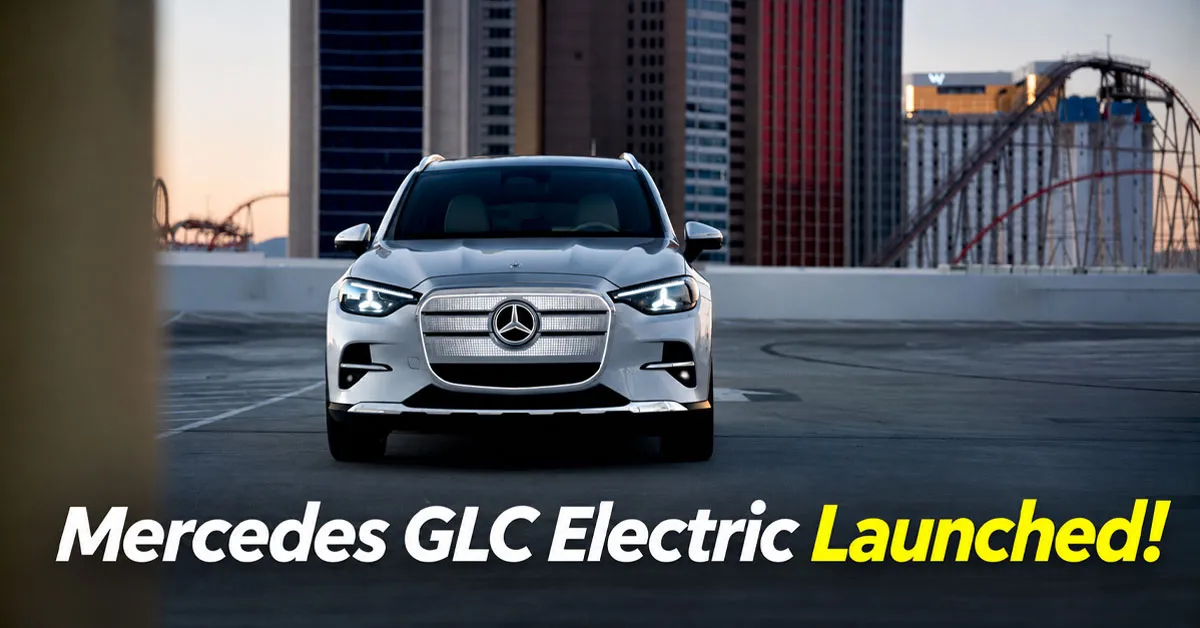
Mercedes-Benz has launched the GLC Electric at an introductory ex-showroom price of Rs 78.5 lakh. The electric SUV is being assembled at the company’s Chakan factory near Pune and is available in a single GLC 400 4MATIC variant. Mercedes says it has already received more than 1,000 bookings, with its initial production allocation sold out until March 2027.
That is a notable start for an electric SUV costing nearly Rs 80 lakh. It is also priced remarkably close to the petrol and diesel GLC, which are listed at about Rs 77 lakh ex-showroom. The electric model costs only around Rs 1.5 lakh more before registration and insurance, although buyers should compare actual dealer quotations and equipment before drawing conclusions about value.
The GLC Electric uses a 94kWh battery powering two electric motors, one at each axle. Combined output is approximately 490hp and 800Nm, with all-wheel drive as standard. Mercedes claims a 0-100kph time of 4.3 seconds. This makes it much quicker on paper than the regular petrol and diesel GLC, even though the electric model weighs around 2.5 tonnes.
The latest India launch reports quote a WLTP-certified range of 711km, while earlier international material cited figures as high as 715km. Both are laboratory-cycle claims, not a guarantee of highway range with passengers and air-conditioning. Anyone planning intercity journeys should allow for higher consumption at sustained speeds and in hot weather.
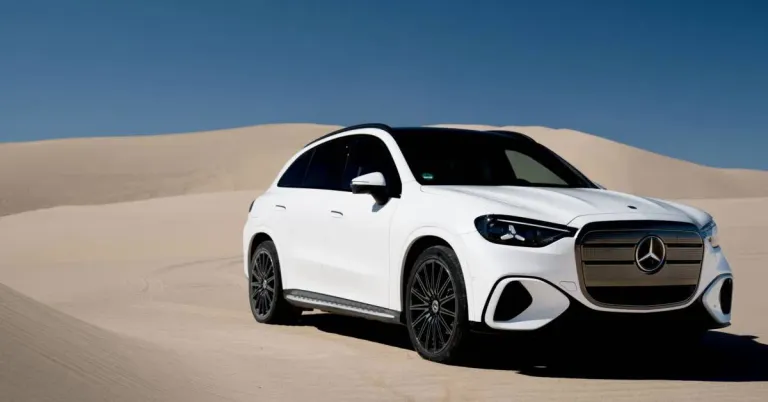
The SUV supports DC charging at up to 330kW. Under suitable conditions, Mercedes claims a 10-80% charge in about 22 minutes and the addition of approximately 300km of WLTP range in ten minutes. Those figures require an unusually powerful compatible charger; a typical public charger will take longer. Mercedes also promotes access to more than 22,000 charging points through its MB.CHARGE Public service, although those stations do not all offer the same power output.
The electric SUV is built on a dedicated EV platform rather than simply replacing the engine of the existing GLC. At 4,856mm long, 1,913mm wide and 1,652mm tall, it is larger than the combustion version. Its 2,972mm wheelbase is also 84mm longer, creating the opportunity for more cabin space.
Boot capacity is 570 litres, with an additional 128-litre storage compartment under the bonnet. Together, that gives owners 698 litres for luggage and smaller items. The front compartment should be especially useful for charging cables, which otherwise take up space in the main boot.
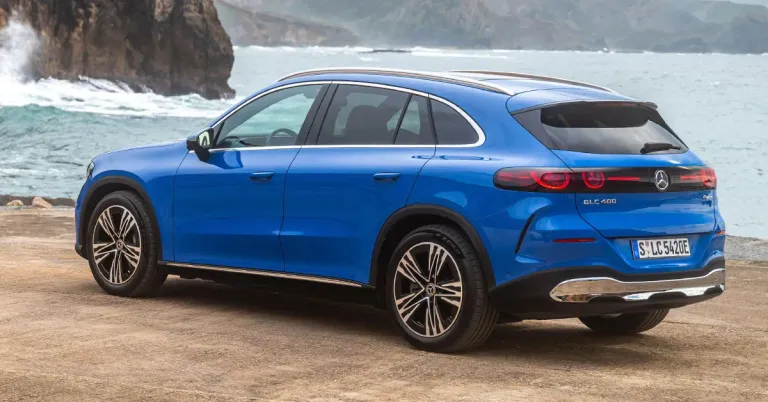
The India-spec GLC Electric comes with AMG Line styling, including 20-inch alloy wheels and sportier bumpers. The illuminated front grille, three-pointed-star lighting signatures and connected rear lamps distinguish it from the regular GLC. Mercedes offers six exterior colours, including Sheer Blue and Lavender Silver.
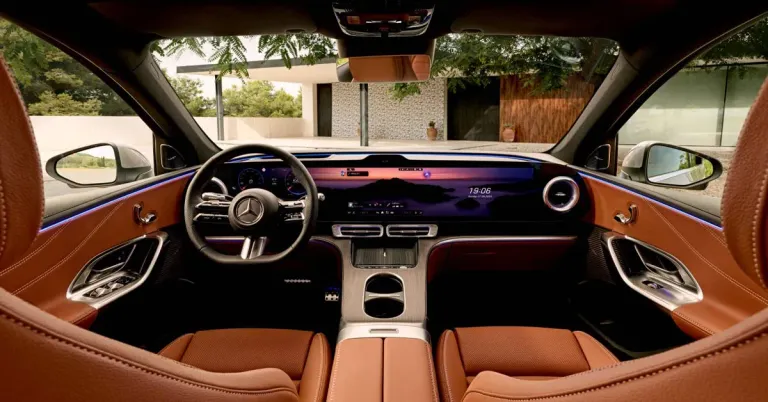
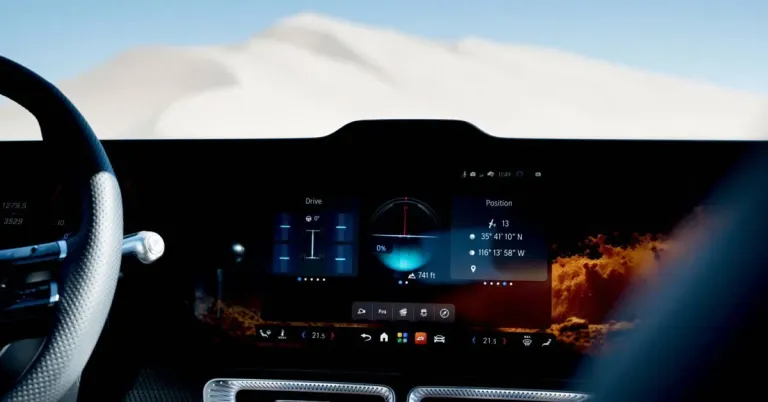
The biggest cabin feature is the 39.1-inch MBUX Hyperscreen, a continuous display stretching across the dashboard. It combines driver information, infotainment and passenger entertainment functions. The disadvantage is that many controls, including climate settings, are operated through the screen rather than conventional switches.
Other equipment includes a 15-speaker Burmester 3D audio system with Dolby Atmos, powered front seats, panoramic glass roof with adjustable transparency, dual wireless phone chargers, a 360-degree camera and automatic parking assistance. Safety equipment includes nine airbags and Level 2 driver assistance. The electric GLC has not yet received a separately published Indian crash-test rating.
There are omissions compared with some overseas versions. The India-spec model does not get rear-wheel steering or adaptive air suspension. It uses conventional suspension with selective damping. Buyers expecting every option shown in international promotional videos should check the domestic equipment list.
Mercedes plans to begin customer deliveries around Diwali. However, with more than 1,000 bookings already received and the initial allocation sold out through March 2027, customers placing fresh orders should expect the dealer to confirm a later delivery slot.
The BMW iX1, Kia EV6 and Tesla Model Y are electric alternatives, although they differ in price, size and equipment. The more direct future competitor is the next-generation BMW iX3, expected to arrive in 2027.