
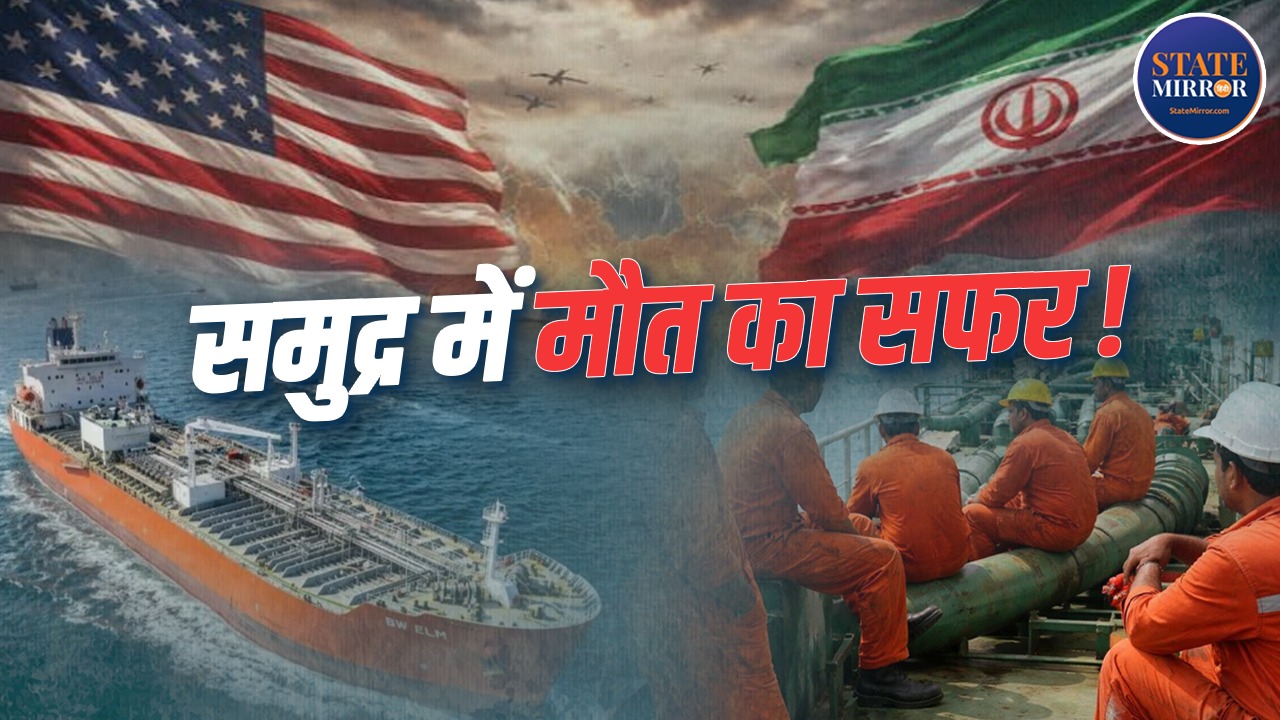
Missiles, tankers and death: How did Indian sailors become targets in the Red Zone of Hormuz?

Now every journey has become a new test for the sailors aboard every commercial ship passing through the Strait of Hormuz. Sometimes there was threat of missile attack, sometimes siege of warships and sometimes sudden military action. Amidst all this, thousands of sailors are forced to perform their duty. A large number of these are Indians, who are considered the backbone of the world’s maritime trade system.
After the US-Iran conflict started on February 28, 2026, this path brought news of mourning for many Indian families. In a little more than four months, at least seven Indian sailors have lost their lives, while several others have been injured.
In fact, the military conflict between America and Iran that started on February 28, 2026 is no longer limited to just the two countries. Its biggest impact is visible on the Strait of Hormuz, one of the world’s busiest maritime trade routes. Commercial ships passing through this route are constantly coming under missile attacks, naval operations and military action.
Why is the Strait of Hormuz so important?
strait of hormuz It is counted among the most important maritime trade routes of the world. A large amount of crude oil and natural gas originating from Gulf countries reaches international markets through this route. This is the reason why with the increase in US-Iran tension, this area became the center of military activities. Commercial ships, which had no direct connection with the war, also started falling prey to this conflict. A large number of Indian sailors are deployed on these ships, hence every major attack had an impact on Indian citizens as well.
What happened in the early days of the conflict?
The first news of the deaths of Indian sailors came out the very next day after the conflict began. On March 1, an Indian crew member was killed in an attack on the Marshall Islands-flagged oil tanker ‘MKD Vyom’. No organization took responsibility for this attack, but the US Army held Iranian forces responsible for it.
Another big accident happened on the same day. Palau-flagged tanker ‘Skylight’ was attacked near Musandam Peninsula of Oman, in which two Indian sailors lost their lives. This area is included in the major sea routes reaching the Strait of Hormuz. After both these incidents, three Indian sailors had died within the first 48 hours of the conflict.
How did the number of deaths increase after this?
As the conflict dragged on, maritime security continued to deteriorate. On 8 May a wooden boat (dhow) caught fire near the Strait of Hormuz. An Indian sailor died in this accident. Local officials linked the incident to increased military tension and insecurity in the area.
Exactly a month later, on June 9, the deadliest incident so far came to light. Three Indian crew members were killed during a US military action on the oil tanker ‘Settebello’ near the coast of Oman. The US military claimed that the ship had violated the naval blockade imposed on Iranian ports. However, the death of Indian sailors in this action raised concern at the international level as well.
What happened in the most recent incident?
On July 13, two oil tankers of the United Arab Emirates (UAE) passing through the southern shipping lane of the Strait of Hormuz were hit by an Iranian cruise missile attack. According to UAE officials, one Indian crew member died in this attack, while eight people were injured. The injured included six Indian sailors and two Ukrainian citizens. This incident once again proved that the biggest threat of war now looms over commercial shipping.
How many Indian sailors have lost their lives so far?
According to publicly available information, at least seven Indian sailors have died in various incidents between February 28 and July 13. Of these, three deaths occurred in the first two days of the conflict, one in May, three in June and one in July. Apart from this, many Indian sailors have also been injured. The United Nations also recently said that at least 14 sailors have been killed in attacks in this maritime area since the conflict began, a notable number of which are Indian citizens.
Why may the concern increase further?
Experts believe that unless the tension between America and Iran reduces, it will remain a threat to commercial ships passing through the Strait of Hormuz. Indian sailors form an important part of the world’s largest maritime workforce and thousands of Indians are deployed on ships plying this route. In such a situation, maritime security, adherence to international humanitarian laws and ensuring the safety of civilian ships will remain the biggest challenge before the global community in the times to come.

Comments are closed.