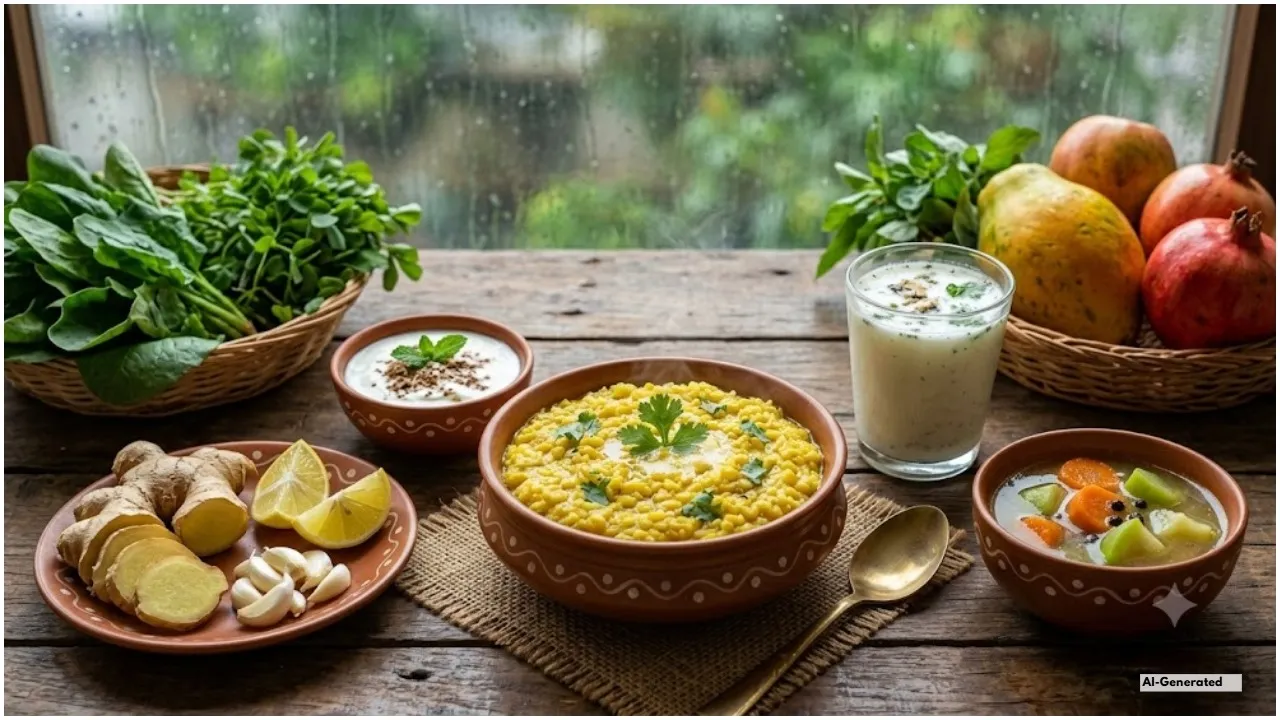
Monsoon Care Tips: The rainy season certainly brings us relief from the heat, but it also increases the risk of stomach-related illnesses. Humidity, contaminated water, open-air food, and poor sanitation can lead to diarrhea, food poisoning, gas, indigestion, vomiting, and stomach infections. According to health experts, our digestive system becomes more sensitive during the monsoon season, so even the slightest negligence in eating habits can harm our health. These days, rain and waterlogging are occurring in almost every state in the country. This is bound to lead to the spread of mosquitoes and waterborne diseases. So, in this article, let’s explore what we can include in our monsoon diet to maintain immunity.
Why do stomach ailments increase during the rainy season?
Health experts say that the humidity in the atmosphere increases during the rainy season, which increases the likelihood of bacteria and other microorganisms thriving. Consuming contaminated water or contaminated food can lead to stomach infections. Doctors say that cut fruits found on the roadside, food prepared in the open, and food stored for long periods of time also spoil during the rainy season. Eating these increases the risk of infection. Furthermore, physical activity decreases during the rainy season, and people tend to eat more fried food, citing the weather as an excuse. This also increases the problems of constipation, acidity, and indigestion.
Include these 5 healthy foods in your diet
1. Light and easily digestible foods:
During the monsoon season, you should include khichdi, mung bean porridge, porridge, and light vegetables. These foods are easy on the stomach and provide essential nutrition to the body.
Also Read – Cold drinks and orange juice are increasing the risk of cancer! New research reveals a major revelation.
2. Yogurt and Probiotic Foods:
Although yogurt is cold, it’s recommended to consume it in a timely manner. However, the good bacteria in yogurt can be beneficial for intestinal health. People who have problems with milk or dairy products should consume it only after consulting a doctor.
3. Fiber-rich foods:
Fiber helps maintain a healthy digestive system. During the monsoon season, it’s best to eat vegetables that have been thoroughly washed and cooked if possible. Fruits should also be eaten only after rinsing them thoroughly with clean water.
4. Drink plenty of water.
Thirst may be less during the rainy season, but our bodies need adequate water. Therefore, always drink clean and safe water during these times. If necessary, boil or filter water before drinking.
Also Read – Coffee Myths: 5 coffee-related lies you should forget today
5. Consume ginger and mild spices.
It’s best to consume spices like ginger, turmeric, black pepper, and cloves in moderation. These can aid digestion during this season, protect against colds and coughs, and boost immunity. However, you should avoid eating highly spiced or oily foods.
Drink these healthy drinks during monsoon:
Lukewarm water
Lemon water (made with clean water)
Coconut water
Ginger-Tulsi herbal tea
Turmeric milk (at night)
Early signs of dehydration during monsoon
are frequent thirst
Dry mouth
Dizziness
Weakness
Dark urine It
is important to take some precautions
Dr Amit Miglani, Director and HOD of Gastroenterology Department at Asian Hospital, believes that to avoid stomach ailments during monsoon, it is most important to pay maximum attention to the hygiene of food and water. Eat fresh and well-cooked food at home. Avoid eating food items kept in the open, cut fruits, and drinking water from anywhere or open. Carry water with you from home or drink water from a sealed bottle.
Always follow medical advice.
If someone is experiencing symptoms such as persistent vomiting, diarrhea, severe abdominal pain, fever, or dehydration, they should consult a doctor without delay. According to experts, we should also pay special attention to hand hygiene during the monsoon season. Always wash your hands with soap before eating and after using the toilet. Keep food covered and avoid storing leftovers at room temperature for long periods.
Avoid self-medication.
Avoid taking antibiotics or anti-diarrheal medications without consulting a doctor. A little caution and a balanced diet can help prevent many stomach problems during the rainy season. Fresh, clean, and light food is sufficient to keep your digestive system healthy during this season.
Who should be more cautious?
Young children,
the elderly over 60,
pregnant women, and
those with diabetes and kidney disease,
and those with weakened immunity.