
Rajouri’s Bhairav Yatra, a centuries-old symbol of faith, communal harmony, earns national recognition

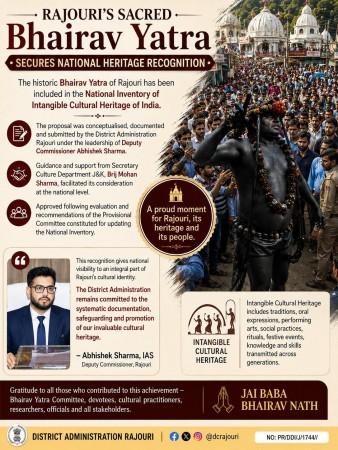
Jammu and Kashmir’s border district of Rajouri got national-level recognition as its historic Bhairav Yatra is officially added to the National Inventory of Intangible Cultural Heritage (IHC) of India.
Jammu and Kashmir Lieutenant Governor Manoj Sinha today extended his heartiest congratulations to the Rajouri District Administration and Department of Culture, J&K, on the inclusion of the historic Bhairav Yatra of Rajouri to the National Inventory of Intangible Cultural Heritage (ICH) of India.
Proud moment for Rajouri! The district’s historic Bhairav Yatra has officially been added to National Inventory of Intangible Cultural Heritage of India. Congratulations to the Rajouri District Administration and the J&K’s Department of Culture for turning this dream into a… pic.twitter.com/RCykJRZ5zV
— Manoj Sinha (@manojsinha_) July 15, 2026
In a post on X, the lieutenant governor has said, “Proud moment for Rajouri! The district’s historic Bhairav Yatra has officially been added to the National Inventory of Intangible Cultural Heritage of India. Congratulations to the Rajouri District Administration and the J&K Department of Culture for turning this dream into a reality.
The Bhairav Yatra of Rajouri is the second cultural heritage included in the IHC list. Earlier “Buddhist chanting of Ladakh: recitation of sacred Buddhist texts in the trans-Himalayan Ladakh region, Jammu and Kashmir”, was included in the IHC list.
This prestigious recognition will go a long way in documenting, preserving, and celebrating the area’s deep spiritual and cultural roots. This national honor validates the generations of devotees who kept this tradition alive. The inclusion of Bhairav Yatra in the National Inventory of Intangible Cultural Heritage will strengthen Rajouri’s unique cultural footprint on the national stage, and it will open the door for research, cultural exchange, and sustainable heritage tourism.”
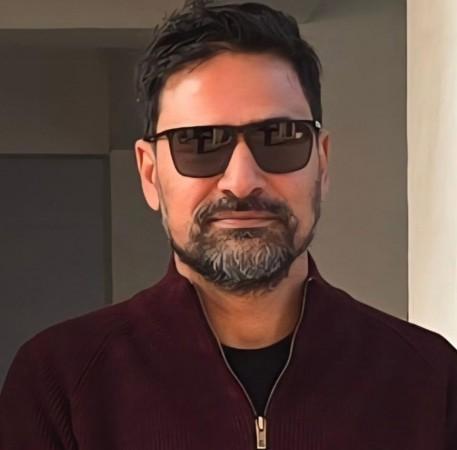
Eminent writer and social activist from Rajouri, Mantoo Dutta Sharma, termed the inclusion of Bhairav Yatra in the National Inventory of Intangible Cultural Heritage as a proud moment for the residents of Jammu and Kashmir in general and Rajouri district in particular.

Highlighting the importance of this unique Yatra, which is conducted every year only in the Rajouri district of Jammu and Kashmir, she said, “No one can say exactly when the Bhairo Yatra began. Ask the elders of Rajouri, and they’ll tell you only that they remember it from their own childhoods – passed down, unbroken, through the years. But the story behind it survives, carried in local memory like scripture.”
Social activist from Rajouri, Tazeem Dar, who is always at the forefront to preserve the rich heritage and ecology of the twin border districts of Poonch and Rajouri, said it was really a matter of pride for the people of this part of Jammu and Kashmir.
“Including of the Bhairav Yatra in the National Inventory of Intangible Cultural Heritage is recognition of our region’s unique and exclusive cultural and folklore.” Dar said, adding, “The Bhairav Yatra is a living symbol of faith and communal harmony as all communities participate in this cultural event to cement communal harmony and brotherhood.”
Dar said that the Rajouri district, in particular, and the Pir Panchal region in general are shining examples of communal harmony and brotherhood.
Long ago, the legend goes, Rajouri was gripped by a devastating famine. As desperation spread through the district, a mysterious saintly figure appeared among the people. His message was simple: organise the Bhairo Jhanki each year on the eve of Holi and seek the divine protection of Bhairo Dev. Do this, he told them, and prosperity would return.
It did. And ever since, the ritual has never lapsed – celebrated with unwavering devotion across Rajouri City and Jawhar Nagar, now standing as the ceremonial gateway to a seven-day Holi celebration that defines the region’s cultural calendar.
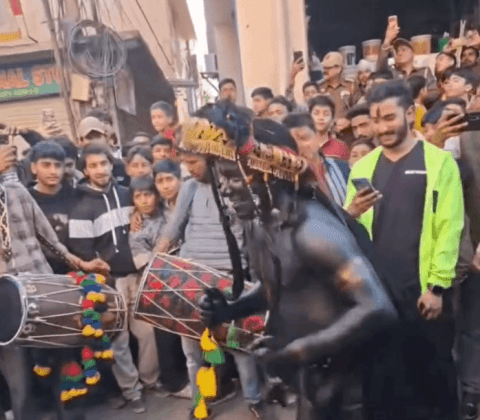
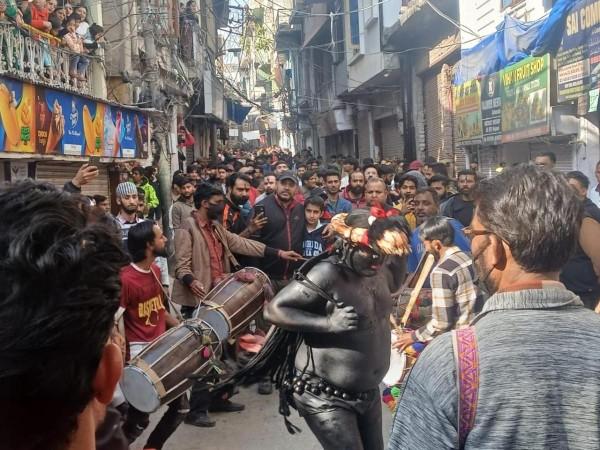
“The person to be portrayed as Bhairon is brought to the Devi temple, and a black paste is applied to his body. He is then given a Chimta. Bhairon Baba then dances to the beat of a drum, inspiring everyone to dance. Hundreds of people of all ages and backgrounds join him”, she said.
His appearance is deliberately arresting. His body is coated head to toe in bharo — a deep black pigment symbolising strength and spiritual power. His hair flows long and untamed beneath a kada and paranda, traditional ornaments that lend him an air of wild, divine authority. In his hand, he grips a chimta – an iron rod believed to ward off evil – completing an image that fuses raw mysticism with commanding presence.
This procession has two stops: one at the Bhairon Sthan in Nikki Tawi and the other at the Bhairon Sthan in Naban Mohalla. At both stops, the stone form of Bhairon Baba is worshipped. Beginning in the afternoon, the procession circumnavigates the town and concludes at the Devi Dwar in the evening. This continues until Holi day. As a blessing, people ask Bhairon Baba to apply a black tilak and receive a blessing on their backs with iron tongs.
At the centre of the Jhanki walks Bhairo Bawa himself — a striking, almost otherworldly figure believed to carry good fortune wherever he goes. Tradition holds that a single pat from him is enough to mark someone as blessed for the year ahead.
As Bhairo Bawa moves through Rajouri’s streets, hundreds of youths dance around him in a swirl of colour and sound, the air filled with devotional songs and traditional music. Rooftops fill with women watching the spectacle unfold below, offering prayers as the procession passes — a scene as much about faith as it is about festivity.
A Rare Thread of Unity
Perhaps what makes the Bhairo Dev Jhanki most remarkable is what it represents beyond ritual. In a border district where Hindus and Muslims have long lived side by side, the Jhanki draws both communities into a single, shared celebration. Muslim residents join Hindu neighbors in the procession without hesitation — a living, breathing symbol of coexistence in a region too often defined in the national imagination by conflict rather than harmony.
In Rajouri, at least once a year, the Bhairo Dev Jhanki reminds everyone what the district actually stands for: peace, prosperity, and a brotherhood that predates whatever divides people elsewhere.

Comments are closed.