Political News: With the aim of promoting effective and evidence-based policymaking in the country, the Nation First Policy Research and Change Foundation (NFPRC) organized a special workshop for MPs and MLAs at the India Habitat Centre in New Delhi. At the event, representatives from the Lok Sabha, Rajya Sabha, and various state legislative assemblies, along with policy experts, discussed key topics such as climate-resilient agriculture, crop insurance, irrigation, digital communications, and legislative capacity building.
The objective of the workshop was to provide a common platform to the public representatives where they could interact with experts and consider measures to make policy making more effective, practical and in public interest.
Tarun Chugh emphasizes on research-based policy making
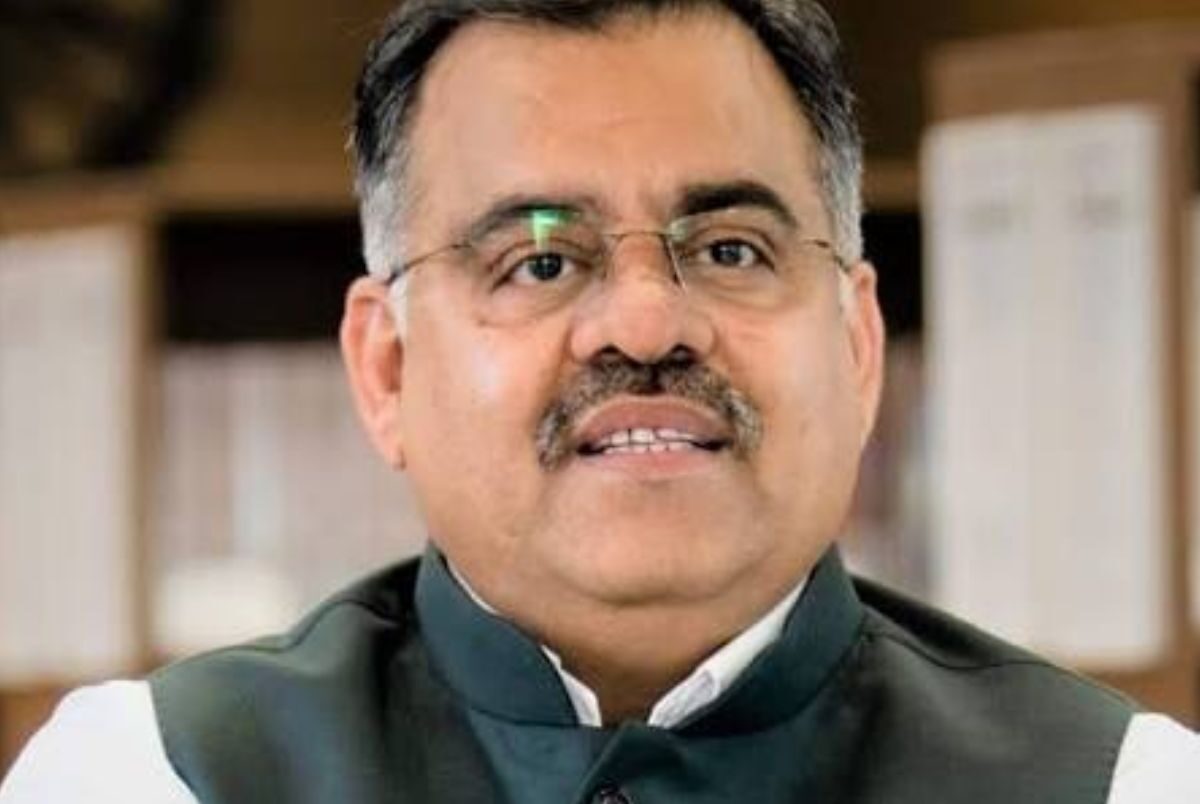
At the event, NFPRC Foundation President and Rajya Sabha MP Tarun Chugh reiterated the organization’s commitment to research-based policy dialogue and capacity building of public representatives. In his address, he emphasized the need for crop diversification, water conservation, expansion of irrigation facilities, and strengthening crop insurance coverage. He also stated that by effectively utilizing digital media and modern communication channels, public representatives can disseminate information about government schemes to a wider audience. He emphasized the need for better institutional coordination and people-centered governance to achieve the goal of a developed India @ 2047.
Detailed discussion on climate-friendly agriculture and water conservation
In a key session of the workshop, Dr. Praveen Kumar Singh, Agriculture Commissioner, Ministry of Agriculture and Farmers Welfare, and Dr. Rajbir Singh, Deputy Director General, Indian Council of Agricultural Research (ICAR), shared their views on climate-resilient agricultural models. They stated that in light of changing climatic conditions, promoting coarse grains, pulses, oilseeds, horticultural crops, and climate-resilient varieties is the need of the hour.
The importance of rainwater harvesting, watershed development, farm ponds, groundwater recharge, drip irrigation, sprinkler systems, and micro-irrigation techniques was also discussed in detail. Experts stated that effective water management can increase farmers’ incomes and make agriculture more sustainable.
Agritech and AI are transforming Indian agriculture
Professor Ramesh Chand, Distinguished Professor at ICRIER and former member of the NITI Aayog, highlighted the growing role of technology in agriculture. He said that India is rapidly integrating modern technologies such as Artificial Intelligence (AI), the Internet of Things (IoT), drone technology, and digital supply chains into agriculture. According to him, technological innovations and government initiatives over the past decade have made Indian agriculture more robust and climate-resilient than before.
He also said that digital technology is playing an important role in providing benefits of schemes to farmers, simplifying the insurance claims process and increasing agricultural productivity.
Special Session on Digital Communication and Social Media
At the workshop, communications and social media expert Arun Yadav conducted a special capacity-building session on digital communication for public representatives. Practical information was provided on topics such as social media algorithms, platform analytics, audience analysis, content strategy, fact-checking, cybersecurity, data privacy, and AI-based communication. Experts explained that responsible use of digital platforms can make communication between public representatives and citizens more effective.
Emphasis on cooperation for a developed India 2047
At the conclusion of the event, NFPRC Board Member Dr. Abhinav Prakash expressed his gratitude to all speakers and participants. He stated that the organization will continue to organize such programs in the future to promote research-based policy dialogue, legislative capacity building, and public-friendly policymaking. Public representatives participating in the workshop also acknowledged that impartial, knowledge-based, and research-focused dialogue platforms play a vital role in strengthening policymaking and establishing better governance.