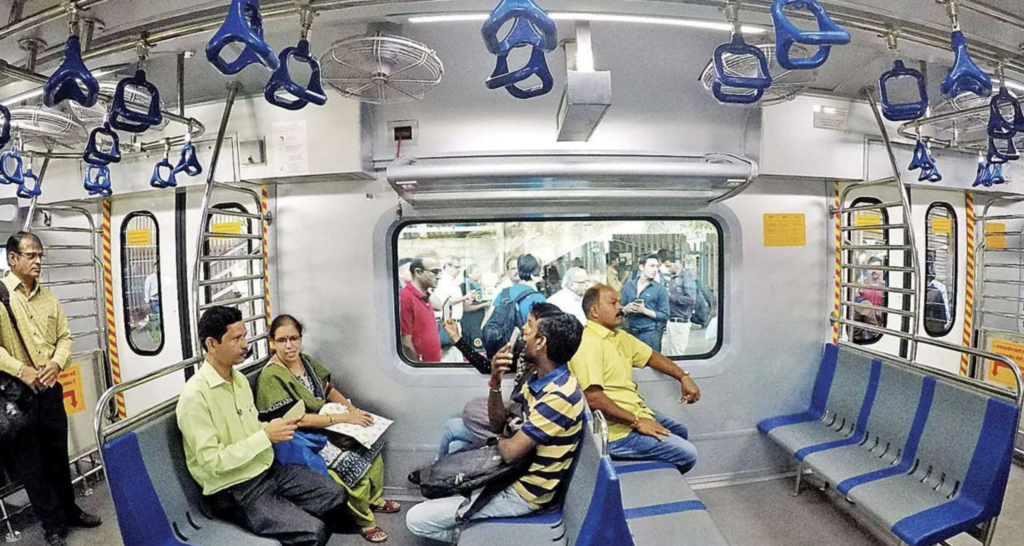
238 New AC Rakes Planned For Mumbai
Mumbai’s suburban railway network is set for a major transformation, with Indian Railways planning to introduce 238 new air-conditioned local train rakes by 2030.
The first of these new AC locals is expected to arrive in 2027, significantly earlier than the previous procurement timeline.
The move is aimed at increasing suburban rail capacity, reducing overcrowding and making daily journeys more comfortable and safer for millions of Mumbai commuters.
2,856 New AC Coaches
The planned fleet will consist of 238 rakes, each comprising 12 coaches.
That means Mumbai’s suburban network will eventually receive 2,856 new AC coaches.
The estimated rolling-stock cost of the project is around ₹19,293 crore.
The trains are being planned as part of the broader modernisation and capacity-expansion programme for Mumbai’s suburban railway network.
Three Railway Factories To Build The Trains
Instead of depending on a single manufacturer, Indian Railways has decided to distribute production among three of its own manufacturing facilities.
The Integral Coach Factory (ICF) in Chennai will manufacture 120 rakes.
The Rail Coach Factory (RCF) in Kapurthala will produce 71 rakes.
The Modern Coach Factory (MCF) in Raebareli will manufacture the remaining 47 rakes.
By producing the trains simultaneously at three locations, Railways expects to bring the first rakes into service much sooner.
First AC Local Expected In 2027
The first trainset is targeted for delivery in 2027while the entire fleet of 238 rakes is expected to be available by 2030.
This is a substantial acceleration compared with the earlier procurement plan.
The original international tender was launched in 2023, but repeated delays meant that the first rake could have arrived only around 2030, with the complete fleet potentially taking until 2034.
The government considered that timeline unacceptable and opted for a different manufacturing strategy.
Why The Earlier Plan Was Changed
Mumbai Railway Vikas Corporation had initially planned to procure the entire fleet through an international bidding process.
The tender included not only manufacturing but also long-term maintenance requirements.
However, the bidding process did not progress as expected, with deadlines being extended several times.
An assessment subsequently showed that the procurement route would significantly delay the availability of the new trains.
Railways therefore decided to use its own production facilities and manufacture the rakes simultaneously.
Less Crowding For Mumbai Commuters
The biggest expected benefit for passengers is additional capacity.
Mumbai’s suburban railway carries enormous passenger volumes every day, making overcrowding one of the network’s biggest challenges.
The addition of 238 AC rakes should allow Railways to introduce more services as infrastructure capacity expands.
The objective is not simply to replace existing trains with air-conditioned ones.
The larger goal is to increase the total number of available suburban services and improve the passenger experience.
Automatic Doors Could Improve Safety
The new AC locals will also bring an important safety advantage.
The trains will have automatic door-closing systemshelping prevent passengers from travelling with open doors.
Open doors are a familiar feature of Mumbai’s conventional suburban trains and have long been associated with passenger safety concerns.
Closed-door AC trains could therefore provide a safer commuting environment, particularly during peak hours.
₹22,000 Crore Network Upgrade Underway
The new trains are being introduced alongside a much larger infrastructure programme.
Around ₹22,000 crore is being invested in expanding and upgrading Mumbai’s suburban railway network.
The work includes new railway corridors, platform extensions capable of accommodating longer trains and improvements to railway yards.
These infrastructure projects are expected to be completed in phases between 2027 and 2030.
The idea is to ensure that new trains arrive at roughly the same time as the infrastructure required to operate additional services.
15-Coach Trains Will Also Get More Space
Platform extensions are an important component of the expansion programme.
Mumbai’s suburban network already operates longer trains on several routes, and extending platforms to accommodate 15-coach trains can increase the number of passengers carried by individual services.
Combining longer trains, additional rakes and new infrastructure could therefore provide a significant increase in overall passenger capacity.
Why The Timing Matters
The timing of the project is important because Mumbai’s suburban network is undergoing expansion on multiple fronts.
If new infrastructure is completed without enough trains, the additional capacity cannot be fully utilised.
Similarly, buying new trains without expanding the network can create operational constraints.
Railways is therefore attempting to synchronise train production with infrastructure development.
The first new AC rakes arriving in 2027 could allow additional services to begin as upgraded infrastructure becomes operational.
Mumbai’s AC Local Network Will Expand
Mumbai already has AC local train services, but their availability remains limited compared with the city’s enormous suburban railway network.
The addition of 238 rakes would dramatically increase the scale of AC operations.
For passengers, this could mean more opportunities to travel in air-conditioned coaches rather than relying exclusively on conventional non-AC services.
However, the actual routes and schedules for the new trains will depend on operational planning and infrastructure availability.
Comfort Is Only One Part Of The Upgrade
Air conditioning is likely to be the most visible improvement for passengers.
However, the broader benefits could be more significant.
Additional trains can increase service frequency.
Automatic doors can improve safety.
New infrastructure can reduce operational bottlenecks.
Longer platforms can support higher-capacity trains.
Together, these changes could improve the overall efficiency of Mumbai’s suburban railway system.
A Major Shift In Procurement Strategy
The project also demonstrates a change in how Indian Railways is approaching large suburban train requirements.
Instead of waiting for a lengthy international procurement process, the government has chosen to use existing domestic production capacity.
This approach could potentially shorten delivery timelines while allowing Indian Railways to directly manage production across multiple facilities.
It also ensures that the project utilises India’s existing railway manufacturing infrastructure.
Mumbai Commuters May See The First Benefits In 2027
The most important date for passengers is 2027.
That is when the first new AC rakes are expected to become available.
The complete fleet will take several more years, with all 238 rakes targeted by 2030.
As the trains arrive, their deployment will be linked to the availability of upgraded infrastructure and the operational requirements of Mumbai’s suburban network.
The Bigger Plan Is To Modernise Mumbai’s Lifeline
Mumbai’s local trains are often described as the city’s lifeline because millions of people depend on them for daily commuting.
The 238-rake programme is therefore about more than introducing air conditioning.
It is part of a much larger attempt to expand capacity, improve safety and modernise the suburban railway system.
With ₹22,000 crore of infrastructure investment taking place alongside the train programme, Railways is attempting to address both sides of the problem: more trains and more capacity to run them.
Mumbai Could Get A Very Different Local Train Experience
If the programme stays on schedule, Mumbai commuters could begin seeing a substantially larger AC local network from 2027 onwards.
The first rakes will arrive next year, production will continue simultaneously at three railway factories, and the entire 238-rake fleet is targeted for completion by 2030.
For a city where overcrowded local trains remain a daily reality, the combination of more AC services, automatic doors, longer platforms and new railway infrastructure could represent one of the biggest suburban transport upgrades in years.
Summary
Mumbai’s suburban railway network is set to receive 238 new AC local train rakes, with the first expected in 2027 and the complete fleet targeted by 2030. The project will provide 2,856 new coaches at an estimated rolling-stock cost of ₹19,293 crore. Production will be divided among ICF Chennai, RCF Kapurthala and MCF Raebareli. The trains will feature automatic doors, while a separate ₹22,000 crore infrastructure programme will expand corridors, platforms and railway capacity. The combined investment aims to reduce overcrowding, improve safety and provide Mumbai commuters with more comfortable suburban services.