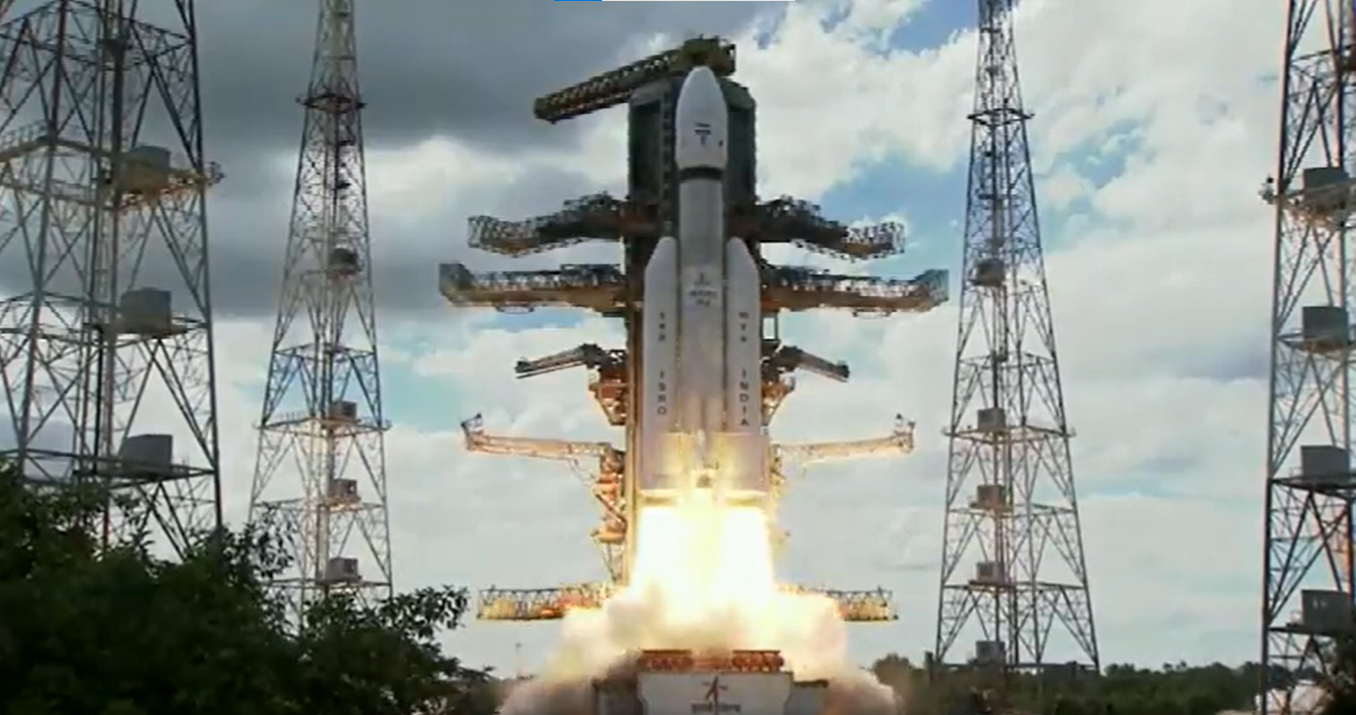
As India celebrates the National Space Day, marking the third anniversary of the successful Chandrayaan-3 Moon landing, a new peer-reviewed study has challenged the long-standing narrative of the country’s frugal space launches. The article found that India spends around four times what the US spends on its rocket missions, making them the costliest in the world.
The article, written by economists Alessio Terzi of the University of Cambridge, England, and Francesco Nicoli of Politecnico Institute of Turin, Italy, and published in the peer-reviewed academic journal Economic Letters, reached its conclusion after examining launch costs across six major markets.
‘US has the cheapest launches’
It said that the end of calendar year 2025, the cost of launching a satellite from India was $13,302 (Rs 12.7 lakh) per kilogram aboard available rocket models. The figure, the study found, was four times higher than what the US spends – around $3,225 (Rs 31.1 lakh) – on its rocket launches, which incidentally is also the lowest among the six markets studied.
Also read: How the Nancy Grace Roman Space Telescope, NASA’s latest eye in space, will help decode the universe
Livemintquoting the article, said that India’s rocket launches were also costlier than those of the European Union, Russia ($6,682), China ($5,809), and Japan ($5,287). Europe’s at $9,897 (Rs 9.5 lakh) per kg is the next-most expensive launch after India.
The prices mentioned in the article were of launches overseen by NewSpace India Limited (NSIL), the commercial arm of the Indian Space Research Organisation (ISRO), aboard a mix of ISRO rockets.
Counterintuitive to frugal launch narrative
The finding is especially striking given India’s reputation for cost-effective space missions. In 2014, Prime Minister Narendra Modi famously observed that while a one-kilometre auto-rickshaw ride in Ahmedabad cost ₹10, the Mangalyaan mission reached Mars at roughly ₹7 per kilometre.
A 2024 BBC report noted that Mangalyaan cost about $74 million and Chandrayaan-3 about $75 million—both less than the $100 million budget of the Hollywood film Gravity.
The authors themselves acknowledge that their conclusion appears counterintuitive when seen against this narrative of a frugal space programme. They attribute the high per-kilogram figure largely to rocket size: Indian launch vehicles typically carry smaller payloads, so fixed costs are spread over fewer kilograms, inflating the unit cost even when absolute mission costs remain modest.
More launches, more cost-efficacy
Comparing launch activities of the studied countries over a period of time, the authors analyse how experience, launch frequency and reusability eventually bring costs down.
They say that while the US and Europe show statistically significant improvements in launch costs through experience curves, India, China, Russia and Japan do not show the same in the period analysed.
Also read: TN rocket port in private hands: Is IN-SPACe becoming Centre’s space privatisation arm?
The researchers attribute the high costs for India to a low launch frequency. Citing the example of SpaceX, they say countries that launch more frequently tend to learn faster, industrialise more efficiently and distribute infrastructure costs over a larger number of missions.
Space analyst Chaitanya Giri of the Observer Research Foundation told Mint that India currently lacks the technical and scale advantages needed to match US costs. “What India should work toward is to try lowering its launch costs to match the EU first, and then Japan—to levels of about $7,000 per kg. Rivalling the US is too far into the future,” he said, emphasising the need for a steady domestic (largely government) customer base.
Wrong data: ISRO chairman
ISRO has pushed back. Chairman Dr V Narayanan told NDTV that the paper used “wrong data,” though he did not elaborate.
Former ISRO chairman S Somanath argued that cost per kilogram does not tell the full story. For a 4.5-tonne spacecraft, he noted, the launch price India paid to an American provider was comparable to what an LVM3 mission would have cost, suggesting Indian services remain competitive for heavier payloads.
Also read: What NASA invitation to India to join work on planned Moon Base could mean for both
He added that SpaceX’s lower per-kilogram figures largely reflect its massive internal utilisation and scale rather than benefits passed on to external customers.