Professor (Dr.) Vikas Sharma, Shiya Saini and Komal Sudan
“A champion is not made in a day; a champion is built through discipline, determination and countless hours of effort.” This spirit lies at the heart of India’s National Sports Day, observed every year on 29 August, the birth anniversary of the legendary Indian hockey player Major Dhyan Chand. The day provides an opportunity to remember one of India’s greatest sporting icons while also recognizing the importance of sports in our everyday lives. National Sports Day is not merely a celebration of medals, trophies and famous athletes. It is a reminder that sports can shape character, improve physical and mental well-being, bring communities together and inspire young people to believe in their abilities.
The Legend Behind National Sports Day
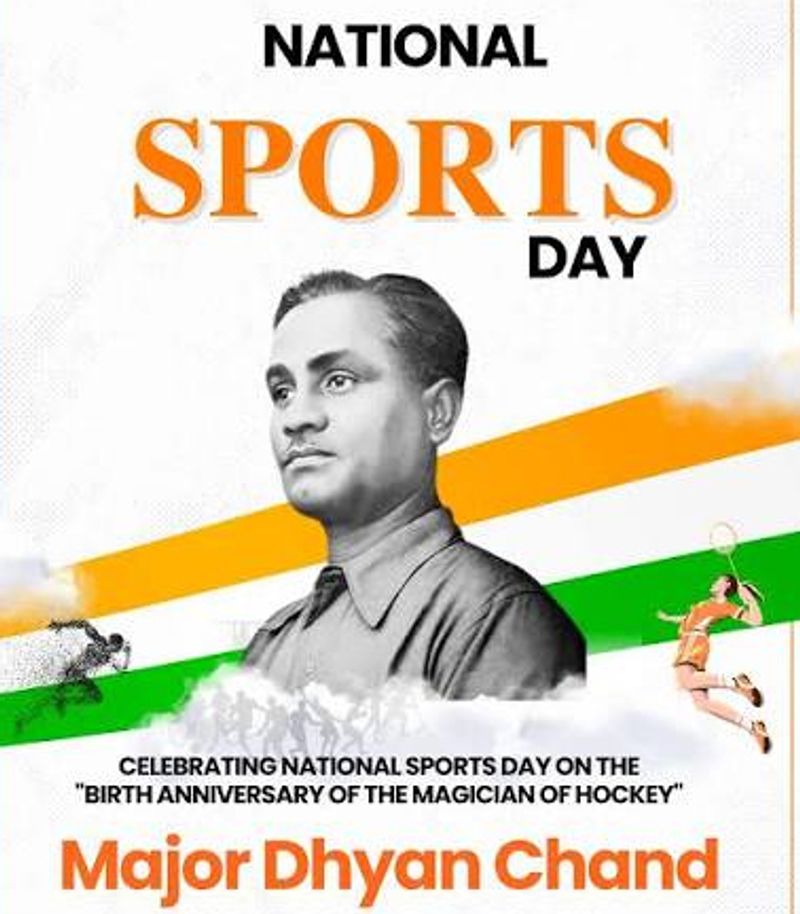
Major Dhyan Chand was born on 29 August 1905 in Allahabad, now known as Prayagraj. His name became inseparable from Indian hockey because of his extraordinary ability to control the ball and create scoring opportunities. His performances earned him the popular title of the “Hockey Wizard”. Dhyan Chand was a key member of the Indian hockey team during one of the country’s most successful periods in Olympic history. India won gold medals in hockey at three successive Olympic Gamesin 1928, 1932 and 1936. His performances helped establish India as a dominant force in international hockey and created a legacy that continues to be remembered decades later. What makes his story particularly inspiring is that his achievements were not based solely on natural ability. They reflected dedication, regular practice, discipline and an extraordinary commitment to his sport. His journey demonstrates that excellence is developed through continuous effort. The Government of India declared 29 August as National Sports Day in 2012. Selecting Dhyan Chand’s birthday for the occasion was a meaningful way of honouring his contribution to Indian sports while encouraging the country to become more active. The purpose of the day extends beyond remembering a sporting legend. It seeks to create greater awareness about the importance of physical activity and encourage people, especially young students, to participate in sports. Schools, colleges and sporting institutions often organize competitions, fitness activities, awareness programmes and other events to mark the occasion. The day also provides an opportunity to acknowledge athletes and coaches whose dedication contributes to India’s sporting achievements.
The Real Importance of Sports
In today’s world, sports are sometimes treated as an activity that exists mainly for entertainment or competition. Their actual importance, however, is much broader. Regular participation in physical activities helps improve strength, stamina, coordination and overall fitness. It can also provide a valuable break from academic pressure and excessive screen time. For young people especially, developing an active lifestyle can create habits that remain beneficial throughout adulthood. It also provides lessons that cannot always be learned from textbooks. A player learns how to cooperate with teammates, accept responsibility, follow rules and remain focused under pressure. Victory teaches confidence, while defeat teaches patience and resilience. A lost match does not mean that an athlete has failed permanently. Instead, it can reveal areas that need improvement. This attitude of learning from mistakes rather than being defeated by them is one of the most valuable lessons sports can offer.
Dhyan Chand’s Message to the Younger Generation
The story of Major Dhyan Chand remains particularly relevant to today’s youth. Young people live in a world filled with opportunities but also distractions. Social media, online entertainment and digital technology have become an important part of everyday life. While technology has many benefits, excessive inactivity can make it difficult to maintain a balanced lifestyle. National Sports Day encourages young people to rediscover the value of movement and outdoor activity. Playing a sport does not necessarily mean aspiring to become a professional athlete. Football, cricket, hockey, badminton, athletics, swimming, cycling or even a regular game with friends can provide physical and emotional benefits. Dhyan Chand’s life also teaches young people that success should not be measured only by fame. True achievement comes from developing one’s abilities and remaining committed to improvement.
Sports teach us how to face life
One of the most powerful aspects of sports is their ability to prepare people for challenges beyond the playing field. An athlete may train for months for a competition and still lose. A team may perform brilliantly on one day and struggle on another. Such experiences teach individuals to handle uncertainty and disappointment. Similarly, life does not always produce the results we expect. There are successes, failures, unexpected obstacles and moments when giving up seems easier than continuing. Sports develop the mental strength required to keep moving forward. Team sports also demonstrate the importance of cooperation. A talented individual cannot always succeed without the support of teammates. Communication, trust and mutual respect become essential. These qualities are equally valuable in classrooms, workplaces, families and communities.
India is home to people from different regions, languages, cultures and backgrounds. Sports have a special ability to connect these diverse communities.When Indian athletes compete internationally, people across the country often come together to support them. A medal won by an Indian athlete becomes a moment of national pride, regardless of the athlete’s state, language or background. This unifying quality makes sports an important part of national identity. From large international stadiums to small school playgrounds, sporting activities create opportunities for people to interact, compete and celebrate together.
Respecting the Journey, Not Just the Medal
National Sports Day should also encourage us to change the way we look at sporting achievement. The public often notices an athlete when they win a major competition, but the journey behind that success can remain invisible. Every medal may represent years of training, early mornings, physical exhaustion, injuries, sacrifices and repeated disappointments. Behind an athlete are also coaches, parents, teachers, medical professionals and supporters who contribute to the journey. Therefore, celebrating sports should mean appreciating the process as much as the final result. Young athletes deserve encouragement even when they do not win. Participation, improvement, discipline and sportsmanship are achievements in themselves.
A Tribute Beyond a Celebration
National Sports Day gives India a chance to remember Major Dhyan Chand, but remembering him should involve more than recalling his Olympic victories. His greatest legacy lies in the values associated with his career dedication, discipline, humility and love for the game. The best way to honour such a legacy is to allow those values to influence the present generation. We can encourage children to participate, support athletes in their journeys, respect opponents, accept defeat gracefully and continue working toward improvement. Sports have the power to make us healthier, stronger and more confident. They teach us to celebrate success without arrogance and face failure without surrender. They bring people together and give young minds the courage to dream. This National Sports Day, let us honour the legend not only by remembering his achievements, but by embracing the spirit that made those achievements possible: discipline, perseverance, teamwork and an unwavering commitment to excellence. Let us step onto the field, stay active, support our athletes and inspire the next generation to play, dream and achieve.