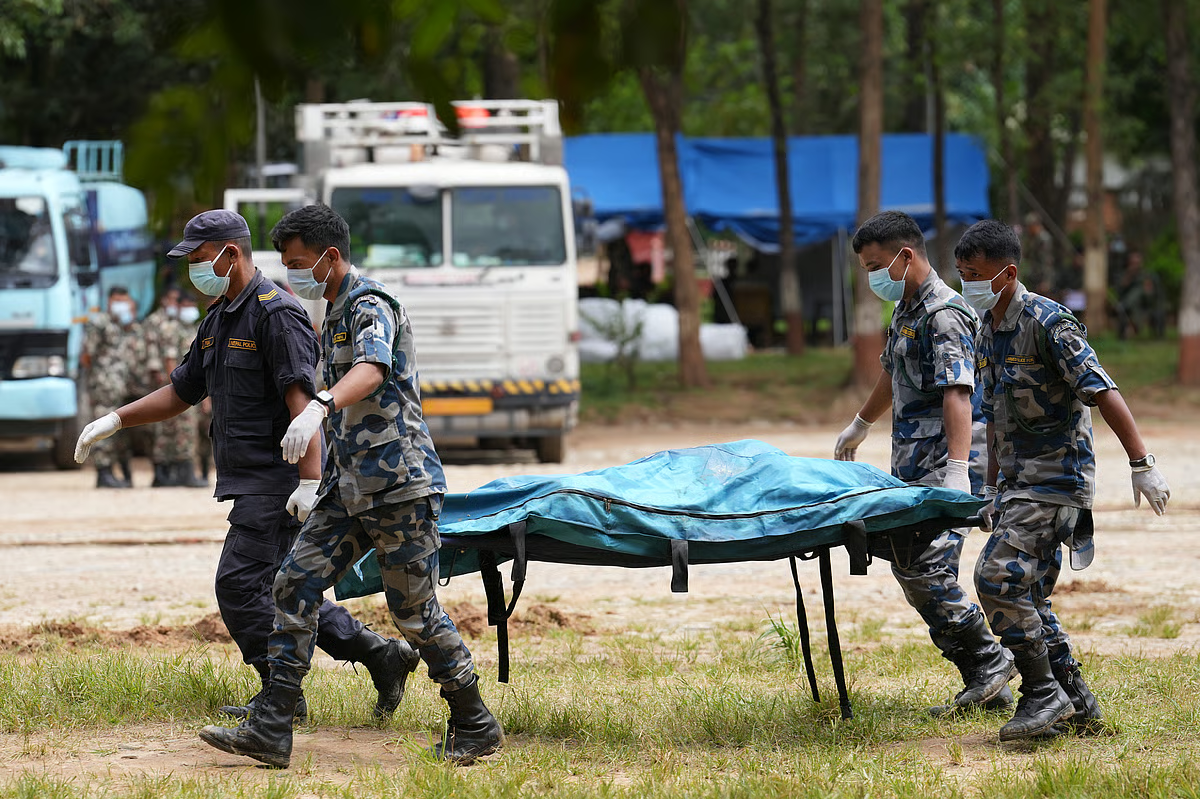
Nepal has begun preparations to bury unidentified and unclaimed bodies recovered from the devastating flash floods that swept through parts of the country this week, as authorities grapple with the risk of disease and the rapid deterioration of the remains.
At least 734 bodies have been recovered so far after torrents of water and mud struck villages and towns on Wednesday. Chitwan district, in southern Nepal and bordering India, has reported the highest number of recoveries, with 233 bodies.
Authorities in Chitwan decided on Saturday to bury the bodies after hospitals and temporary facilities ran out of space to store them. Health officials warned that the decomposition of bodies and the foul smell from makeshift storage facilities could pose a public health risk.
“As the number of dead bodies piled up, we used a house as a cooling centre where the bodies were kept,” an official said.
“As the house also ran out of space, we had no alternative but to bury them,” the official added.
DNA samples, identification numbers
Authorities, however, are taking steps to ensure that relatives can identify and recover the bodies at a later stage.
DNA samples are being collected from each body before burial, while officials are maintaining detailed records and assigning every body a unique identification or reference number. The bodies are also being tagged with their locations to facilitate their recovery if a DNA match is established later.
By Saturday afternoon, DNA profiling of more than 100 bodies had been completed and the remains were ready for burial, officials said.