
Netherlands’ ‘Cycling Culture’: The ‘Maut Roko’ connection of Netherlands ‘Cycling Culture’ will surprise you, the whole story will change your thinking.

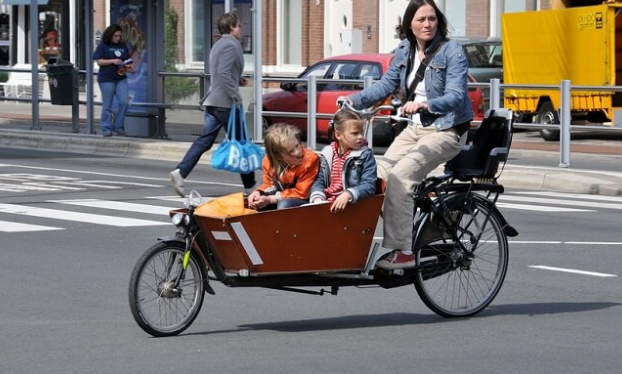
The Netherlands’ ‘Cycling Culture’: Similarity with a bicycle, this sounds a bit strange doesn’t it? Yes, the wheel of a bicycle moves forward with similarity. Don’t be surprised, anything is possible in the world. Netherlands is a country which is famous all over the world for its ‘Cycling Culture’, where there are more bicycles than humans. The total population here is around 1.8 crores, while the number of bicycles is more than 2.3 crores. Here both the government and the public showed commitment in adopting bicycles.
Read:- Pakistan should stop giving shelter to terrorism, otherwise decide whether it wants to be a part of geography or history: Upendra Dwivedi.
Properties
Infrastructure: More than 35,000 kilometers of protected and separated cycle tracks (Fietspaden) have been built throughout the country.
Geography: The land here is completely flat, which makes cycling very easy and less tiring.
Safety: Dutch law places the safety of cyclists and the rights of pedestrians above those of car drivers in the event of an accident.
Huge Parking: There are huge and modern underground parking for thousands of bicycles outside the stations and markets.
Read :- PM Modi reached Afslootdike Dam, said – Netherlands’ water management is an example for the whole world.
Weather: People here like to travel by bicycle even in sunshine, rain or snowfall.
Social and cultural impact
Childhood: Here, along with learning to walk, children also learn to ride a bicycle. Most of the children going to school use bicycles.
Symbol of equality: Cycling in the Netherlands is not a sign of poverty or compulsion. The Prime Minister and members of the royal family also travel by bicycle like the general public.
Read:- Preparations for resignation of British Prime Minister Keir Starmer created an uproar in politics, will the Labor Party government fall?
Driving without a helmet: People here generally do not wear helmets in everyday travel, as the cycle tracks are very safe and completely separated from the vehicles.
Environment friendly: Due to this culture, the people of the Netherlands remain extremely fit and the pollution levels are very low. Do you want to know about the cycling history of the Netherlands or about the traffic rules there?
The Netherlands’ transformation from a car-friendly country to a bicycle-friendly country has a long history of movements, global crises and correct political decisions.

Bicycle history of the Netherlands
‘Royal Dutch Touring Club’
1. Late 19th century: hobby of the rich (1880 – 1900) The first bicycle (velocipede) arrived around 1820, but was not very successful initially. Until the 1890s, the bicycle was only a means of entertainment for the upper class and the rich. People used to ride it as a hobby in the parks on weekends. Meanwhile, the ‘Royal Dutch Touring Club’ (ANWB) was established in 1883, which later played a big role in promoting cycling.
Read:- Kami Rita Sherpa: Kami Rita Sherpa has a deep connection with the mountains, breaking her record and conquering Mount Everest for the 32nd time.
2.Riding by the common people (1900 – 1940)
As bicycles became affordable and durable between the 1910s and 1920s, they became the main form of transportation for workers and the general public. By 1911, the Netherlands had the highest number of bicycles per capita in Europe. During the Second World War (WWII) the country faced severe fuel (petrol) shortages, making bicycles a lifeline for the Dutch people.
1950s – 1960s: Invasion of the car and crisis After World War II, the Dutch economy grew rapidly and people’s incomes improved. People gave up bicycles and started buying cars. The government also started widening roads and creating parking by removing cycle tracks. This resulted in huge traffic jams, pollution and terrible road accidents in the cities.

‘Stop de Kindermoor’
‘Stop de Kindermoord’ movement: More than 3,300 people died in car accidents in 1971, including more than 400 children. People and parents of the entire country came out on the streets against this. He started a big civil movement called “Stop Killing Children”. People blocked roads and demanded safe routes for bicycles from the government.
oil crisis
Oil Crisis of 1973: During this time, the countries of the Middle East stopped the supply of oil, due to which the prices of petrol in the Netherlands started skyrocketing.
‘Car-Free Sunday’
The government declared ‘Car-free Sundays’ to save fuel. Due to this, people again understood the importance of bicycles.
Since 1980: Bicycle policy and modern infrastructure In response to public pressure and the oil crisis, the Dutch government completely changed its transport policy. Cities were redeveloped. Car routes were shortened and more than 35,000 km of protected, red-painted dedicated bike lanes were created.
Read :- Thailand Open 2026: Satwik-Chirag pair missed the title, Martin-Carnando lost 21-12, 25-23
right thinking of government
Thus, the Dutch people, with their stubbornness and the right thinking of the government, defeated the empire of cars and made the bicycle their national pride.
Comments are closed.