

28
Bihar Health Minister’s swift action hints at Nitish Kumar-style administrative approach.
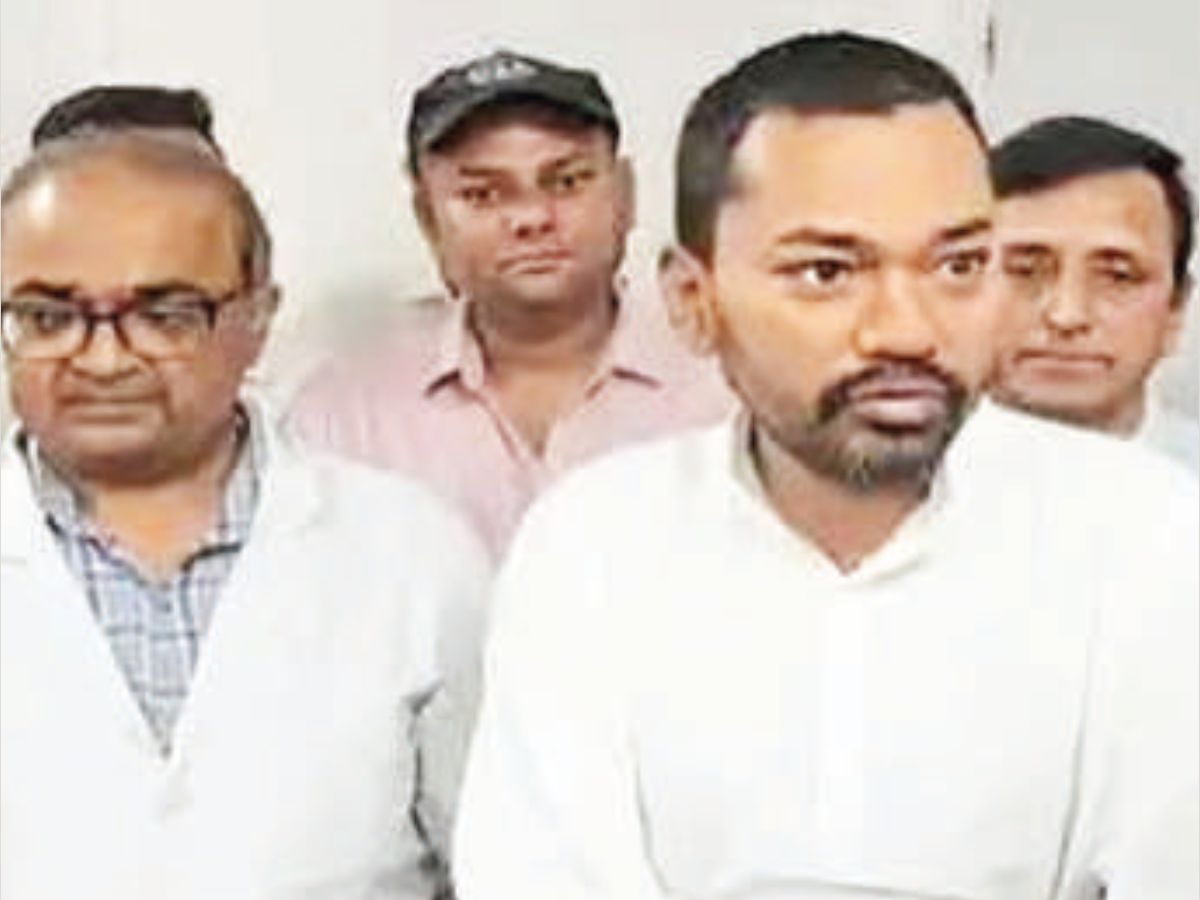
For the first few weeks after taking oath as Bihar’s Health Minister, Nishant Kumar was subjected to relentless trolling on social media. Political opponents and online commentators mocked his physical appearance, the way he dressed and questioned whether the first-time minister was equipped to handle one of the state’s most challenging portfolios. Less than a month into office, however, Nishant has responded not through rhetoric but through administrative action. His decision to remove the Principal of the Patna Medical College and Hospital (PMCH) on 25 June after a surprise inspection has emerged as the first major assertion of his authority as a minister, while also offering the clearest indication yet that he intends to adopt the governance style long associated with his father and Bihar Chief Minister Nitish Kumar.
The episode began with Nishant’s surprise visit to PMCH on 23 June, where he found Principal Dr. Narendra Pratap Singh absent from duty. A departmental inquiry reportedly found that the official was at his private clinic during office hours. The government subsequently relieved Singh of the additional charge of PMCH Principal, transferred him to Government Medical College, Bettiah, and handed additional charge of the institution to Dr. Geeta Sinha.
The significance of the decision lies not merely in the disciplinary action but in the method employed. Surprise inspections followed by swift administrative action have been one of the defining features of Nitish Kumar’s governance for nearly two decades.
In the early years of his first tenure as Chief Minister, one of Nitish Kumar’s flagship priorities was addressing Patna’s chronic flooding by constructing an extensive drainage network, particularly in localities such as Kankarbagh that routinely remained waterlogged during the monsoon.
During one inspection of the project, Nitish picked up two bricks that were to be used in the drains and lightly struck them against each other. The bricks broke apart, revealing that inferior quality material was being used. He immediately ordered action against the officials concerned and directed that the contractor should not receive any further government work. The episode became emblematic of Nitish Kumar’s insistence on personally verifying the quality of public works rather than relying solely on official reports.
The same approach was visible repeatedly throughout his tenure. Nitish routinely conducted unannounced inspections of hospitals, schools, government offices and development projects, with erring officials often facing transfers, suspensions or departmental proceedings. In September 2023, he carried out surprise morning inspections of the Bihar Secretariat, finding several officers and even ministers absent from their offices and directing that attendance norms be strictly enforced.
Nishant’s handling of the PMCH episode closely mirrors that administrative template. A surprise inspection, followed by an inquiry and immediate disciplinary action, has sent a message to the bureaucracy that negligence and absenteeism will invite consequences.
The action has also acquired political significance because it came days before Nishant met JD(U) Working President Sanjay Jha in Patna.
While the party has made no formal announcement regarding any future leadership arrangement, the meeting and Nishant’s growing administrative visibility have fuelled discussion within political circles about his expanding role in both the government and the organisation.
Those who have known Nishant Kumar over the years say the development is consistent with his personality. People familiar with his functioning had told this correspondent when he was preparing to enter politics that he was not someone who believed in rushing into decisions. Instead, they described him as someone who preferred to first understand a system before asserting himself. They also said he was acutely aware of the expectations, scrutiny and comparisons that would inevitably accompany his entry into public life as Nitish Kumar’s son.
The PMCH action appears to reflect that approach. Rather than seeking immediate visibility through frequent public interventions, Nishant has allowed his first significant statement as a minister to come through an administrative decision. Those familiar with the JD(U)’s internal functioning believe this is unlikely to remain an isolated episode and expect his role, both within the government and the party, to become increasingly pronounced as he settles into office.
For those who had dismissed him as a reluctant entrant into politics or someone who could be easily overshadowed because of his reserved demeanour and his father’s towering legacy, the first few weeks in office have begun to offer a different picture.
Whether Nishant Kumar can sustain that momentum remains to be seen, but his opening moves suggest he intends to carve out authority not through grand political pronouncements but by borrowing from a governance model that helped define Nitish Kumar’s tenure for nearly two decades.

Comments are closed.