


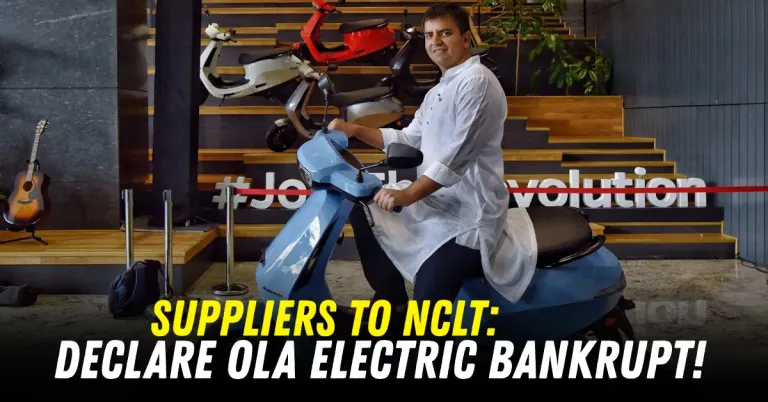
Ola Electric Technologies Private Limited has received a notice from the Bengaluru Bench of the National Company Law Tribunal in an insolvency petition filed by Seoyon E-Hwa Summit Mobility Krishnagiri Private Limited. The automotive component supplier has alleged an outstanding payment default of Rs 9.57 crore.
The case has been filed under Section 9 of the Insolvency and Bankruptcy Code, which allows an operational creditor to seek the initiation of insolvency proceedings over unpaid dues. However, the tribunal’s decision to issue a notice does not amount to admission of the insolvency petition or a finding that Ola has defaulted. Ola will have an opportunity to contest the claim before the NCLT decides whether the petition meets the conditions for admission.
The supplier told the tribunal that it had initially raised a demand of Rs 21.19 crore through a statutory notice dated April 2, 2026. It said Ola subsequently made a part payment but continued to dispute the remaining liability, citing warranty-related issues and the supply of spare parts.
The NCLT directed that notice be issued subject to the petitioner producing the originally signed extract of a board resolution dated March 11, 2026, along with the identity documents of the person who signed the petition. The matter has been listed for further consideration on August 31, 2026.
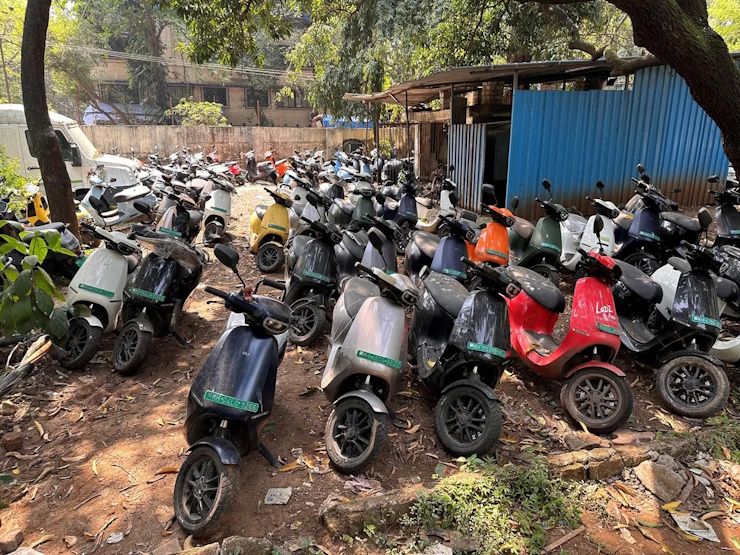
The new proceeding is part of a wider series of supplier disputes involving the electric two-wheeler company. Sterling E-Mobility Solutions and Anevolve Mando E-Mobility have also approached the NCLT over alleged unpaid dues.
Ola has maintained that those claims arise from pre-existing commercial disputes involving component quality, warranty obligations and product performance. The company has said that arbitration proceedings have already been initiated in those cases.
An earlier insolvency petition filed by vehicle-registration service provider Rosmerta was withdrawn following a settlement. These cases do not establish insolvency by themselves, but the repeated appearance of vendor disputes increases scrutiny of Ola’s working-capital position and supplier relationships.
The legal proceedings have surfaced after a difficult financial year for Ola Electric. Revenue from operations fell 50.1 percent to Rs 2,253 crore in FY26, from Rs 4,514 crore in FY25. Deliveries declined from about 3.08 lakh vehicles to 1,73,794 vehicles, a fall of roughly 44 percent.
The company’s annual net loss narrowed to Rs 1,833 crore from Rs 2,276 crore, helped by a reduction in operating costs and other expenses. Total expenses declined from Rs 6,253 crore in FY25 to Rs 3,245 crore in FY26. Consolidated gross margin improved to 30.6 percent for the year and reached 38.5 percent during the March quarter.
The margin improvement, however, came on a much smaller revenue base. Ola delivered only 20,256 vehicles in the fourth quarter, while quarterly revenue fell to Rs 265 crore. Its average fourth-quarter delivery rate was therefore below 7,000 vehicles a month.
Ola’s loss of market share has been equally sharp. Based on Vahan registration data, its share of the electric two-wheeler market declined from 36.7 percent in calendar year 2024 to 16.1 percent in 2025. Ola registered 1,96,767 vehicles during 2025, even as TVS Motor, Bajaj Auto, Ather Energy and Hero MotoCorp expanded their electric scooter operations.
Ather also moved ahead of Ola on annual revenue in FY26. Ather’s revenue rose to Rs 3,671 crore, supported by the growth of the Rizta family scooter and a wider retail network. This reversal is significant because Ola had previously operated at a substantially larger scale than the Bengaluru-based rival.
Ola’s liquidity position requires a more precise reading than the earlier claim that the company had Rs 1,600 crore of net cash. Management said that Ola had approximately Rs 1,550 crore to Rs 1,600 crore of gross cash on March 31, 2026, against debt of about Rs 2,500 crore. This translated into net debt of roughly Rs 950 crore.
The company expects operating cash-flow burn of Rs 300 crore to Rs 500 crore during FY27, depending on the speed of its volume recovery. It also expects more than Rs 400 crore of debt repayments during the year and may accelerate some repayments because of its cost of borrowing.
Ola had its first positive consolidated operating cash-flow quarter in Q4 FY26, reporting Rs 91 crore. Its automotive business generated operating cash flow of Rs 213 crore and free cash flow of Rs 173 crore. Consolidated free cash flow, however, remained negative because the cell-manufacturing business is still in an investment phase.
The board also proposed another revision in the use of IPO proceeds in March 2026. It reduced the amount earmarked for research and product development by Rs 575 crore. Of this, Rs 475 crore was proposed for debt repayment or prepayment and Rs 100 crore for organic growth. The proposal reduced the revised R&D allocation from Rs 1,505 crore to Rs 930 crore and remained subject to the required shareholder approval.
Ola has cut consolidated quarterly operating expenditure, including lease costs, from Rs 844 crore in Q4 FY25 to Rs 428 crore in Q4 FY26. Management expects this figure to move towards Rs 350 crore over the next few quarters as the effects of network rationalisation, lower overheads and service-cost reductions become fully visible.
The company now estimates that adjusted operating EBITDA break-even can be achieved at monthly volumes of around 20,000 to 25,000 vehicles, depending on product mix, pricing and commodity costs. This is substantially above the company’s fourth-quarter delivery rate and also higher than the 15,000-unit estimate mentioned in some earlier reports.
Ola says its service turnaround time, parts availability and pending-service volumes improved during the second half of FY26. Those improvements will need to continue while sales rise because the company’s earlier service problems contributed to customer complaints and regulatory scrutiny.
The financial turnaround therefore depends on three outcomes: sustaining gross margins without excessive discounting, raising monthly volumes towards the revised break-even range and controlling cash outflow while servicing debt. The supplier petitions add another immediate test. Ola must show that the disputed claims are genuine commercial disagreements rather than signs of a broader inability to meet vendor obligations.
Comments are closed.