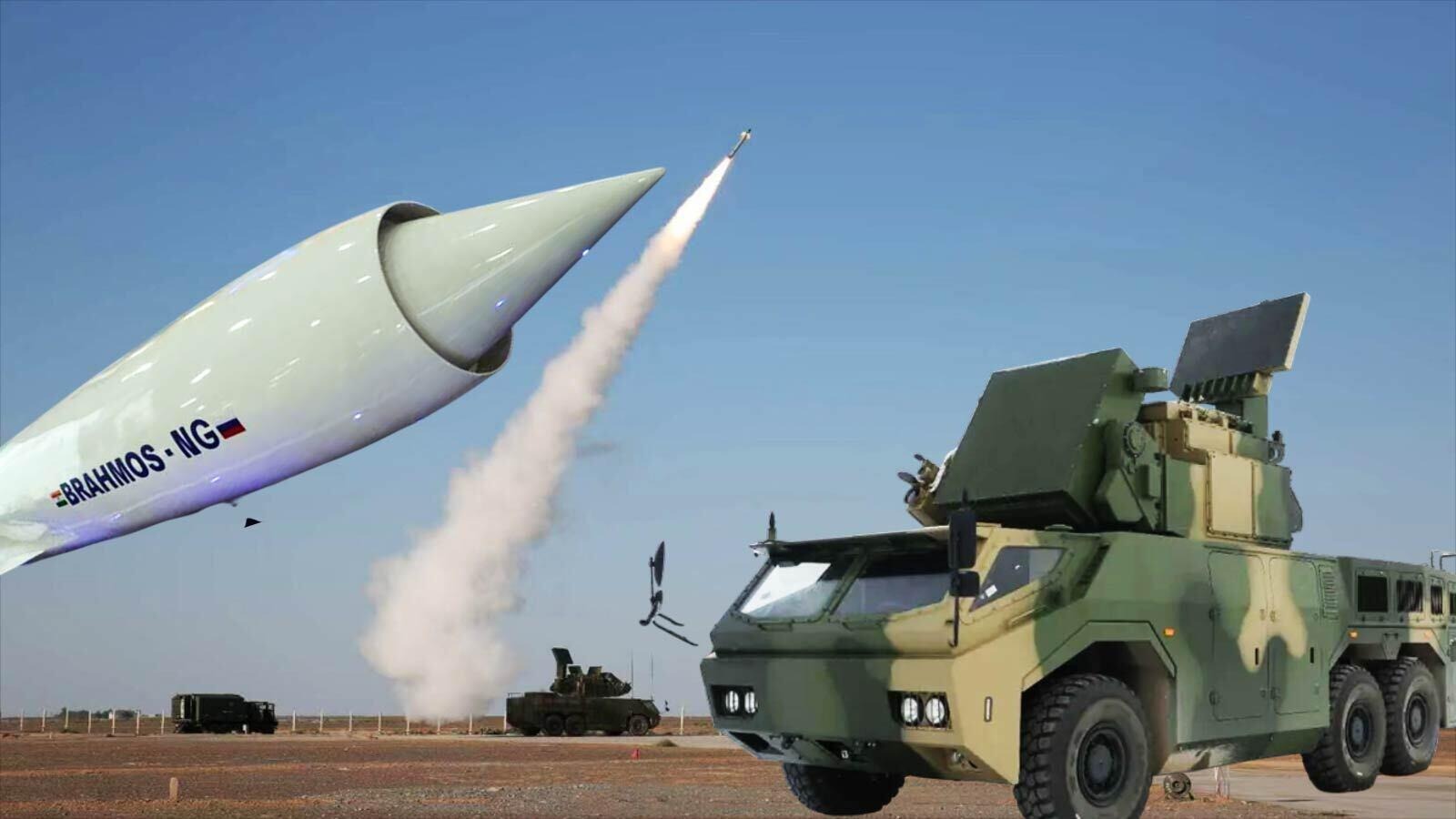
The temperature of tension seems to be rising once again in the geopolitical and strategic activity of South Asia, because in the name of upgrading the security of its borders, Pakistan Army has deployed the state-of-the-art air defense missile system made in China, HQ-17AE, at strategically important targets. This mobile air defense system, equipped with Chinese defense technology, is promoted worldwide as a highly lethal weapon to deal with short-range and medium-altitude air threats. It is being claimed in Pakistani military circles that the introduction of this new system has given unprecedented strength to their air defense cover. However, a debate has erupted among defense experts and strategic affairs experts as to whether this shield based on Chinese technology is really capable of standing up to the invincible and extremely lethal weapons of the Indian Army or whether it is limited to mere paper claims. Can China's HQ-17AE system intercept India's BrahMos supersonic missile? After this entire deployment, the biggest and important question that is arising in the minds of military analysts is whether this HQ-17AE system deployed by Pakistan has the power to stop India's powerful BrahMos supersonic cruise missile like Brahmastra or not. BrahMos missile is known all over the world for its impeccable accuracy, ability to fly at low altitude and speed of Mach 3 i.e. three times the speed of sound. Defense scientists clearly believe that the kind of highly advanced radar tracking and nano-second reaction time required to counter modern supersonic and hypersonic stealth missiles like BrahMos is far beyond the technical capabilities of this Chinese system. Determining the radar cross-section and flight trajectory of a very fast-moving BrahMos missile and destroying it in the air would be no less than a tough task for a medium-range defense system like the HQ-17AE. Technical Features of HQ-17AE and Ground Reality of China's Defense Exports The HQ-17AE system, manufactured by a Chinese defense manufacturing company, is considered to be an advanced and modern clone of Russia's famous Tor-M1 air defense system, which has features like all-weather tracking, vertical launch mechanism and a combination of radar and missile launcher on a single vehicle. The system is primarily designed to target short-flying drones, fighter planes, helicopters and to some extent guided bombs. But when it comes to countering hypersonic and supersonic cruise missiles on the modern battlefield, these types of systems show their limitations. The purchase and deployment of such expensive Chinese weapons by the Pakistan Army in this period of economic crisis is mainly a psychological attempt to show its domestic public that their defense preparedness is still strong, while on the ground they stand far behind the Indian Defense Forces in terms of technological superiority. Indian strategic preparedness and increasing scope of self-reliance in the defense sector. All these neighboring activities and deployment of weapons are being closely monitored by India. Today's new India is no longer a country dependent only on imports in the defense sector, but the Indian Army has such a deadly arsenal of missiles like BrahMos as well as indigenous missile systems like Akash, Pralay and Agni, which has the full capability to destroy any enemy's air defense system within a few moments. India is continuously upgrading its strategic firepower and is fully prepared to deal with every challenge of modern warfare. In such a situation, no matter how many new Chinese defense systems are deployed by Pakistan on the border, they are going to prove ineffective in front of India's strategic edge and strategic superiority, because both the offensive and defensive policies of the Indian Army are always ready to give a befitting reply to every audacity of the enemies. Impact on regional stability and future military equations: This blind arms race in South Asia and the game of continuously providing sophisticated military equipment to Pakistan through China has posed a serious challenge to regional peace. As part of its expansionist policies and diplomacy to indirectly encircle India, China is using countries like Pakistan as its arms market, so that it can show the world how modern its defense products are. However, in the actual battlefield, paper claims and grandeur are soon exposed, which the Pakistani military leadership is well aware of. India's mature and strong foreign and defense policy has proved that the country is fully capable of protecting its sovereignty and its defensive and offensive systems are infallible to face any external threat, thereby keeping the balance of peace and stability on the border firmly in India's favor.