
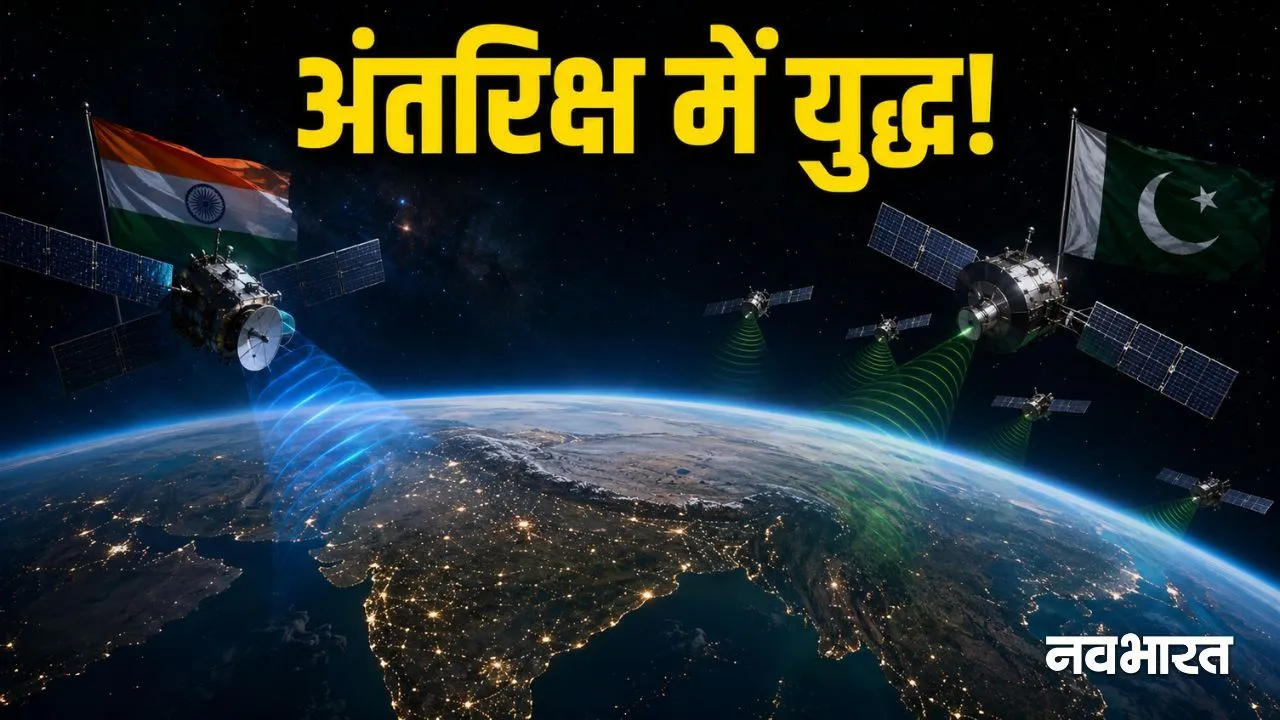
Explainer: Space is becoming the new battleground of South Asia, Pakistan launches 6 spy satellites; How prepared is India?

Pakistan launched six spy satellites: One year after Operation Sindoor launched by India in response to the terrorist attack in Pahalgam, Jammu and Kashmir, the focus is shifting from the battlefield to space. While military conflicts are visible on the ground, modern surveillance now takes place hundreds of kilometers above the earth through satellite. Pakistan has recently launched satellites, in which China has also had a lot of support.
New developments in the space have caught the attention of strategic analysts. This development has sparked debate over how space-based surveillance could shape India-Pakistan competition in the future and whether South Asia is entering a new era of orbital intelligence gathering?
Pakistan launched 6 satellites
Pakistan has launched six Earth observation satellites between January 2025 and April 2026. These satellites have been designed to take pictures of the Earth and collect information about the activities happening on the ground. Rear Admiral Sudhir Pillai, a former Indian Navy officer, said in a blog post analyzing the recent launches that the pace of Pakistan’s satellite deployment marks a major change in its space programme. He further said that satellites together can keep a regular eye on Indian territory. With this, a detailed picture of the development taking place at the border and military bases can be made.
Lieutenant Colonel JS Sodhi (retd) says the expansion of six satellites should be seen as part of Pakistan’s effort to strengthen intelligence gathering capabilities with China’s support.
Why are these modern satellites necessary?
- A single satellite can capture images only when it passes over a place.
- But a group of satellites working together can visit the same area more often.
- This means that Pakistan can keep an eye on the changes happening on the ground. Can track the movement of vehicles, ships and military equipment and compare images taken on different days.
- Some newer satellites also use advanced imaging technologies that can detect camouflage, structural changes, and activity that are not visible with normal imaging.
- Lieutenant Colonel Sodhi explains that satellites become especially useful during battles because they can provide almost real-time information about army movements, equipment and strategic deployment.
How important is the orbit of these satellites?
A satellite’s orbit determines how often it can pass over a particular area and monitor it. Analysts say that Pakistan’s latest PRSC-EO3 satellite seems to be placed in such an orbit that it can cover Pakistan, India and Kashmir more often. This allows repeated imaging of the same area, making it easier to track changes on the ground over time.
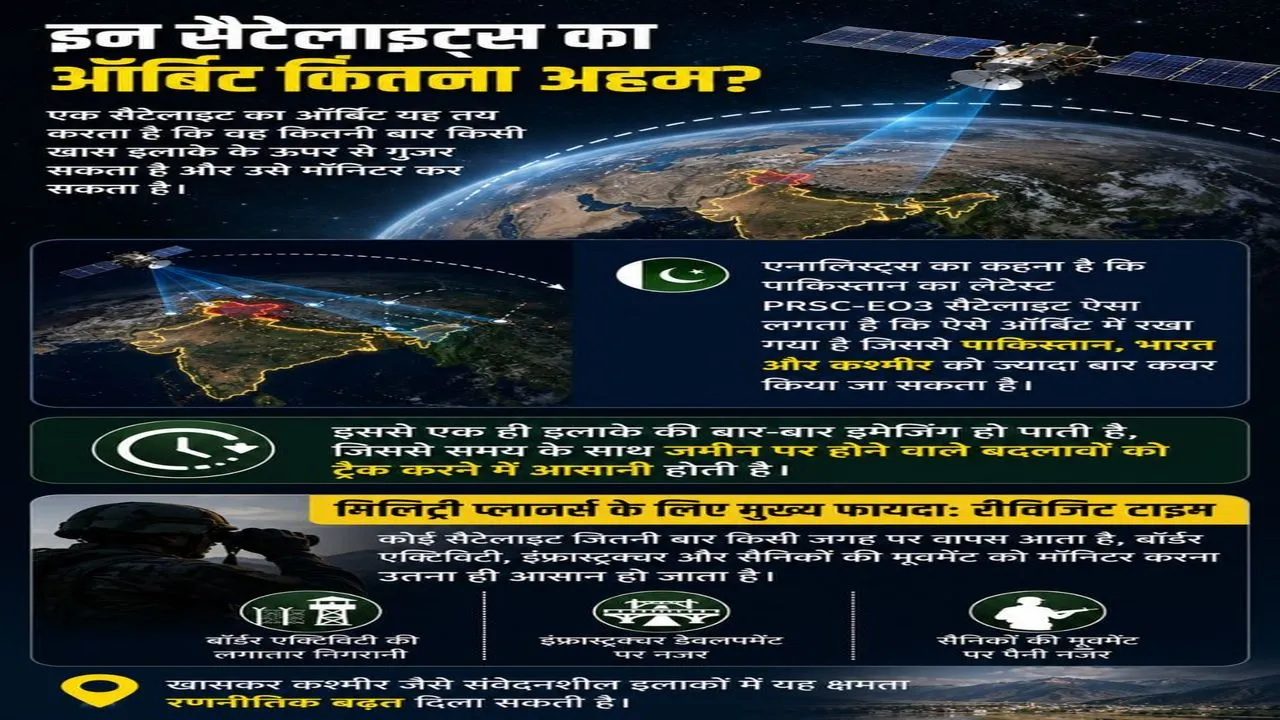
Its main advantage for military planners is revisit time. The more often a satellite returns to a location, the easier it becomes to monitor border activity, infrastructure and troop movements. Especially in sensitive areas like Kashmir.
Can these satellites see everything?
No. Advanced Satellites It also has its own capabilities. Optical satellites can be affected by cloud cover and weather conditions. While imaging quality depends on orbital position and revisit frequency. So military planners combine satellite intelligence with drones, aircraft, radar systems and human intelligence.
China’s role in Pakistan’s space program
Many of Pakistan’s recent satellites were launched with the help of China. Some were launched from Chinese rockets, while some were made in collaboration with Chinese organizations. Ashwin Prasad Rao, space strategy expert at the Takshashila Institution, told The Print that Pakistan’s surveillance capability should be seen in the context of growing China-Pakistan cooperation in space. He believes that the speed at which Pakistan has expanded its satellite network would have been difficult without any external help. Pakistan’s growing surveillance capabilities cannot be separated from its growing strategic and technological cooperation with China.
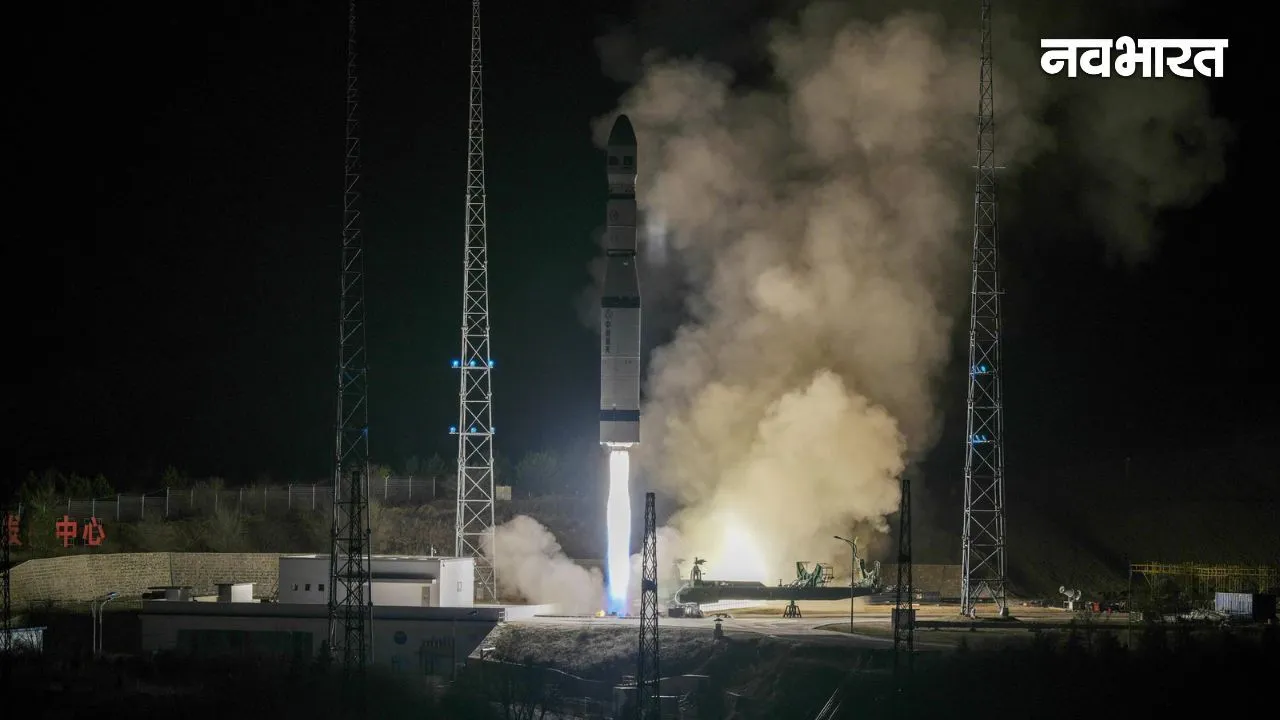
A Pakistani satellite being launched from China’s Taiyuan Satellite Launch Centre, (Source-
Why is this a matter of concern for India?
The concern is not only about Pakistan’s new satellites, but space mission I also take note of India’s recent failures. Between 2025 and 2026, India faced failure in critical satellite programs such as Earth Observation and Navigation Systems used for mapping, communication and defense. An old ISRO official who keeps an eye on regional space programs says that India is already continuously keeping an eye on foreign satellites. He further says that the solution is not to stop others, but to strengthen India’s own capabilities.
Experts like Ashwin Prasad Rao say that today most Earth observation satellites are dual-use, which means they can be used for both civilian and military purposes.
Main concerns facing India
- Satellites can track army movements and military activities.
- They can keep an eye on borders, roads and supply routes.
- Future battles may rely more on space intelligence rather than ground weapons.
Sodhi warned that China-Pakistan cooperation adds another layer of concern. He says that Pakistan’s satellite growth is more driven by China through technology, launch and navigation systems. According to him, in any future war, Pakistan can benefit from shared intelligence, due to which space-based surveillance will become a big factor in modern warfare.
How prepared is India in surveillance satellite?
India already has a strong surveillance satellite network. ISRO systems like RISAT, CartoSat, EMISAT and HySIS help in border monitoring, military tracking and intelligence gathering in sensitive areas. Now the focus is less on capacity and more on speed. Pakistan has increased its space activities, launching about six satellites in 16 months with the help of China. Some of which are aimed at improving imaging and observation.
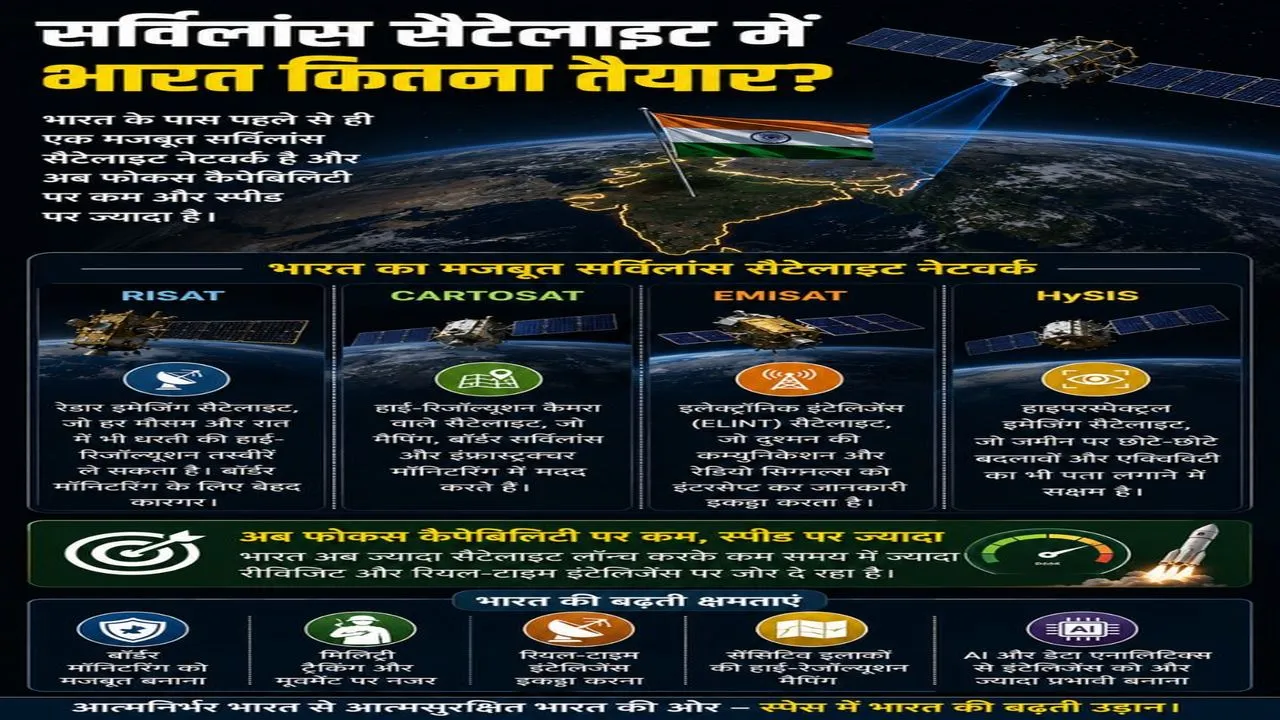
52 defense surveillance satellites approved
In response, India has approved plans for about 52 defense surveillance satellites by 2029, worth approximately ₹26,968 crore. The objective of this strategy is to ensure continuous monitoring of the border and fast intelligence flow. India plans to launch a ‘bodyguard satellite’ to protect its space assets after a close orbital incident with a neighboring satellite in 2024; Is also developing.
As Lt Col JS Sodhi (retd) says, India’s capability is strong, but the challenge lies in keeping pace with the rapidly increasing space competition. This is a shortcoming that Operation Sindoor in May 2025 brought to the fore and made more urgent.
Also read: explainer: What is JAAC which is plaguing Pakistan? How is it giving fuel and water to the chaos in PoK?
Is space becoming the new battleground?
Many researchers believe that satellites are becoming centers of intelligence and military planning. Sodhi argues that South Asia is gradually moving towards space-driven surveillance, where orbital intelligence will play a key role in future security dynamics. He sees this change in the context of India’s larger neighbourhood, which includes countries like Pakistan, China, Nepal, Bhutan, Bangladesh, Myanmar, Sri Lanka, Afghanistan and Maldives.

Comments are closed.