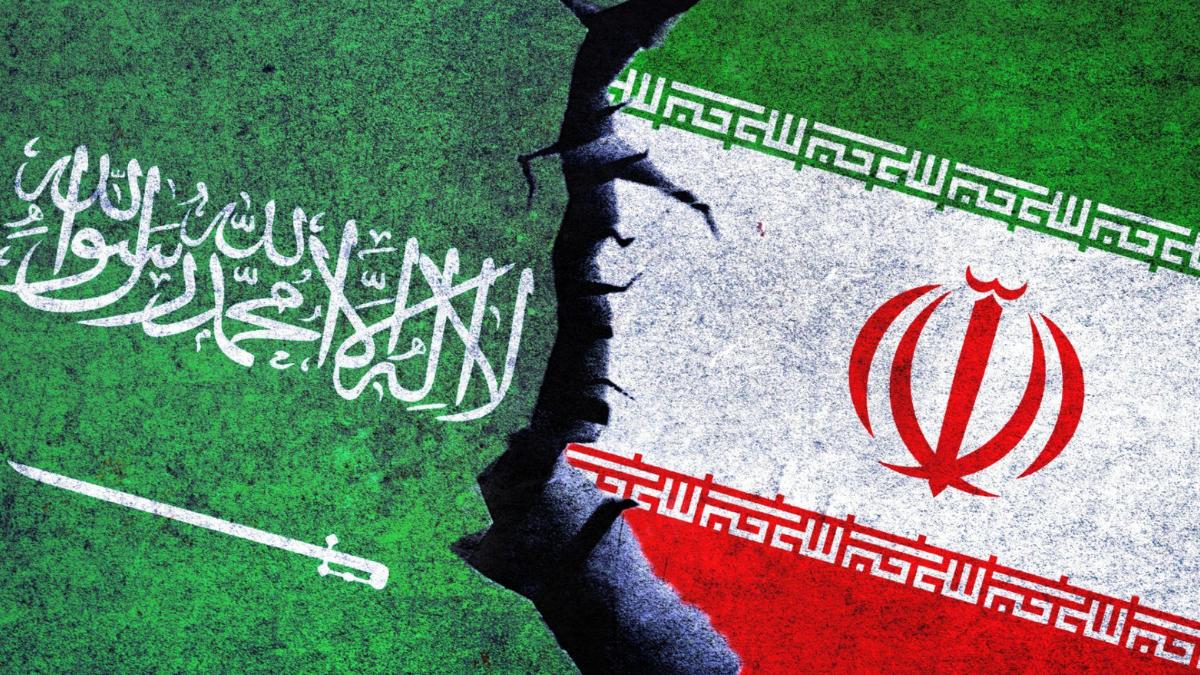
For most of the past four decades, Iran’s strategic planners treated the 900-kilometer frontier with Pakistan as a policing problem rather than a military one. That assumption is no longer safe. Pakistan has not turned hostile to Iran. It has done something more consequential for Tehran’s planners: it has joined the order of battle facing Iran across the Gulf while remaining Iran’s principal diplomatic channel.
From Treaty Text to Deployed Force
The Strategic Mutual Defense Agreement, signed in Riyadh on 17 September 2025, treats aggression against either country as aggression against both. Within days of the war’s outbreak, Foreign Minister Ishaq Dar invoked it in a carefully worded warning to his Iranian counterpart, Abbas Araghchi. By May he was calling the Kingdom a “no-go area.”
In early April, Pakistani combat aircraft landed at King Abdulaziz Air Base in the Eastern Province, roughly 300 kilometers across the Gulf from Bushehr. The force now numbers some 8,000 troops, a squadron of mostly JF-17 fighters, two drone squadrons and an HQ-9 air defense system, operated by Pakistanis and paid for by Riyadh. The confidential text reportedly allows for up to 80,000 troops.
From Theater to Plumbing
Last month I had argued that the Mecca Joint Defense Agreement, which brought Turkey in on August 7, had failed its first test. After the Houthi strikes of 8 September, Islamabad said no military response was under discussion and that Pakistan would act “when time comes.” On October 5 it came. After Houthi attacks on the holy cities, the three members met in an emergency session in Riyadh, invoked the pact for the first time and agreed to rapidly deploy agreed forces to the Kingdom. They also agreed to set up a secretariat on Saudi soil. The plumbing is still thin: deployment runs under “approved arrangements” and national laws, with no integrated command. But a pact that looked like deterrence theater in September is acquiring substance in October, and its first trigger was an Iranian ally, not Iran.
The Nuclear Shadow
Pakistan holds an estimated 170 warheads. The Shaheen-III, with a declared range of 2,750 kilometers, covers all of Iran from a direction its air and missile defenses were never oriented to face. In September 2025, asked whether that deterrent extended to the Kingdom, Defense Minister Khawaja Asif said Pakistan’s capabilities “will be made available.” The same night he told Reuters that nuclear weapons were “not on the radar.”
No published clause resolves the contradiction, and that is precisely the point. A non-nuclear Iran, its own program battered by successive strikes, must now assume that any serious confrontation with Riyadh carries a nuclear rung it cannot match.
What It Means for Tehran
Three consequences follow. First, Iran’s ability to hold Saudi energy infrastructure at risk, directly or through the Houthis, loses coercive value if using it might summon a nuclear-armed third party. Second, Iran faces a latent two-front problem. The cross-border strikes of January 2024 showed that Pakistani aircraft and missiles can reach Sistan and Baluchestan, and forces held back against that contingency are unavailable in the west and south, where pressure is already acute. Third, Iran’s diplomatic exposure has grown. The mediator of the talks on which an end to the war depends also garrisons the opposite shore.
On 2 October Dar said he had briefed Tehran on how Pakistan would honor the pact, even as Iran was using Islamabad to float political engagement with the Houthis. Such briefings read less as reassurance than as notification.
None of this means Islamabad wants war with Iran. With its Afghan frontier active and India to the east, it has every reason to avoid one. A regime that survived the killing of its Supreme Leader will not be cowed by a communiqué either. But prudent planners build on capabilities, not intentions.
Where India Sits
For India the stakes are concrete. The Eastern Province hosts a large Indian workforce, many of them from Kerala, whose safety now partly depends on how this architecture behaves under strain. New Delhi’s studied minimalism remains sound, but it should now read the Mecca pact less as a signaling device still finding its feet and more as a structure that is quietly hardening. For Tehran, the eastern frontier is no longer a quiet border. It is a front.