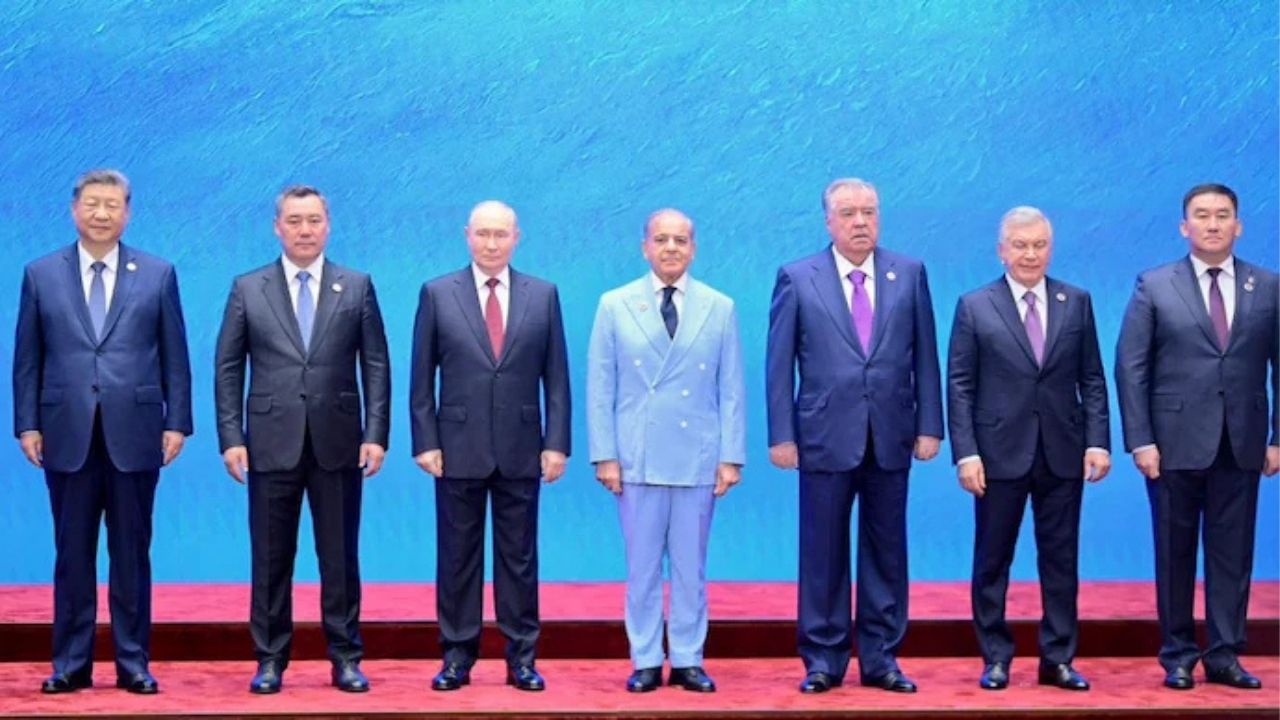
Bishkek: A single photograph from the Shanghai Cooperation Organization (SCO) Summit in Bishkek on Tuesday triggered a fresh diplomatic debate between India and Pakistan after the Pakistan Prime Minister's Office shared an edited version of the official leaders' group picture, leaving Prime Minister Narendra Modi out of the frame.
The original SCO ‘family photo’ featured all major leaders attending the summit, including Prime Minister Narendra Modi, Pakistan Prime Minister Shehbaz Sharif, Russian President Vladimir Putin, Chinese President Xi Jinping and Iranian President Masoud Pezeshkian.
However, the image posted by Pakistan's official social media account showed a cropped version in which Modi and several other leaders were missing, while Shehbaz Sharif appeared more prominently positioned.
India later shared the complete photograph from the summit, showing the actual arrangement of all leaders. The contrasting images quickly went viral, turning a routine diplomatic moment into a major political and social media controversy.
The incident has once again highlighted how official photographs at international summits are increasingly becoming tools of diplomatic messaging, public perception and political narratives.
SCO Summit Photo Row Sparks Political Debate
The controversial image was captured during the SCO leaders' group photograph in Bishkek, Kyrgyzstan, where heads of government from the 10-member organization gathered for the traditional summit picture.
Diplomatic group photographs are considered important symbols at international events as they represent unity, participation and cooperation among nations.
The complete SCO image showed all participating leaders standing together. However, the version shared by Pakistan's PM Office removed several leaders from the frame, including Indian Prime Minister Narendra Modi.
The edited photograph created a different visual impression, with Sharif appearing closer to the center of the image. The move immediately attracted attention on social media, where users compared the Pakistani version with the original photograph shared by India.
India Shares Full Picture From Bishkek Summit
Prime Minister Narendra Modi's official social media account shared the complete SCO family photograph from the summit. The image clearly showed the presence of all leaders, including Shehbaz Sharif, in their original positions.
The contrast between the two versions became the center of online discussions, with many users questioning why an official account chose to share a modified version of a major international event photograph. The controversy also highlighted the growing influence of digital diplomacy, where images shared online can shape public opinion within minutes.
Shehbaz Sharif's Putin Moment Adds To Summit Buzz
The photo controversy came shortly after another widely discussed moment involving Pakistan's prime minister at the SCO Summit. A video from the event showed Shehbaz Sharif approaching Russian President Vladimir Putin immediately after the group photograph.
As Putin appeared to move away from the photo area, Sharif walked towards him and engaged in a brief interaction. The clip spread rapidly on social media, with users debating the optics of the moment and comparing it with Putin's interactions with other world leaders.
Meanwhile, Prime Minister Modi was seen exchanging greetings with Putin and Chinese President Xi Jinping during the summit, creating another major visual highlight from Bishkek.
PM Modi's Terror Message At SCO Summit
The photo controversy unfolded alongside Prime Minister Modi's strong remarks on terrorism during the SCO meeting. Addressing the gathering, Modi called for a united global approach against terrorism and stressed that countries should avoid selective action against terror networks.
He highlighted the need to eliminate the entire ecosystem supporting terrorism, including financing, recruitment, radicalisation and safe havens. The remarks gained significance as India has repeatedly raised concerns about cross-border terrorism and security challenges. Modi also called for resolving global conflicts through dialogue and diplomacy instead of military confrontation.
Modi, Putin And Xi Jinping Interaction Draws Attention
Another major highlight from the summit was the interaction between Narendra Modi, Vladimir Putin and Xi Jinping. The three leaders were seen exchanging greetings and engaging in conversations during the event.
The visuals attracted international attention as India, Russia and China continue to play important roles in global geopolitics. The interaction reflected India's diplomatic balancing strategy of maintaining strategic relations with major global powers while protecting national interests.
SCO Bishkek Declaration And Key Decisions
The SCO leaders also signed the Bishkek agreement during the summit, focusing on regional cooperation, security and economic development. The declaration called for stronger cooperation among member countries, opposition to terrorism in all forms and reforms in global financial institutions.
The leaders also discussed connectivity projects, trade cooperation and the importance of respecting national sovereignty. The summit came at a time when global power equations are undergoing major changes due to conflicts, economic challenges and shifting alliances.
Bigger Diplomatic Impact
The SCO photograph controversy has become a larger conversation about diplomatic image management in the digital age. While official meetings involve complex negotiations, photographs and social media posts often become powerful political symbols.
For India, the release of the complete photograph reinforced its presence at a major international platform. For Pakistan, the edited image has invited criticism and raised questions over the messaging strategy adopted by its official communication channels. The episode shows how even a small change in a summit photograph can create a major diplomatic narrative.
The immediate impact of the photo controversy is expected to remain limited to political discussions and online debates. However, the incident may continue to influence public conversations around India-Pakistan relations and diplomatic communication strategies.
With upcoming international meetings, including future BRICS and SCO engagements, global attention will remain focused on how major powers manage both diplomacy and digital narratives.