App-based cab and bike-taxi services like Ola, Uber and Rapido have become the main means of travel for working women, students and daily commuters in the metros and tier-II cities of the country. However, late night journeys, drivers taking arbitrary routes and untoward security incidents have raised serious questions on the accountability of digital mobility platforms from time to time. Taking these concerns seriously, the National Commission for Women (NCW) has issued a detailed and strict security advisory for digital transport and cab aggregators across the country. These guidelines, prepared under the leadership of Commission Chairperson Vijaya Rahatkar, have been sent to the Chief Secretaries of all the states and union territories of the country and a request has been made to implement them compulsorily at the ground level. The Commission has a clear stand that the convenience of technology cannot be provided at the expense of the dignity and physical safety of women passengers under any circumstances.
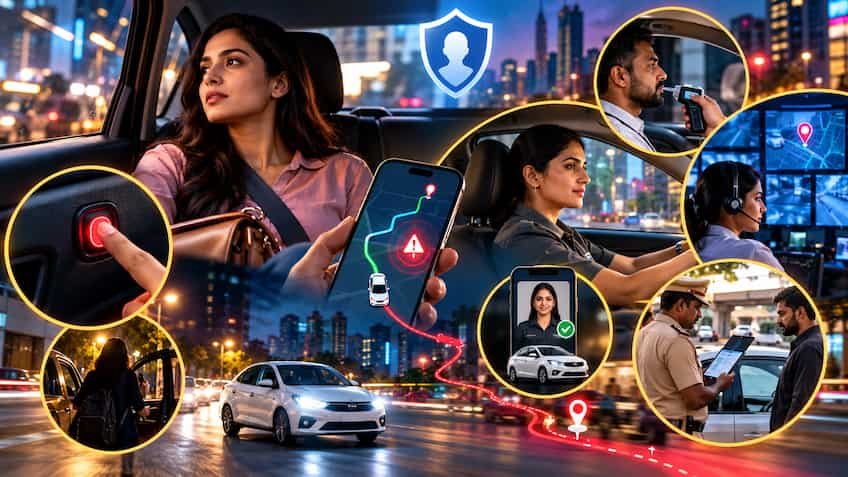
The most prominent provision in the new recommendations issued by the Commission is regarding the presence of 'Physical Panic Button' (SOS Button) inside the cab. Often in an emergency, it is not possible for a woman passenger to take out her mobile phone, open an app or press a digital button in the absence of network. To deal with such situations, there should be a physical emergency button near the back seat of cabs and taxis, which when pressed, the emergency siren will sound and the GPS location of the vehicle will be transmitted live directly to the police control room (112) and the company's 24×7 command and control center. Along with this, all cab aggregators will have to operate a modern control room, which is active round the clock, which can immediately inform the local police in case of any panic alert or untoward incident and provide emergency assistance at the ground level within 15 to 20 minutes.
Many times during cab journeys, drivers take the vehicle through deserted lanes, unauthorized roads or in the opposite direction instead of taking the direct and safe route suggested by the app, thereby creating unknown fear among the women passengers. To completely eliminate this risk, NCW has recommended Real-Time Route Deviation Alerts. If a cab suddenly takes a wrong turn from the fixed GPS route or stops for an unusually long time at a suspicious and deserted place midway, the system will automatically send a loud alert to both the passenger's phone and the control room. Immediately after this, a safety call will be sent from the command center to both the passenger and the driver so that any untoward incident can be nipped in the bud.
The Commission has given a very far-reaching suggestion to increase the mental confidence and comfort of women passengers. Under this, Ola, Uber and other cab platforms have been directed to create and encourage a pool of verified women drivers in their network. When a female passenger is booking a cab for late night or solo travel, the app should provide her with an optional feature to select a female driver if she wishes. Although the Commission has also acknowledged that this facility will depend on the availability of drivers and local practicality, the addition of this option will increase the confidence of women to travel independently.
Many times, the driver and car registration number shown in the app at the time of booking is completely different from the vehicle that arrives at the spot. In such cases, when passengers cancel the ride due to feeling unsafe, the cab companies instead impose cancellation penalty on the passenger. NCW has strongly attacked this unethical system. Citing the rules of the Motor Vehicle Aggregator Guidelines, the Commission has clarified that if the incoming car, its number or the appearance of the driver does not match the profile shown in the app, then the woman passenger will have full statutory right to cancel the ride without any penalty-free cancellation. Considering such mismatch as a direct safety violation, the company will have to take strict disciplinary action against the concerned driver.
Drivers have been instructed to thoroughly check their criminal history and strictly implement mandatory police verification before onboarding. Apart from this, re-verification of drivers should be done every six months or year. Special protocols have been suggested for late-night cabs—such as driver face authentication (Live Selfie), Intoxication Checks before the trip begins, auto-trip sharing with trusted contacts, and Safe-Drop Confirmation at the end of the trip. Besides, regular mandatory training related to gender sensitization and decent behavior with women will be implemented for all drivers, so that every woman can travel safely on the roads of the country without any fear.