
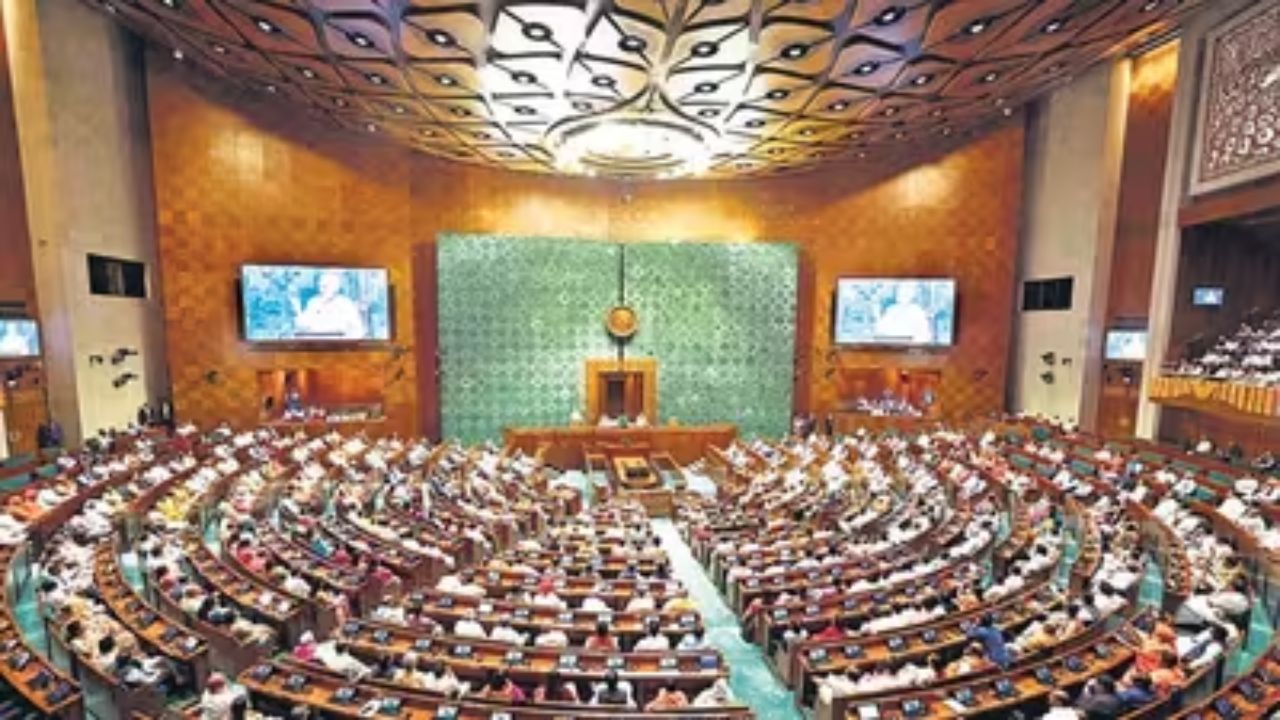
Parliament Special Session: Three days, 28 hours and the new structure of Indian democracy; Will the special session of Parliament change the direction of power equations?

- Three days, 28 hours and the new structure of Indian democracy
- Will the special session of Parliament change the direction of power equations?
- The edge of opposition and the government’s claim
Central Govt A special session of the Parliament has been called between 16th and 18th April, and through this, a big goal has been put forward to implement the ‘Nari Shakti Vandan Act’ from the 2029 Lok Sabha elections itself. However, along with this historic step, the reorganization of constituencies and political balance between the North and South states has created a dilemma and the political atmosphere in the country has heated up.
A three-day convention
The government has decided to speed up the implementation of the Women’s Reservation Act passed in 2023. As per the original rules, this reservation was to come into effect after the 2027 census and subsequent reorganization (around 2034). However, now the government is preparing to implement 33% reservation from 2029 itself by introducing three new bills, Constitution Amendment Bill, Delimitation Bill and Union Territories Amendment Bill.
The nature of Parliament will change
The most important proposal in this new bill is the increase in Lok Sabha seats. It is planned to increase the existing 543 seats to around 850. Approximately 273 seats will be reserved for women. It is understood that preparations are underway to reorganize on the basis of 2011 census instead of 2027. So that the reservation can be implemented from 2029 by removing the technical difficulties. It will also have a provision for internal reservation for SC-ST category women.
Bihar New Cm Oath : No background of RSS, no start from BJP; How did Samrat Chaudhary become an effective leader in 8 years?
Incumbent vs Opposition
A special majority (2/3 majority) is required in Parliament to amend the Constitution. NDA currently has 292-293 MPs. Around 362 votes would be needed to approve the amendment, meaning the government would have to match an additional 70 votes. As the NDA is far from a majority even in the Rajya Sabha, it will be a big challenge for the government to get the support of the regional parties.
A debate on the balance of political power
Due to this bill, not only women’s reservation, but also the question of political influence of the states has come to the fore. The states of Tamil Nadu, Kerala, Karnataka and Telangana have expressed fear that increasing the seats as per the 2011 census would increase the dominance of North India and reduce the political weight of South India. “We have successfully done population control, so why are we being punished by reducing political representation?” This question has been raised by the southern states.
The edge of opposition and the government’s claim
Many opposition parties, including the Congress, have taken the stance of ‘supporting reservation but opposing political restructuring’. The opposition has alleged that this is an attempt to change the political map of the country under the pretext of restructuring. On the other hand, the central government is claiming that “this is a historic moment to empower half of the population and no state will be wronged.” The 25-28 hour debate in the Lok Sabha and Rajya Sabha over the next three days will decide the fate of the country’s democracy.
PM Narendra Modi: “April 16, 17, 18… India will take a big decision”, PM Modi’s big announcement

Comments are closed.