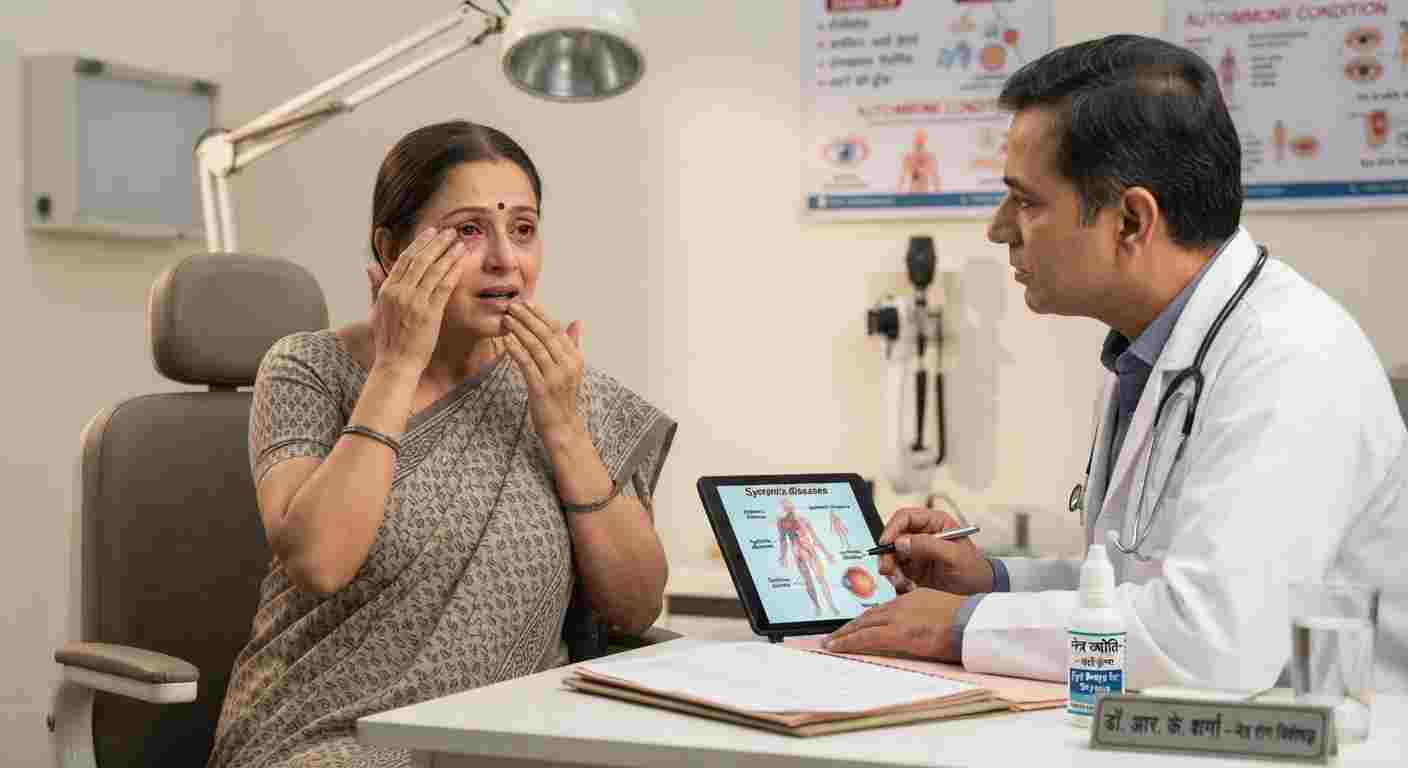
In daily life, people often ignore the problem of slight irritation in the eyes, grittiness or frequent dry throat and mouth, considering it to be the result of normal fatigue, dehydration or excessive use of mobile-laptop. But if this problem persists for weeks or months, then it may not be a normal seasonal or lifestyle problem, but the beginning of a serious autoimmune disorder or systemic disease within the body. According to medical experts, dry eyes and mouth together are a classic early sign of complex autoimmune diseases like Sjögren's Syndrome. If not diagnosed timely and treated appropriately, this condition can cause damage ranging from permanent damage to the cornea to tooth loss and erosion of internal organs. What is Sjögren's syndrome? When the body's defense cells become ravenous Sjogren's syndrome is a chronic autoimmune disorder in which the body's immune system, instead of fighting external bacteria or viruses, mistakenly attacks its own exocrine glands and starts destroying them. Among these, the 'Lacrimal Glands' that produce tears in the eyes and the 'Salivary Glands' that produce saliva in the mouth are the main victims. This disease is mainly divided into two categories: Primary Sjögren's syndrome: When this disease develops alone in the body without any other disease. Secondary Sjögren's syndrome: When it occurs in association with pre-existing autoimmune diseases such as rheumatoid arthritis, systemic lupus erythematosus (SLE), scleroderma, or Hashimoto's thyroiditis. According to epidemiological data, this disease is found 9 times more often in women than in men, especially in the age group of 40 to 60 years. Other major medical causes: From screen time to uncontrolled diabetes Although Sjögren's syndrome is the most prominent autoimmune cause, many other medical and lifestyle factors can also cause severe dry eyes and mouth: Uncontrolled Diabetes: When blood sugar levels get too high, the body expels excess glucose through urine, which leads to dehydration and a rapid decrease in saliva production. Apart from this, autonomic neuropathy disrupts the signals of the glands. Medication Side Effects: More than 400 common medications cause xerostomia (dry mouth) and dry eyes. These include antihistamines (allergy medicines), blood pressure medicines (beta-blockers and diuretics), antidepressant medicines for depression and anxiety, and pain relievers. Digital Eye Strain (Computer Vision Syndrome): Due to continuous staring at a computer, mobile or TV screen, the blinking rate reduces from the normal 15-20 times per minute to only 5-7 times, due to which the moisture in the eyes evaporates rapidly. Nutritional Deficiencies: Due to severe deficiency of Vitamin-A, Vitamin-B12 and Omega-3 fatty acids in the body, lacrimal and mucosal membranes start drying up. Serious Dangers of Ignoring: Blindness, Tooth Decay and Organ Damage Tears and saliva are not just fluids, they are the body's natural antibacterial and protective shield. If the deficiency in their production is ignored for a long time, serious health complications can arise: Corneal ulcers and blindness: Lack of tears can lead to abrasions, scratches and serious infections on the cornea, leading to the formation of corneal ulcers and permanent blurring or loss of vision. Severe Dental Caries (Dental Rampant Caries): Enzymes present in saliva prevent the growth of bacteria in the mouth and neutralize the acid. When saliva ends, teeth start rotting rapidly, periodontitis occurs in the gums and candida (oral thrush) fungal infection spreads in the mouth. Difficulty in swallowing and speaking (Dysphagia): It becomes difficult to swallow dry food, there is constant pain in the throat and there is hoarseness in the voice. Damage to internal organs: Sjogren's syndrome is not limited to glands only; Over time, this can increase the risk of fibrosis in the lungs, inflammation of the kidneys (nephritis), numbness in the nerves (peripheral neuropathy) and non-Hodgkin lymphoma (blood cancer) several fold. Accurate identification and diagnostic tools: How do doctors confirm the disease? If a person is experiencing dryness in the eyes and mouth for more than 3 months, rheumatologists and ophthalmologists confirm the condition through the following tests: Schirmer's Test: Tear production is measured over 5 minutes by placing a special filter paper strip inside the lower eyelid. A reading less than 5 mm indicates severe dryness. Fluorescein dye and slit lamp examination: A safe dye is applied to the surface of the eye to examine the cornea for microscopic lesions and tear break-up time (TBUT). Blood autoantibody tests: Anti-nuclear antibody (ANA), anti-SSA (Anti-Ro), and anti-SSB (Anti-La) blood tests are 70% to 80% accurate in confirming Sjogren's syndrome. Along with this, ESR and Rheumatoid Factor (RF) are examined. Salivary gland biopsy and flow test: Tissue of a small salivary gland from the inner part of the lower lip is taken and examined under a microscope for the accumulation of lymphocytes. Also, the total amount of saliva production in a stipulated time is measured. Modern Treatments and Surefire Ways to Get Relief While there is no single magic cure for autoimmune dryness, it can be completely controlled with modern medicines and systematic lifestyle management: Preservative-free eye drops and ointments: Use preservative-free artificial tears at regular intervals during the day and apply a lubricating gel or ointment at night before sleeping. Punctal Plugs: The microscopic drainage holes (puncta) through which tears flow from the eyes into the nose are closed with silicone plugs so that natural tears remain on the surface of the eye for a longer period of time. Medications to increase saliva (Secretagogues): Under doctor's supervision, medications such as pilocarpine or cevimeline stimulate the glands to make more fluid. Apart from this, artificial saliva spray is used. Immunomodulatory drugs: If the disease is affecting other organs or joints, drugs like hydroxychloroquine (HCQ) or methotrexate slow the aggressiveness of the disease. Household and Daily Precautions: Follow the 20-20-20 rule: Look 20 feet away for 20 seconds every 20 minutes while working on a screen and blink deliberately. Maintain humidity in the room: Use air humidifiers and do not sit in direct contact with air from AC or heater. Regular hydration: Drink small sips of water throughout the day and use sugar-free chewing gum to keep salivary glands active. Avoidance of tobacco and caffeine: Avoid smoking, excessive tea, coffee and alcohol as they rapidly dry out moisture from the body. Ignoring itchy eyes and dry mouth as just a minor problem can prove to be risky for health. This is the body's silent warning that there is a deep imbalance occurring in your immune system. When symptoms appear, instead of wasting time relying on home remedies, immediately consult an ophthalmologist or rheumatologist for proper examination, because only timely treatment can protect your eyesight, dental health and quality of life.