
Electric vehicles could become one of the biggest new sources of electricity demand for power distribution companies, according to Tarun Kapoor, adviser to the Prime Minister. He has warned that distribution companies, or discoms, must prepare for growing demand instead of treating EV charging connections as a troublesome new requirement.
Speaking at a charging-infrastructure event organised by industry body SIAM on November 20, Kapoor said some discoms were not cooperating adequately with companies trying to establish charging stations. In particular, he pointed to the high connection and infrastructure costs that can arise when an operator wants a charger rated at 100 kW or more.
Every electric scooter, car, bus or truck replaces at least some visits to a petrol pump with electricity purchases. For the company supplying that electricity, charging represents a growing market. The opportunity is particularly attractive as electric two-wheelers and three-wheelers gain ground and larger commercial vehicles gradually move towards battery power.
EV registrations increased from roughly 20.4 lakh in FY2025 to 25.5 lakh in FY2026, according to VAHAN figures. The number of vehicles that will need charging is therefore rising, even if electric cars still account for a modest share of new passenger vehicle sales.
Kapoor argued that power companies should recognise charging as a future source of revenue. He also called for a dedicated officer at each discom to resolve issues faced by charging operators. That could help investors who currently have to negotiate connections, charges and approvals with different local offices.
A country may have adequate generating capacity and still struggle to supply a fast charger at a particular location. A large charging hub needs a suitable connection, local transformers, cables and sufficient capacity in the neighbourhood distribution network. Upgrading that equipment can be expensive.
This is also why a 100 kW public charger is very different from a slow charger at home. When several fast chargers operate together, the demand at one site can become substantial. For motorists, delays in getting these locations connected mean fewer dependable charging options on long journeys.
Tariffs matter as well. If a charging operator pays a high fixed charge despite selling relatively little electricity, the business may be unviable. The operator then either raises the price paid by drivers or stops maintaining the charger properly.
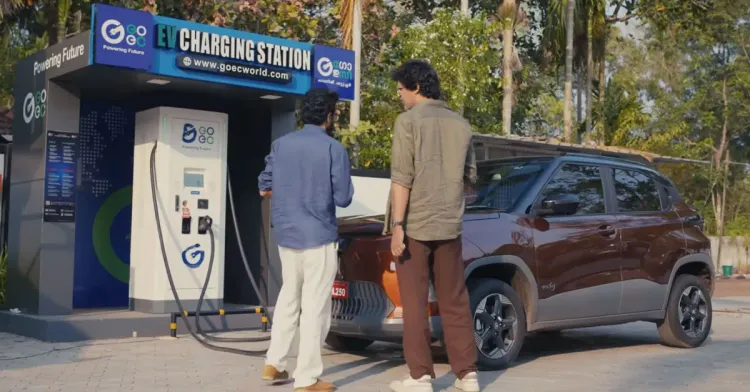
Kapoor also talked about the opposite problem. Some existing public chargers reportedly have utilisation levels below one per cent. Such a charger costs money to install and maintain but generates almost no revenue. Building more equipment in the wrong locations will not solve that problem.
Charging networks need to be planned around actual demand. Busy highways, apartment clusters without private parking, taxi stands and commercial depots have very different requirements. A charger installed simply to raise a city’s total count is less useful than one that works reliably where motorists genuinely need it.
There is already significant public support. The PM E-DRIVE programme has allocated Rs 2,000 crore for EV charging infrastructure. But money spent on installation is only part of the answer. Availability, working condition, pricing and ease of payment ultimately decide whether a public charger serves customers.
Kapoor wants more charging at offices, markets and parking areas during the day rather than relying almost entirely on vehicles plugging in at home overnight. Daytime charging can help make use of electricity when solar generation is strong, although the benefit depends on local demand and the power system.
Managed charging is equally important. Smart systems can schedule charging when the grid has spare capacity and avoid everyone starting a large charging session at the same time. For buses and commercial fleets, operators may be able to arrange charging around fixed routes and overnight depot schedules.
Source