New Delhi: Prime Minister Narendra Modi on Thursday virtually inaugurated five development projects worth around Rs 3,350 crore in Ladakh, covering airport infrastructure, strategic road connectivity, renewable energy, archaeological conservation and water security.
The projects include a new passenger terminal at Kushok Bakula Rimpochee Airport in Leh, the 298-km Nimmu-Padum-Darcha Road, a small hydroelectric power project, a transmission line, India’s first Petroglyph Conservation Park and 40 water bodies developed across 40 villages under Project Him Sarovar.
Addressing the inauguration through video conferencing, Modi said the projects would improve connectivity, strengthen electricity infrastructure, increase water availability and help preserve Ladakh’s cultural heritage.
“Today, another chapter is being added to Ladakh’s progress and development. I am happy to be part of this occasion through technology. Several important development projects have been inaugurated in Ladakh today,” Modi said, according to PTI.
He added that the initiatives would make travel easier, improve electricity facilities in some areas, increase water availability in others and strengthen the preservation of the region’s ancient heritage.
New Leh airport terminal built at Rs 640 crore
The new passenger terminal at Kushok Bakula Rimpochee Airport in Leh has been constructed at a cost of Rs 640 crore. Spread across 23,800 square metres, the terminal is designed to handle 35 lakh passengers annually, officials said.
The facility is expected to improve passenger convenience and strengthen air connectivity between Ladakh and the rest of the country. Better airport infrastructure is particularly important for the Union Territory, where difficult terrain, high altitude and weather conditions can affect travel.
The terminal combines modern passenger amenities with elements inspired by Ladakh’s cultural heritage. Its design also incorporates geothermal energy to improve energy efficiency and reduce its carbon footprint.
The use of energy-efficient systems is significant in Ladakh, an ecologically sensitive region where extreme weather conditions and the availability of resources present challenges for infrastructure development.
The new facility is expected to support the region’s growing travel requirements while providing improved facilities for residents, tourists and other passengers.
Nimmu-Padum-Darcha Road strengthens strategic connectivity
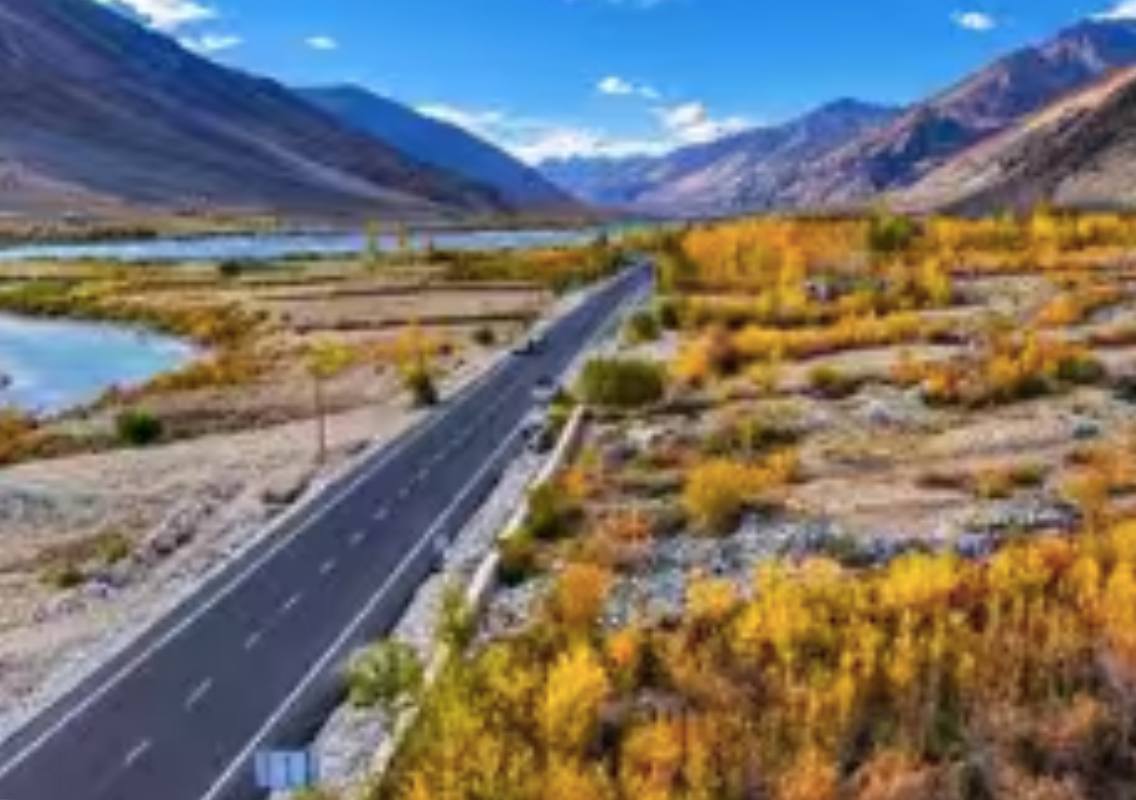
Modi also dedicated the 298-km Nimmu-Padum-Darcha Road to the nation. Constructed by the Border Roads Organisation (BRO), the road connects Nimmu in Leh with Darcha in Himachal Pradesh through the remote Zanskar region.
The route provides an alternative road connection to Ladakh, supplementing the existing Srinagar-Leh and Manali-Leh highways.
The road passes through challenging Himalayan terrain, including the high-altitude Shinkun La Pass. Its strategic significance lies in providing another route for the movement of personnel, equipment and supplies for the armed forces.
Improved road connectivity can also reduce the isolation of remote settlements and provide residents with better access to essential services.
For people living in Zanskar, the road is expected to improve access to healthcare facilities, educational institutions, markets and other services. It could also support the movement of agricultural produce and other local goods.
The route’s importance extends beyond military logistics, as improved connectivity can help strengthen economic activity and reduce travel difficulties for communities in remote areas.
Hydroelectric project and transmission line to improve power supply
As part of efforts to strengthen energy security and use Ladakh’s renewable energy potential, the Prime Minister inaugurated the 9 MW Hanu small hydroelectric project and the 66 kV double-circuit Dah-Hanu-Khaltsi transmission line.
The two projects are expected to strengthen electricity infrastructure and improve the reliability of the region’s power network.
The Hanu project adds to Ladakh’s hydropower capacity, while the transmission line is intended to support the movement of electricity through the regional network.
Reliable electricity is essential for households, public services, businesses and infrastructure in a region where harsh winters and remote settlements can make energy supply challenging.
The projects are also part of the broader effort to make better use of locally available renewable energy resources.
However, the effectiveness of the additional infrastructure will depend on its integration with the existing network, operational reliability and the region’s future electricity requirements.
India’s first Petroglyph Conservation Park inaugurated
The Prime Minister also inaugurated India’s first Petroglyph Conservation Park at Sindhu Ghat in Leh to protect Ladakh’s archaeological heritage.
Petroglyphs are images or symbols carved into rock surfaces. Ladakh is home to hundreds of prehistoric rock-art sites featuring depictions of wildlife, human figures and other symbolic representations.
These carvings provide clues about the people who lived in the region, their surroundings and aspects of their cultural history over thousands of years.
The conservation park aims to protect this heritage and preserve it for future generations. It is also expected to provide a dedicated setting for the conservation and interpretation of the region’s ancient rock art.
Ladakh’s archaeological sites are an important part of its cultural identity. Protecting them requires measures to limit damage caused by weathering, human activity and other environmental factors.
The new park adds a conservation-focused component to the development programme, alongside projects intended to improve transport, electricity and water availability.
Project Him Sarovar develops 40 water bodies
Water conservation formed another major part of the projects inaugurated by Modi.
Under Project Him Sarovar, 40 water bodies have been developed across 40 villages in Ladakh. The initiative aims to improve water storage and availability in a region where climatic and geographical conditions create challenges for agriculture and daily life.
Agriculture in Ladakh depends heavily on seasonal water availability. Snowmelt and glacial runoff provide water at certain times of the year, but farmers can face shortages during crucial agricultural periods, including sowing.
Project Him Sarovar seeks to conserve water when it is available and make it accessible when demand rises.
The initiative is expected to support irrigation, sustain agricultural livelihoods and strengthen long-term water security in the region. It also aligns with the objectives of Mission Amrit Sarovar, which focuses on the development and rejuvenation of water bodies.
For villages in Ladakh, improved water storage can help manage seasonal variations in supply and reduce dependence on the immediate availability of meltwater.
The benefits will depend on how effectively the water bodies are maintained, how water is distributed and whether storage capacity meets local agricultural and community needs.
Development programme covers multiple sectors
The five-project package brings together infrastructure investments aimed at addressing different challenges faced by Ladakh.
The airport terminal is intended to improve passenger capacity and travel facilities. The Nimmu-Padum-Darcha Road provides an additional strategic route while improving access for remote communities.
The hydroelectric project and transmission line seek to strengthen power infrastructure, while the Petroglyph Conservation Park focuses on preserving the region’s archaeological heritage. Project Him Sarovar addresses seasonal water shortages through the development of water bodies in villages.
Together, these initiatives cover transport, energy, cultural preservation and water management.
Ladakh’s high-altitude geography and harsh climatic conditions make infrastructure development particularly demanding. Projects in the region must account for difficult terrain, limited water availability, extreme temperatures and environmental sensitivity.
The use of geothermal energy at the new airport terminal and the development of renewable power infrastructure also reflect efforts to incorporate energy considerations into the region’s development.
Ladakh’s connectivity and water security in focus
The inauguration of the projects marks an investment in several areas central to Ladakh’s development.
The new airport terminal is expected to strengthen passenger infrastructure, while the 298-km road adds an alternative connection through Zanskar and improves access to remote areas.
The Hanu hydroelectric project and transmission line are intended to support electricity reliability, and the Petroglyph Conservation Park provides a dedicated initiative for protecting the region’s ancient rock art.
Meanwhile, the 40 water bodies developed under Project Him Sarovar seek to address the seasonal mismatch between water availability and agricultural demand.
The long-term impact of the projects will depend on their operation, maintenance and ability to meet the needs of residents and institutions across the Union Territory.
By bringing together transport, energy, heritage conservation and water management, the Rs 3,350 crore package seeks to address multiple development priorities in Ladakh while accounting for the region’s distinctive geographical and environmental conditions.