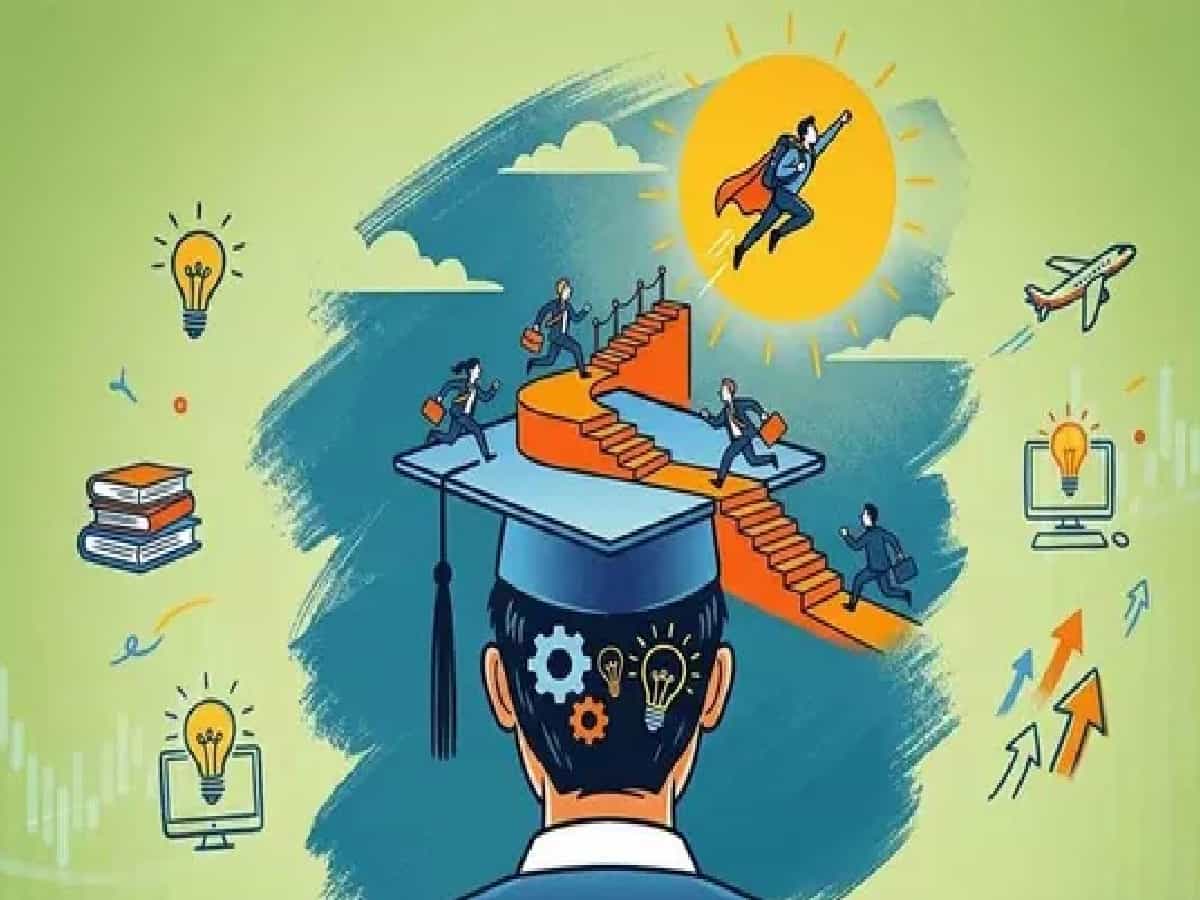
An unprecedented structural change is being witnessed in the Indian economy, corporate sector and recruitment market these days. There was a time when obtaining a bachelor's or master's degree from a reputed university was considered a guarantee of a secure future and an assured job, but the fast pace of modern technology has completely changed the old parameters of recruitment. Currently, every two to three years, software, tools and methodologies either become obsolete or require major technological upgrades. Underlining this serious ground reality, Prime Minister Narendra Modi has issued a special video message to the youth of the country and has called in clear words that the era of relying only on academic certificates is over. The Prime Minister stressed that the learning journey does not end with the completion of college, but the youth must continuously re-skill and up-skill themselves throughout their lives to remain relevant in today's competitive job market. Widening Skill Gap in the Indian Job Market: The Challenge of Degree vs. Practical Knowledge Today, the priorities of the industry have completely changed due to Artificial Intelligence (AI), Robotic Process Automation, Cloud Computing and all-round digital revolution. Top national and multinational companies are now giving priority to practical problem solving ability, critical thinking, technical proficiency and practical skills in job candidates instead of just looking at their degree marks or college rankings. According to the joint data of the India Skills Report and the Union Ministry of Labor and Employment, although the employability of the country's youth has shown partial improvement over the years, there remains a huge gap between the traditional academic courses and the actual needs of the industries. Presently the situation is that lakhs of youth are passing out from engineering, commerce and arts streams every year with degrees, but when they step on the corporate floor they lack the practical skills required to handle real projects. India vs Developed Countries: Huge Gap in Formal Skills Training Official data compiled on the basis of global reports by NITI Aayog and the World Bank presents a shocking picture of the skill status of the workforce in India. While developed economies have invested heavily in imparting practical skills to their youth right from the school level, India lags far behind the global average in terms of formal vocational training: South Korea: 96 per cent of workforce formally trained Japan: 80 per cent of formal vocational training coverage Germany: 75 per cent of workforce skilled and certified United Kingdom (UK): 68 per cent of trained professionals United States of America (USA): 52 per cent of workforce formally skilled India: Only 5 per cent of workforce formally certified and skilled Compare these figures. Studies show that only 5 percent of the workforce in India has received technical or practical training from a recognized institution. In contrast, 96% of youth in South Korea and 80% of youth in Japan have certified skills. Talking about Germany, its famous 'Dual VET System' (Dual Vocational Education and Training) provides compulsory facility of paid apprenticeship directly in industrial units along with classroom theory lectures to more than 50 percent of the high school level students. In sharp contrast, in India, active apprentices are less than 0.5 percent of the total workforce, due to which the employability of graduate youth remains limited to around 56 percent. In global employer surveys, about 65 to 70 percent of Indian recruiters have clearly complained that they face great difficulty in finding suitable candidates in terms of technical and soft skills. Social Attitudes and Outdated Curriculum: The Three Biggest Barriers to Skills There are three major structural reasons primarily responsible for this serious imbalance in the Indian society and education system. The first biggest reason is social attitudes; In India, ITI, Polytechnic Diploma or other vocational training courses are often considered the last option for academically weak students, while degrees like BA, B.Com or traditional B.Tech gain unnatural social prestige. The second major reason is the outdated curriculum of universities and technical colleges, which are completely failing to keep pace with the pace of machine learning, cloud architecture, data analytics and automation changing every two years. The third reason is the huge dominance of more than 85 percent of the unorganized sector in the Indian labor market, where workers learn skills on the job but do not have any formal certification of any national or international standard. To take the Indian economy to the target of five trillion dollars and a developed India in the future, linking skill development at the school level in the education policy and inculcating the habit of continuous upskilling among the youth has now become the most essential need of the hour.