If there’s one thing Porsche is known for, it’s consistency. Whether the car is an original 1965 911 or a brand-new equivalent off the showroom floor, there’s a specific design language that has always just screamed, “Porsche.” It makes sense — much like how Subaru has used its boxer engine since time immemorial, having that single identifiable “thing” helps with brand recognition and lends the car a certain character. That said, it has certainly not stayed the same over the years — a 1960s Porsche looks very different to a 2020s model, only sharing that fastback silhouette.
It’s more accurate, then, to describe Porsche’s lineage as evolutionary, building upon a single concept over many generations. Well, as of October 15, 2026, the brand has evolved once more. The Mission S, as it’s called, represents not just another facelift or, indeed, even the next flagship supercar that it is. This likely is the prelude to the next generational leap in Porsche’s design architecture, an aesthetic that combines stark futurism with retro-inspired vibes in a way only the German marque can truly pull off.
That said, let’s not overblow it. We’ve seen the leaks and know what to expect, after all. Even so, the new halo car is truly a sight to behold, building upon Porsche’s storied motorsports heritage coupled with the svelte proportions of a lightweight monster. Obviously there’s no word on powertrain or anything else; it’s just a concept car, after all. There’s no given that it’s even powered. But as a design study, it’s incredibly intriguing and potentially a teaser into Porsche’s future.
What the photographs tell us
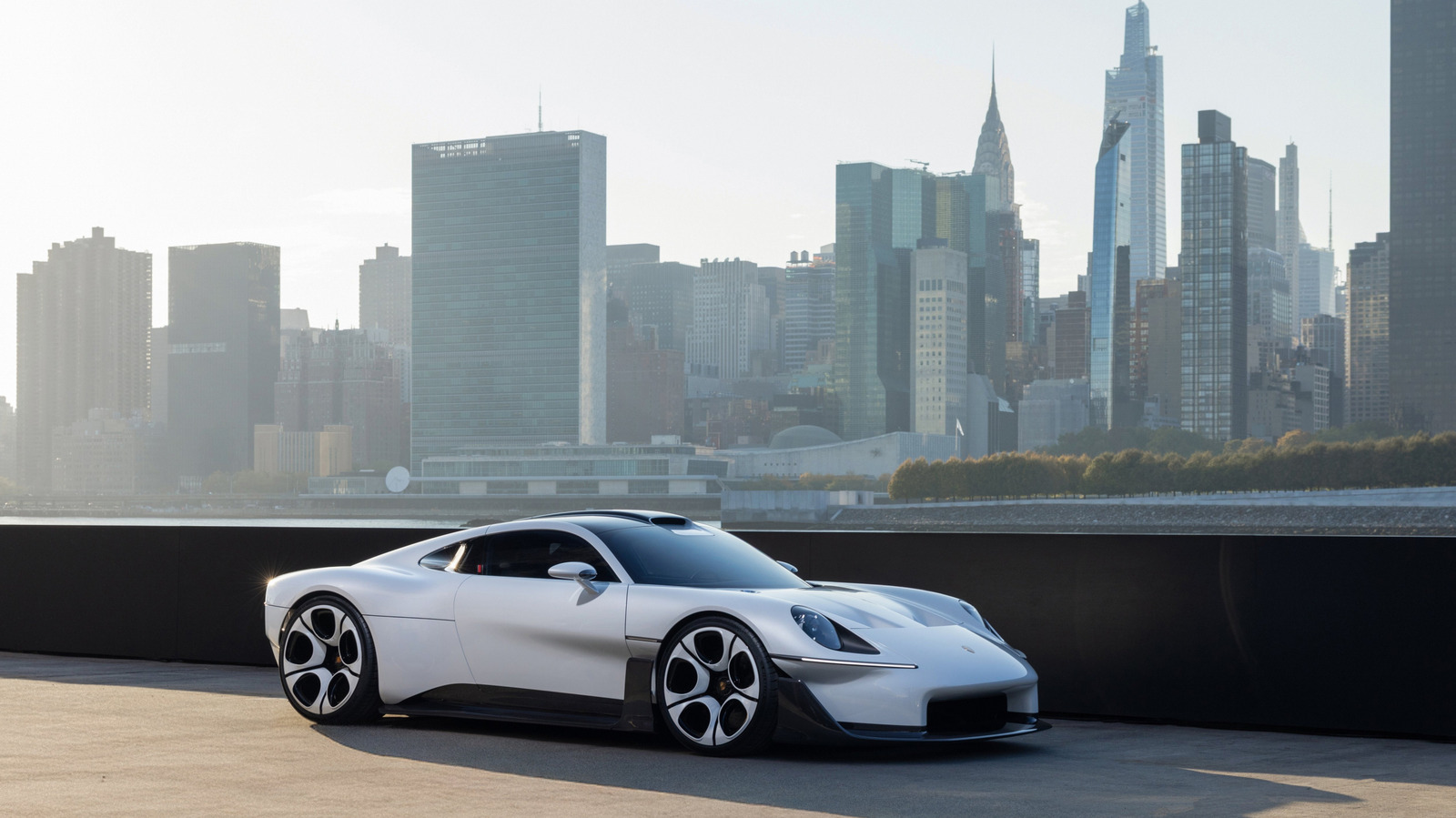
The Porsche Mission S Concept is, put simply, what would happen if you put a modern 911 in a blender with a classic 911 GT1, the 935/76, and the 917K. It’s like a “Greatest Hits” album of Porsche’s finest racing cars; the company has certainly done more specialized vintage-inspired concept cars, like the modern 935. But it’s never truly combined all of the different elements of these disparate machines into one single vehicle.
To begin with, you have the upright-facing headlights crowning an LED bar, revealing the image of that 935 with its pronounced front brow. It also shares the gaping mouth of 911 race cars seen right up to the present day, flanked with pronounced aerodynamic elements like canards and a sharp front splitter. Those canards continued down the side, reminiscent of the 919 endurance Hypercar. Those lines terminate at the rear, where the car is buttressed by the rear wing in an identical style to the 911 GT1 from the late-1990s. Lastly, you have the roof line that ends with the iconic fan cowling, a nod to the 917 and its air-cooled flat-12 engine.
The overall profile is, of course, very 911. It has the twin headlight tunnels on either side of a deep-cut hood, a fastback profile without a pronounced wing, and smooth, elegant lines throughout. The aerodynamic elements at the rear are incorporated into the silhouette, so sideways-on and it looks like it doesn’t even have a rear wing at all. Moreover, the width of the car’s fenders evoke yet one more famous Porsche racer, the air-cooled 911 GT2. Overall, it’s a fantastic silhouette despite its many ingredients or, perhaps, because of them.
Is this the future of Porsche?
It’s hard to say for now whether or not this truly represents the next chapter of Porsche, but it seems that the company at least desires the Mission S to be a sound proof-of-concept for its coming era. The marque stated its clear intentions to use the car as the pillar for its reimagined design identity, recommitting itself to providing a small, driver-focused experience to customers of means. Porsche had several statements regarding the Mission S, namely that it’s mid-engined, has a purist interior design, and the exterior is a harbinger for the next generation.
A few factors became apparent with this latest photoshoot, which echoes the original Porsche 550 Spyder photoshoot from 1953 in front of the same Manhattan skyline. The artistic language of the car, the photography itself, and the corporate statements all point to a renewed interest in heritage and preservation, something which Porsche is particularly good at, considering how famous the Porsche Museum in Stuttgart is.
So if this is a sign of things to come, then we absolutely welcome the future of Porsche with open arms. Combining retro design elements is certainly nothing new, and let’s face it, Porsche’s entire sports car image is practically built upon its iterative 911 design. But taking inspiration from racing machines that rarely, if ever, saw road use is certainly an interesting decision, one which will hopefully continue well into the company’s future. Frankly, even by today’s supercar standards, this thing is absolutely gorgeous, and certainly among Porsche’s coolest concept cars. More of this, please and thank you.