7
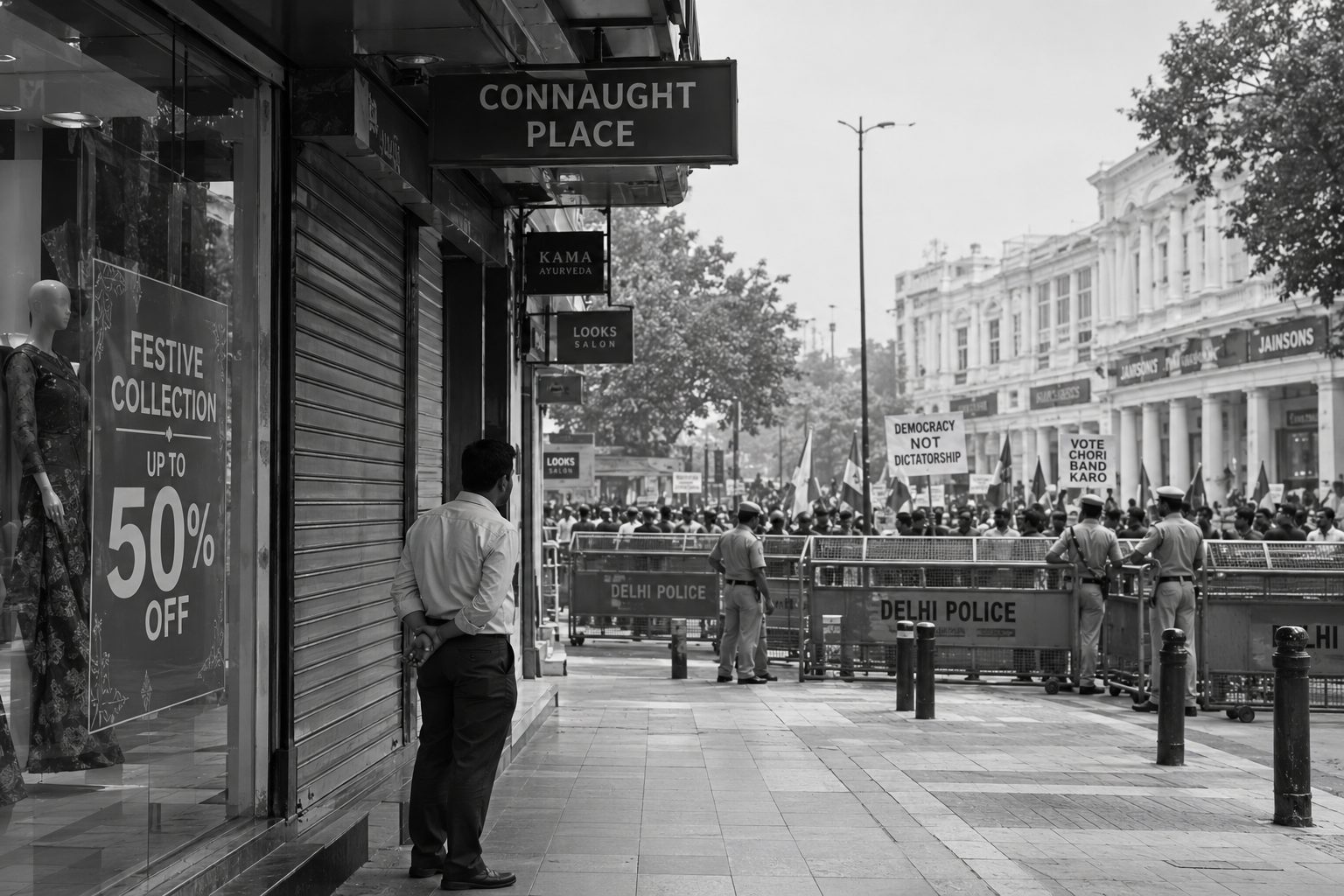
Repeated protests, police barricades and traffic restrictions in central Delhi are taking a toll on businesses in Connaught Place, Khan Market and Palika Bazaar, with traders warning that disruptions during the festive season are threatening their livelihoods and putting months of preparation at risk. For shopkeepers, October is a crucial period when festive shopping, wedding purchases and tourist visits typically boost sales. However, traders say the uncertainty surrounding access to commercial areas has discouraged customers from visiting markets, leaving shops struggling to generate revenue while fixed expenses continue to mount.
At Connaught Place, one of the capital’s busiest shopping and commercial destinations, traders have reported a sharp decline in customer footfall during protest-related disruptions. Barricades, security deployments and restrictions on movement have made access difficult, while some establishments have remained shut during demonstrations. Kapil Nath, who runs a Woodland store in Connaught Place, expressed frustration over the absence of customers during a recent protest. “Only protesters, shopkeepers, media personnel and police are here, where can you see the customer?” he asked.
The impact is particularly concerning because the final months of the year account for a substantial share of sales for many retailers. Nath said October, November and December contribute around 70% of his business, making the disruption a serious setback at a time when shopkeepers expect their investments in seasonal stock to pay off. Traders say the problem is not limited to lost sales. Rent, staff salaries, electricity bills, maintenance charges and other expenses must be paid regardless of how many customers enter a shop.
Atul Bhargava, president of the New Delhi Traders Association, highlighted the financial pressure on businesses in the commercial hub. “We have to pay our rent, staff, and property tax. We are incurring heavy losses,” he said. The association has urged political parties and protest organisers to choose designated demonstration venues instead of major commercial centres, arguing that businesses should not be forced to bear the economic consequences of repeated disruptions. The situation has also raised concerns among traders in Khan Market, where shopkeepers say restricted access and falling footfall have compounded an already difficult business environment.
Known for its boutiques, bookstores, restaurants and specialty stores, the market depends on a steady stream of customers, particularly during the festive period. “There is already an economic slowdown, and these protests are causing further damage. There is hardly any footfall, and people are apprehensive of stepping out,” said Anshu Tandon, president of the Khan Market Welfare Association. Traders have estimated losses of Rs 5-7 crore a day during the disruption. They say customers who anticipate traffic congestion, security checks or difficulty finding an accessible route often choose to postpone shopping or visit other areas instead. For small businesses, even a few days of poor sales can create a cash-flow crisis. Many shopkeepers purchase festive merchandise weeks in advance, using savings or borrowed funds. When expected sales fail to materialise, their money remains tied up in unsold inventory, making it harder to pay suppliers and meet operating expenses.
The protests have also drawn criticism from political representatives, who argue that the demonstrations are disrupting everyday life and placing an additional burden on traders and commuters. Kamaljeet Sehrawat, Member of Parliament from West Delhi, criticised the protests, saying they were affecting ordinary residents without sufficient justification. “All these protests are disrupting the common life in Delhi.
It is affecting the traders as well as the commuters. There is no reason to protest because there is no evidence of vote chori; they’re just disrupting the life of the common man in Delhi,” Sehrawat said. While the protesters’ demands and the allegations surrounding vote chori remain matters of political debate, the immediate economic impact of disruptions on businesses and workers has become a key concern in the capital. Palika Bazaar, the popular underground shopping complex near Connaught Place, has also been affected.
The market attracts bargain hunters, tourists and shoppers looking for clothing, accessories, electronics and other goods. Traders say disruptions around central Delhi reduce the number of visitors and make an already competitive retail environment more difficult. Vinay Kumar Thakur, general secretary of the Palika Bazaar Market Shopkeepers’ Association, said the impact was being felt across businesses. “Our business is badly hit by these protests. Our sales are so poor that we can’t even generate income to meet our basic expenses, such as rents of the shops and salaries of employees,” he said. The consequences extend beyond shop owners.
Auto-rickshaw drivers, delivery workers, street vendors and other people who depend on commercial activity also lose income when fewer customers visit the markets. Prithvi Sharma, an auto-rickshaw driver who had travelled from Laxmi Nagar, said he had earned just Rs 100 by the afternoon despite spending Rs 500 on compressed natural gas that morning. “When nobody comes here, who will we ferry?” he asked. Commuters, meanwhile, face diversions, congestion and uncertainty over access to familiar destinations. For office-goers and families planning festive shopping, the prospect of navigating barricades and crowded roads can make a trip inconvenient. Some may decide to shop elsewhere, further reducing the customer base for businesses in affected areas.
Traders argue that the impact of such disruptions extends well beyond the hours of a demonstration. Customers who change their shopping plans may not return immediately, while lost sales during a short festive window cannot always be recovered later. Businesses also risk losing regular customers to competing markets that remain easier to access. The issue has prompted traders to seek intervention from the authorities and the courts. Their demand, they say, is not to prevent peaceful demonstrations but to ensure that protests can take place without repeatedly disrupting commercial activity and the livelihoods of those who depend on it.