
Punjab’s health sector is going through a revolutionary change, every family is getting easy and affordable services.

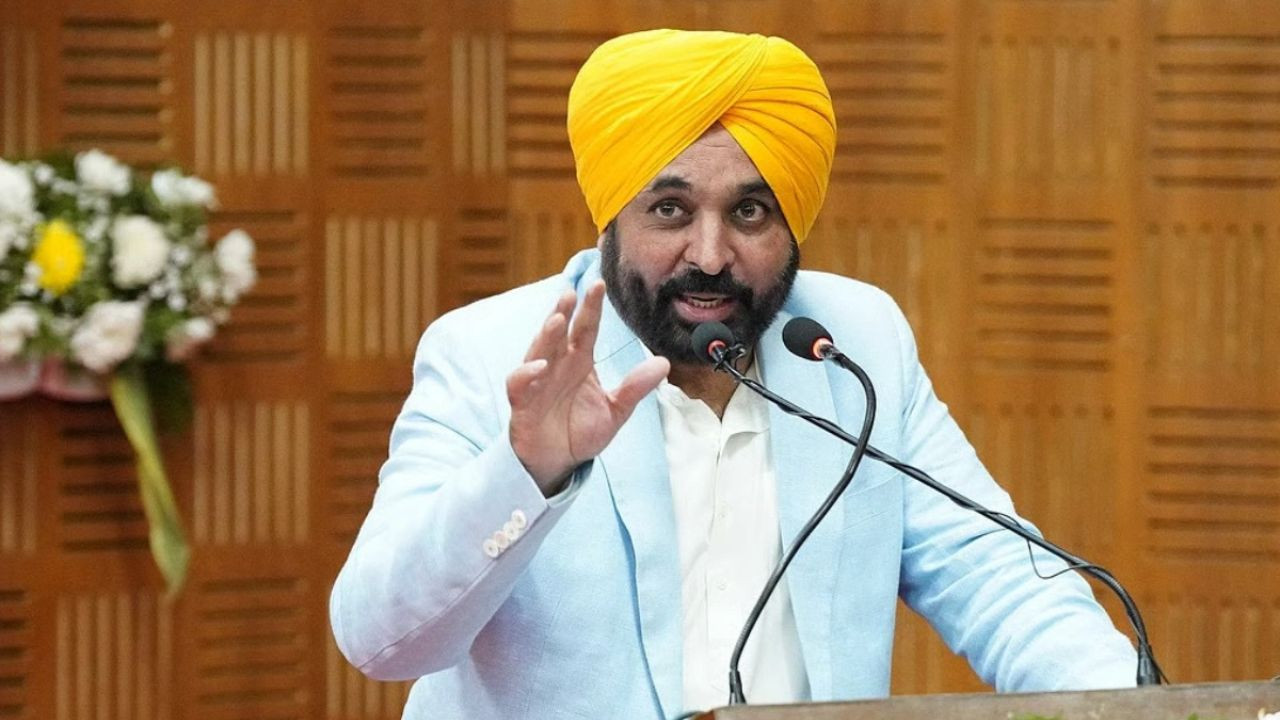
Under the leadership of Chief Minister Bhagwant Singh Mann, the health sector of Punjab is going through a revolutionary change. As per the promise of Punjab Government, every family is getting easy, affordable and respectable health services. For years, high treatment rates have forced patients to delay treatment, postpone medical tests, or discontinue medications, leaving families in debt and impacting health outcomes. This condition, which was widespread in both urban and rural areas, is now gradually changing.
More than 40 lakh health cards issued
At the center of this change is the Mukhyamantri Swasthya Yojana, a flagship initiative of the Bhagwant Mann government that is rapidly expanding people’s access to health services. In just three months, more than 40 lakh health cards have been issued, providing an annual cover of up to Rs 10 lakh to every family. The large scale adoption of this scheme shows its necessity and people’s faith in it. There were 28,766 registrations on April 21, indicating that the health system is becoming more accountable, inclusive and people-centric.
The positive impact of this scheme is clearly visible in the districts. Ludhiana leads with 4.20 lakh cards, followed by Patiala (3.82 lakh) and Jalandhar (2.85 lakh). The important thing is that the reach of this scheme was not limited only to big cities. Its usage is also increasing in Tier-2 and Tier-3 districts like Hoshiarpur, Amritsar, Mansa, Fazilka and Barnala, which shows that the government’s health initiative is rapidly reaching smaller towns where it was needed most.
The biggest confirmation of this change is visible from the grassroots level. Dr. Maninder Singh Bhasin, senior medical officer of Sub-Divisional Hospital Khanna, says, "Health care should not be a special right. Earlier the coverage was limited, but now every resident is covered." He further explains, "In recent months we have performed more than 200 gallbladder surgeries. Normally it costs Rs 40,000 to ₹ 80,000, but patients did not have to pay anything under this scheme."
They say, "Knee and hip replacements, which cost more than Rs 1 lakh, are now becoming free on a daily basis. We perform around 10 surgeries every day, that too all cashless."
Regarding emergency care, Dr. Bhasin explains, "Every minute counts in an S-T elevation myocardial infarction (STEMI) heart attack. With a thrombolytic drug called tenecteplase, which is used to rapidly dissolve blood clots during a heart attack, we restore blood flow quickly and so far we have saved the lives of about 100 patients."
Barnala’s orthopedic surgeon Dr. Karan Chopra also confirms a similar change and says, "Earlier patients used to postpone surgery for months and now they are coming immediately for treatment. People are saving Rs 1-1.5 lakh for every surgery."
What did Dr. Balbir Singh say?
Punjab Health Minister Dr. Balbir Singh, while talking about the objective of this scheme, said that health care should not depend on the paying ability of the patient. Under the Chief Minister Health Scheme, every family is getting an annual cover of up to Rs 10 lakh. Our aim is to ensure that standard treatment reaches every family without any financial burden.
The Bhagwant Mann government is not only expanding the health infrastructure but also redefining the relationship between citizens and the system. By removing financial constraints, it is being ensured that decisions related to treatment are not taken on the basis of cost, but on the basis of need. Doctors across Punjab say that the biggest change is at the psychological level. There has been a marked reduction in fear and families are now coming forward to seek treatment at the initial symptoms of the disease rather than waiting until the situation worsens.
This is an administration that is directly bringing major and reformative changes in the lives of people. This is reform that restores dignity; And this is the Bhagwant Mann government, which is ensuring health services not as a privilege but as a right.

Comments are closed.