
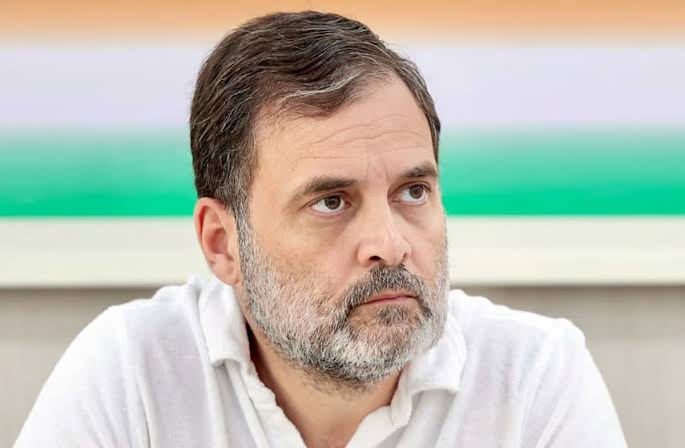

Leader of the Opposition Rahul Gandhi has outlined what many observers describe as a significant shift in opposition politics, calling on the INDIA bloc and democratic forces across the country to move beyond conventional electoral battles and embrace a broader politics of democratic resistance.
The remarks, delivered during a meeting of INDIA bloc leaders on June 8, have sparked debate across political circles. While some attention focused on Gandhi’s comments regarding alliance partners, political analyst Yogendra Yadav argues that the speech’s deeper significance lies in its diagnosis of India’s political environment and its proposed roadmap for opposition politics.
A Warning About Democratic Institutions
According to Gandhi, India’s political challenge extends beyond winning or losing elections. He argued that key institutions—including sections of the media, bureaucracy, legal system, and other state structures—are increasingly aligned with the ruling establishment.
The Congress leader suggested that opposition parties must prepare for a political environment where traditional democratic competition may become increasingly difficult. He warned that institutional independence could continue to weaken if corrective measures are not taken.
From Electoral Contestation to Democratic Resistance
One of the central themes of Gandhi’s speech was the idea that opposition politics should not rely exclusively on elections.
He argued that resistance is not simply an organization or campaign but a mindset rooted in democratic participation. According to Gandhi, when political parties face structural disadvantages, public mobilization and civic engagement become essential tools for safeguarding democratic values.
Political observers view this as an attempt to broaden the opposition’s approach by combining parliamentary action with grassroots engagement.
The Debate Over ‘Electoral Autocracy’
The speech also introduced concerns about what some political scientists describe as a transition from competitive democracy toward “electoral autocracy.”
Supporters of this view argue that democratic backsliding occurs gradually through institutional changes, information control, financial advantages, and influence over public institutions. Critics, however, reject this characterization and maintain that India’s democratic framework remains robust and continues to function through regular elections and constitutional mechanisms.
The debate reflects broader global discussions about democratic resilience and institutional independence.
A Wider Coalition Beyond Political Parties
Gandhi’s message emphasized that defending democratic principles should not be the responsibility of political parties alone.
He called for cooperation among opposition groups, workers’ organizations, farmers’ movements, civil society groups, social activists, and citizens who share concerns about governance and democratic accountability.
The proposed approach seeks to unite diverse social and political constituencies around common democratic objectives while remaining committed to constitutional methods and non-violent political action.
Commitment to Constitutional Democracy
Importantly, Gandhi’s remarks were not framed as a rejection of parliamentary democracy. Instead, they emphasized strengthening democratic participation outside election cycles.
The broader argument is that democratic institutions function best when citizens remain actively engaged in public life, not only during elections but throughout the political process.
As political discussions intensify ahead of future elections, Gandhi’s call for resistance politics may become a defining theme in shaping the INDIA bloc’s strategy and the wider opposition narrative.
Comments are closed.