
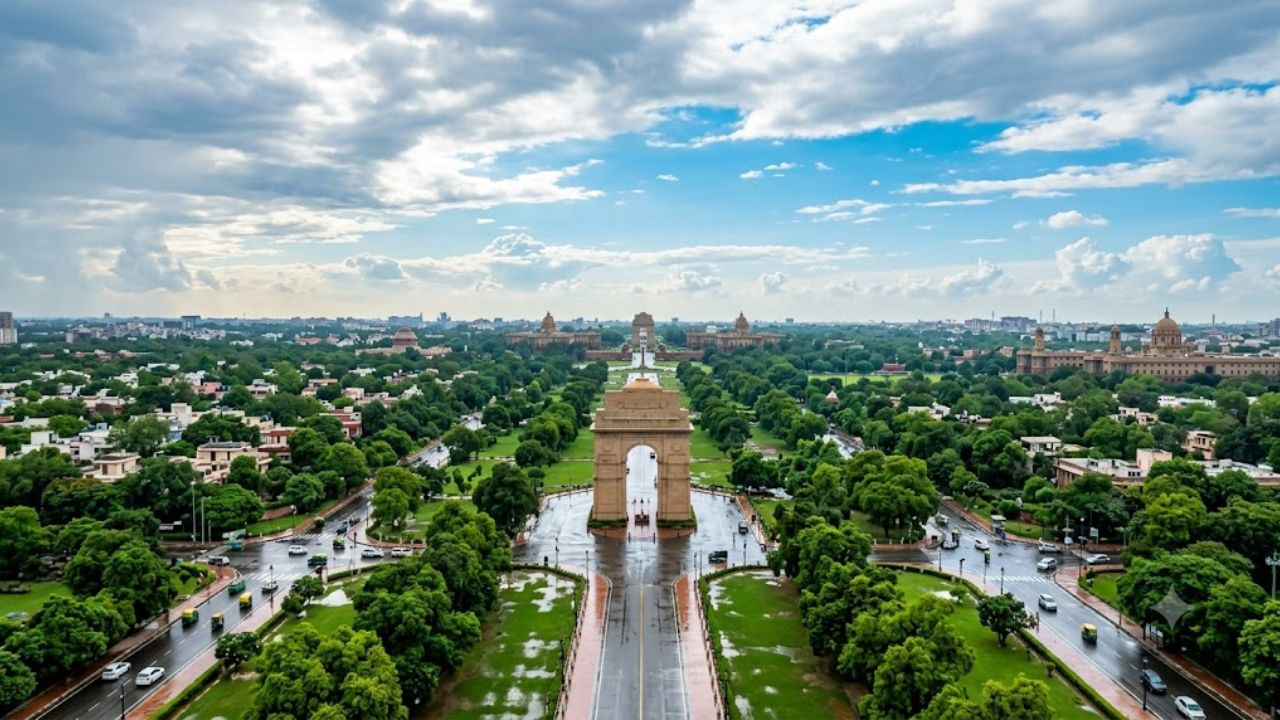

New Delhi: The effect of continuous heavy rains in the capital Delhi is now clearly visible on the air quality. Let us tell you, on July 9, Delhi’s Air Quality Index (AQI) was recorded at 48, which falls in the good category. According to the Commission for Air Quality Management (CAQM), this is the first time in the year 2026 that the air of the capital has reached this category. Earlier in September 2023, Delhi’s air quality was recorded in good category.
How did pollution improve?
Experts say that the improvement in air this time is not the result of any new government scheme or pollution control campaign, but is the effect of continuous heavy rains. The torrential rains in the capital in recent days have cleared the pollutants present in the atmosphere to a great extent, due to which there has been a significant improvement in the air quality.
How is this possible?
According to experts, during heavy rains, water droplets collide with micro pollutant particles present in the air and bring them to the ground. This natural process is called ‘wet deposition’. Apart from this, rain also suppresses dust blown from roads and construction sites, while monsoon winds spread the remaining pollutants into the atmosphere. Safdarjung weather station recorded 72.6 mm rainfall within 24 hours, which played an important role in improving the air quality.
All types of rain do not reduce pollution
However, experts also say that not all types of rain clean the air. Due to increased moisture in the atmosphere during light or intermittent rains, fine pollutant particles can remain in the air for a longer period. Therefore only heavy and continuous rains can effectively reduce pollution levels.
Relief will be available only for a few days
Despite this, experts believe that this relief may be temporary. After the monsoon ends, pollutants will start accumulating again in the lower atmosphere due to changes in temperature and slow winds in the winter season. At the same time, problems like smoke emanating from vehicles, industrial emissions, dust from construction works and burning of garbage still remain. In such a situation, for long-term improvement, it will be necessary to effectively implement permanent pollution control measures instead of relying only on the weather.

Comments are closed.