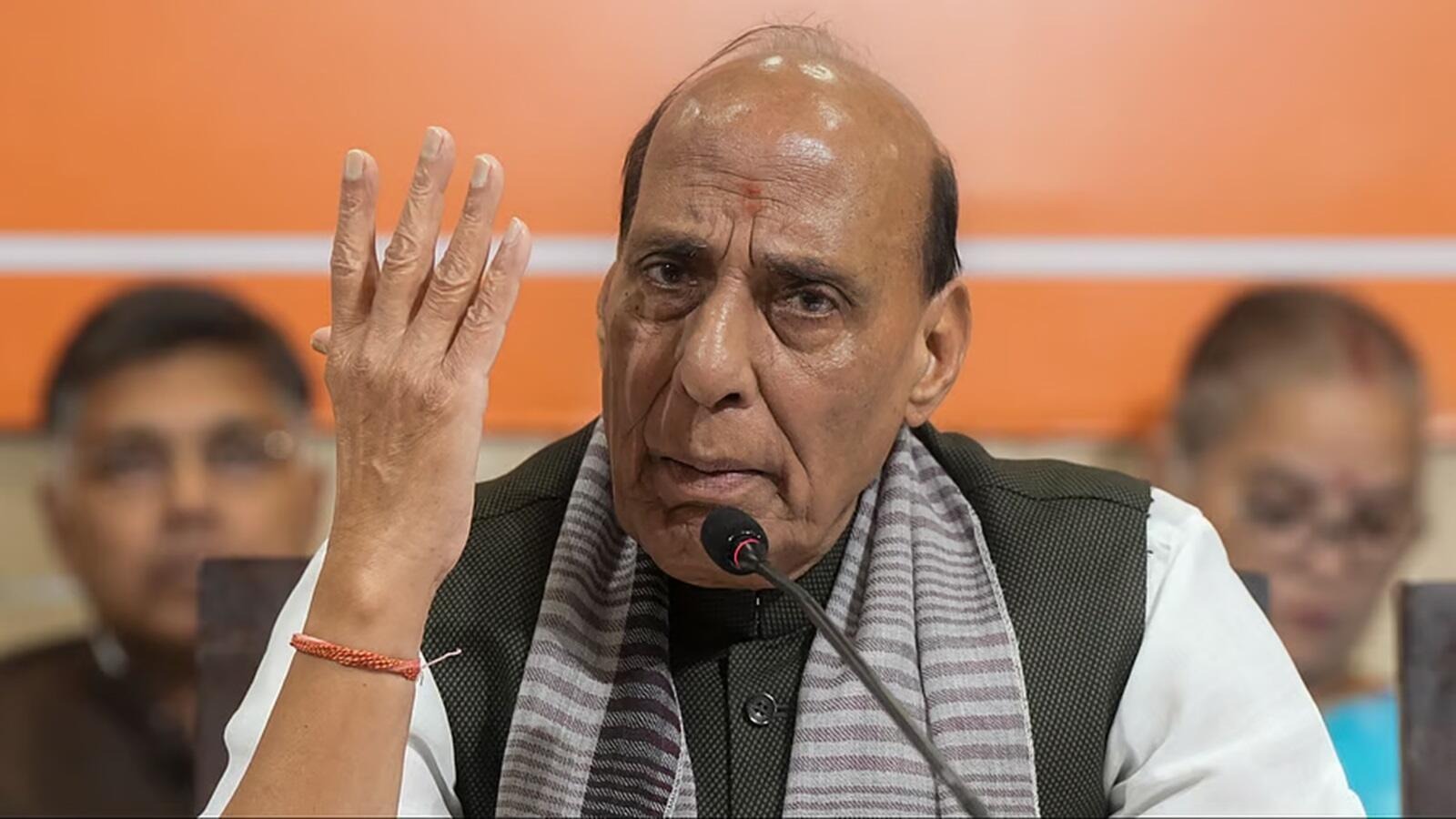
India's Defense Minister Rajnath Singh is going to make a very important and strategic visit to Dushanbe, the capital of the Central Asian nation Tajikistan. According to information received from high-level sources of the Defense Ministry and diplomatic circles, the Defense Minister will lead the Indian delegation at the 25th meeting of the Council of Heads of Government (CHG) of the Shanghai Cooperation Organization (SCO). At present, when new geopolitical turmoil is being witnessed in the Eurasian region and the global security architecture is going through a new phase, this visit of India's top leadership to Dushanbe is being considered very special from the diplomatic point of view. This move by the Defense Minister to strengthen India's historical and strategic partnership with Central Asia will give a new impetus to New Delhi's 'Connect Central Asia' policy. Upon arrival in Dushanbe, he will be given a ceremonial welcome, after which he will participate in a long round of important bilateral and multilateral dialogue meetings with his counterpart leaders of SCO member states. Zero tolerance against terrorism and regional security will be the main focus. During this much-awaited summit, the issue of regional security and strict international action against terrorism will be at the top of the agenda of Defense Minister Rajnath Singh. India has been demanding for a long time that all SCO member countries should take strong action in one voice without any double standards against the forces harboring cross-border terrorism, extremism and radicalism. In the Dushanbe meeting, India will emphasize on making the role of SCO's 'regional anti-terrorist structure' (RATS) more effective and result-oriented. There will also be a detailed discussion in the conference regarding the current situation arising in Afghanistan, the criminal networks operating from there and the security threats looming on the borders of Central Asian countries. India will send a clear message that sustainable peace, development and economic prosperity in the Eurasian continent is possible only when the entire region is completely free from the networks of terrorism and extremism. Connectivity with Central Asia: Agreement will be reached on Chabahar Port and INSTC Corridor. Along with strategic security, the second most important agenda for India in the Dushanbe visit is to establish direct and uninterrupted connectivity with Central Asian countries. As Pakistan continues to hinder India from providing a direct land route to Central Asia, India is strengthening its access to Tajikistan and other Central Asian republics through Iran's strategic Chabahar port and the International North-South Transport Corridor (INSTC). At the conference, Rajnath Singh will strongly advocate for increasing commercial use of Chabahar Port, simplifying trade logistics and removing cross-border trade barriers. Additionally, India will outline concrete agreements to further deepen its economic, technological, energy and defense partnerships with Tajikistan and neighboring countries. India has long had strategic interests in Tajikistan, so this visit will prove to be a milestone in taking bilateral trade and defense cooperation to a new peak. Bilateral meetings and strategic balance initiative with China-Russia On the sidelines of this main forum of SCO, Defense Minister Rajnath Singh will also hold high-level bilateral meetings with senior leaders and defense ministers of Russia, Tajikistan and other Central Asian countries. In these meetings, there is every possibility of forming a consensus on increasing mutual cooperation in cutting-edge areas like co-production of defense materials, joint military exercises, transfer of military technology and cyber security. This step of India is very important from the point of view of maintaining regional balance amidst the increasing influence of China in the Eurasian region. Indian foreign policy strategists believe that India's special relationship with Tajikistan not only strengthens India's influence in Central Asia but also strengthens India's strategic presence close to the Pamir region. This visit will prove to be a major step towards establishing India as a decisive and effective global leader in multilateral global forums while safeguarding its national interests.