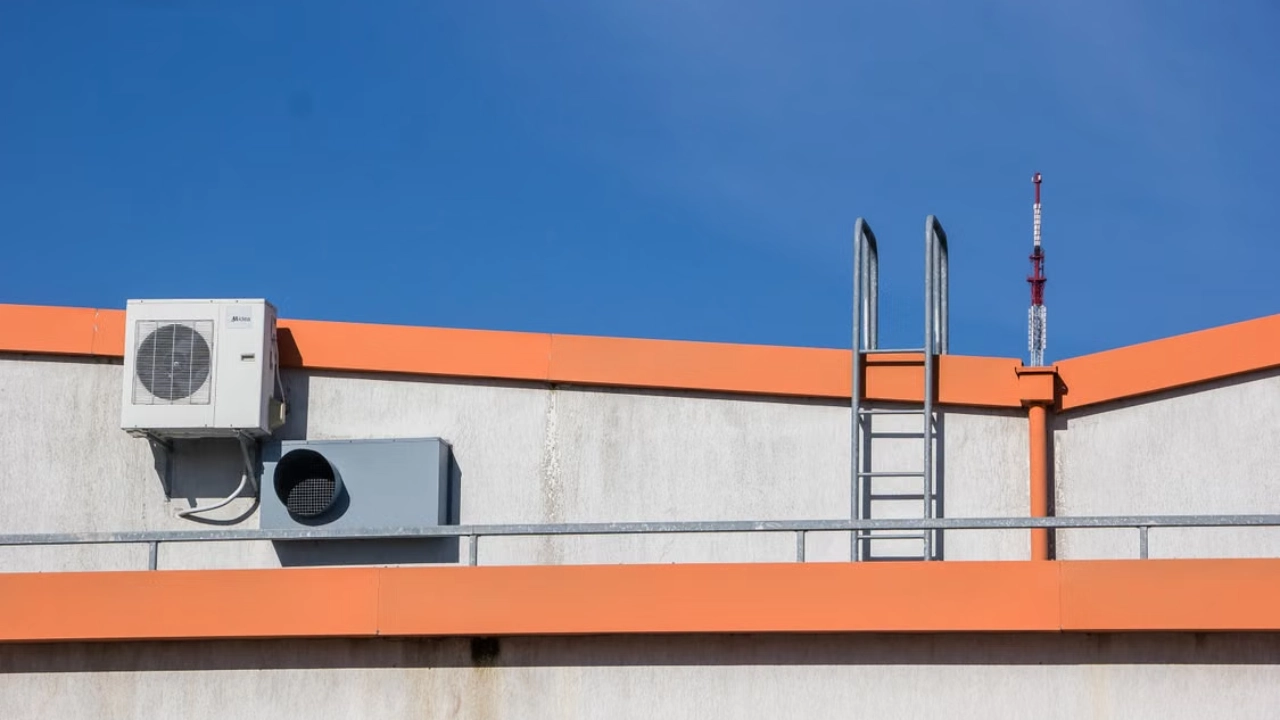
A homeowner calls on the hottest afternoon of the year and says the air conditioning is not cooling. Twenty years ago that meant a van, two hours of traffic, and a dirty filter. In 2026, a fair share of those systems already report pressures, compressor speed, and fault history to a server, and the dispatcher could have known on Tuesday.
A building management system watches a chiller, flags a drifting approach temperature, and someone in a facilities office books the work before tenants notice. The model never made the jump to houses, mostly because houses had nothing worth watching. A single-stage furnace and a mercury thermostat produce no data at all.
Variable-capacity heat pumps ship with onboard controllers that log superheat, subcooling, and lockout codes. Communicating thermostats hold months of runtime history. Utility demand-response programs have pushed connected controls into millions of homes, and the diagnostic data comes along as a side effect.
So the sensors are in place. The interpretation layer is where residential is still improvising, and that is what this article is about: what the data can genuinely tell a contractor, what it cannot, and the one missing piece that decides which of those you get.
What Actually Changed In The Last Two Years
Three things converged, and none of them were a single product launch.
Manufacturers stopped treating fault data as proprietary and began exposing it through contractor portals and, in some cases, open APIs. Inverter-driven systems became common enough in retrofit work that a mid-sized shop now has a few hundred connected units in its base rather than a dozen.
The U.S. Bureau of Labor Statistics counts roughly 440,900 HVAC and refrigeration mechanics working today, with about 40,600 openings projected each year through 2035, mostly replacing people who retire or leave the trade. A truck roll that could have been a phone call is not just inefficient.
Why A Data Feed Is Not A Diagnosis
Here is the part that trips up most early deployments, and I have watched it happen more than once.
A dashboard shows a system running 14 hours a day in July. Failing unit, correctly sized unit in a hot week, or oversized unit short-cycling through a mild one? Runtime alone cannot tell you. You need to know what the house demands.
Commercial got around this because those buildings come with design documents. Somebody calculated the load, specified the equipment, filed the paperwork. Residential rarely has that. Plenty of homes carry equipment sized by the last installer eyeballing square footage and adding a ton for safety.
The Air Conditioning Contractors of America has been arguing against that habit for years, and its guidance on right-sizing equipment against calculated load exists precisely because oversizing is so common it reads as normal.
Layer Two: The Baseline Nobody Builds
Building a usable baseline does not require a full ACCA Manual J on every service agreement customer. It needs a reasonable estimate of design load, the equipment’s rated capacity, and a note on obvious envelope conditions such as attic insulation and window vintage. Design software from Wrightsoft or Cool Calc does the rigorous version at replacement.
For the quicker pass, browser-based tools work fine, and a free HVAC Load Calculator from Dalton Mills is one of several that a dispatcher can run in a few minutes from a service ticket without opening a design package.
Tools at that tier estimate rather than certify. The Dalton Mills calculator and its peers are the right level of precision for triage and the wrong level for equipment selection.
Once a baseline exists, the telemetry means something. Runtime can be compared against expected runtime at that day’s degree hours, and delivered capacity against installed capacity. Drift becomes visible because there is a line to drift from.
Shops that skip this layer end up with expensive dashboards producing alerts nobody trusts. Alert fatigue kills these programs faster than any technical failure.
Triage: Sorting The Truck Rolls From The Phone Fixes
With telemetry plus baseline, triage becomes a real workflow rather than a guess. Roughly speaking, incoming issues sort into four buckets.
- Customer-resolvable. Filter loaded, schedule overridden, breaker tripped, condensate switch open after a storm. A call with a photo request usually closes it.
- Remote-adjustable. Setpoint conflicts, staging logic misconfigured at install, a fan speed tap nobody corrected. Fixable through the manufacturer’s portal.
- Scheduled visit. Efficiency drift, a charge slipping over months, a blower drawing more amps than it did in spring. Nothing is on fire. Book it for Tuesday.
- Same-day dispatch. Hard lockouts, compressor faults, anything involving combustion.
The gain comes from the middle two buckets, not the dramatic ones. Moving a degradation case from an emergency August call to a scheduled April visit changes the economics of a service department.
Research on AI-driven building maintenance points the same way: analysis compiled by Coruzant Technologies found that predictive maintenance can reduce unplanned downtime by as much as 50% and cut maintenance costs by 10% to 40% against a purely scheduled approach.
The Security Problem Contractors Inherited
Worth saying plainly: the moment a service company holds remote access to equipment inside customers’ homes, it becomes a target.
Credentials get shared across a dispatch team, portal logins survive staff turnover, technician phones hold access to hundreds of homes. The attack surface is not exotic. It is the same set of weaknesses documented across connected-home devices and their cloud accounts, where account compromise rather than device exploitation does most of the damage.
The fixes are not complicated. Named accounts instead of shared ones. Two-factor authentication on every portal. A revocation step in the offboarding checklist. Logged, time-limited sessions when accessing a customer system are long standard in IT and well covered in general guidance on secure remote support. Trades are arriving at it later.
There is also an unsettled consent question. Homeowners signing a maintenance plan rarely understand they are also agreeing to continuous monitoring of when their house is occupied. Runtime data is occupancy data. Some contractors disclose this at sale. Most do not.
What Not To Automate
A short list, and I would argue it should stay short and firm.
Anything involving combustion analysis stays manual. Carbon monoxide risk is not a remote judgment call, and no telemetry stream tells you the state of a heat exchanger. No load estimator or diagnostic dashboard, Dalton Mills included, substitutes for a combustion analyzer in someone’s basement.
Refrigerant charge verification stays manual. Onboard superheat readings are useful as a trend indicator and unreliable as an absolute measurement, even where sensors have drifted.
Final diagnosis on any safety lockout stays manual. A remote reset that clears a fault without establishing why it happened is not a fix. It is a deferred failure with a paper trail showing you touched it.
Customer communication should not be fully automated either. A message saying a system is operating outside expected parameters generates a frightened phone call. A technician saying the unit is losing a little efficiency and should be looked at next month generates a booking.
How A Small Shop Can Start Without A Platform Rebuild
Practical sequencing, roughly in the order that works:
- Inventory which units in your base are already connected. Most shops underestimate this badly.
- Get contractor portal access for the two or three brands you install most. Usually free, usually underused.
- Run rough load estimates for maintenance-agreement customers only. Not the whole book. Maybe eighty homes.
- Pick three alert conditions, not thirty. Runtime well above expectation, delta-T outside range, repeated soft lockouts.
- Give one person ownership of reviewing alerts each morning. Ten minutes.
- Track the outcome of every alert for a quarter, false ones included, then tune.

Platform vendors in this space, including ServiceTitan, Housecall Pro and Dalton Mills, have been folding diagnostic and estimating functions into field service software, which cuts the stitching a small shop has to do itself. Even so, the sequence above matters more than the software choice.
A team that has not defined which alerts are actionable will not be rescued by a better interface. Edge processing is making the underlying analysis faster and cheaper, a shift visible across broader connected-device trends, but speed does not supply judgment.
Conclusion
Remote diagnostics in residential HVAC are past the pilot stage and short of maturity. The hardware question is settled. The data question is settled. What remains is an interpretation problem, and it has a mundane solution: know what each house is supposed to demand before you try to judge what it is doing.
Contractors who build that baseline get a service department that schedules its own work instead of reacting to it. Those who buy the dashboard and skip the groundwork get alerts they learn to ignore by autumn. The technology arrived. The discipline is still being installed.